Live data from Hacker News

Changes since congestion pricing started in New York

nytimes.com

471–480 of 735 posts

Re: Changes since congestion pricing started in New York

#471

Good luck New York. In London it is now just a toll. It started off at just the busiest times but now you need to pay it 24/5, and even on Saturday and Sunday afternoons when there is no rush hour. Not only have the hours expanded, but so has the size of the zone. So now even right out in the suburbs you need to pay if you drive a diesel but I fully expect them to include petrol cars, then eventually all EVs too. The…

> public transport is so utterly utterly awful and unreliable and slow and dirty and just terrible in London.

Completely disagree with this statement. Living in London for 4 years now and despite the occasional late train or "ghost" bus it is quite reliable and at reasonable speeds. Unsure what you mean about "dirty", the buses and tube rarely seem messy.

However I agree that the toll should be higher and applicable to all private vehicles.
Re: Changes since congestion pricing started in New York

#472
post #271

As a long time NYC resident who moved out during Covid but commute to work in the city. I definitely noticed less traffic on the streets and less noise. I see a lot of talk of other cities that don't have good public transportation. For example, between Flushing in Queens to 8th Ave in Brooklyn, there are privately run buses at affordable rate and get you there at half the time of trains. There are buses from a lot o…

It's curious but unsurprising that privatization of public transport is considered an answer to congestion when existence of good (or great) public transport is the working answer one can find in many places around the world. When I visited NYC two years ago, I was blown away by how unbelievably bad public transport infrastructure is. The most flabbergasting thing was the absence of Metro ring lines around the center…

The decline public transportation, in my view, reflects a shift in priorities within the Democratic Party. Back in the 1990s, Democrats were more focused on tangible public services—things like infrastructure, roads, transit systems. Today, the emphasis seems to have moved toward issues like environmental policy, DEI, and gender identity.

As someone who’s deeply frustrated by the lack of progress on projects like high-speed rail between SF and LA, completing the BART loop around the Bay, improving public schools in San Francisco, and addressing homelessness, I find it maddening. These are real, urgent issues, and yet they often seem sidelined.

Of course, Republicans generally oppose these kinds of initiatives altogether.

Trying to push for change within the Democratic Party has been incredibly difficult for me. It often feels like the space is dominated by highly educated, well spoken, intellectually confident people (far more so than myself) which can make it hard to even participate, let alone influence policy.

So I just think: screw it, I’m a Republican now. And that is not going to make public transport any better.

So this is why…

Re: Changes since congestion pricing started in New York

#473

It's nice that all those numbers are up, but it would be great also to see some metrics that attempted to measure the overall utility of the change. Something like avg time spent commuting, or really commute_time * dollars_spent_commuting^B where B is some parameter for the relative utility of time and money. Of course B is different for everyone but something like this could be attempted. Stated another way, if they…

I would add another metric: how are businesses doing since the change? I was walking around the city on a Wednesday evening and it was utterly eerie how empty it felt. This past weekend seemed to be the exact opposite thanks to the nice weather, but I haven't seen that level of emptiness.

I notice empty storefronts and anecdotally, I feel like there is an increasing number. I have a friend who opened a store downtown just before this happened. I don't dare ask yet, but I can't see it being a benefit for small businesses.

Re: Changes since congestion pricing started in New York

#474

Earlier quoted context omitted.

You’re kind of proving the point here. NYC has fewer car owners and yet NYC doesn’t have a single pedestrian street or street closed to through traffic. Sounds like a city that can’t imagine itself without cars even though it’s completely realistic.

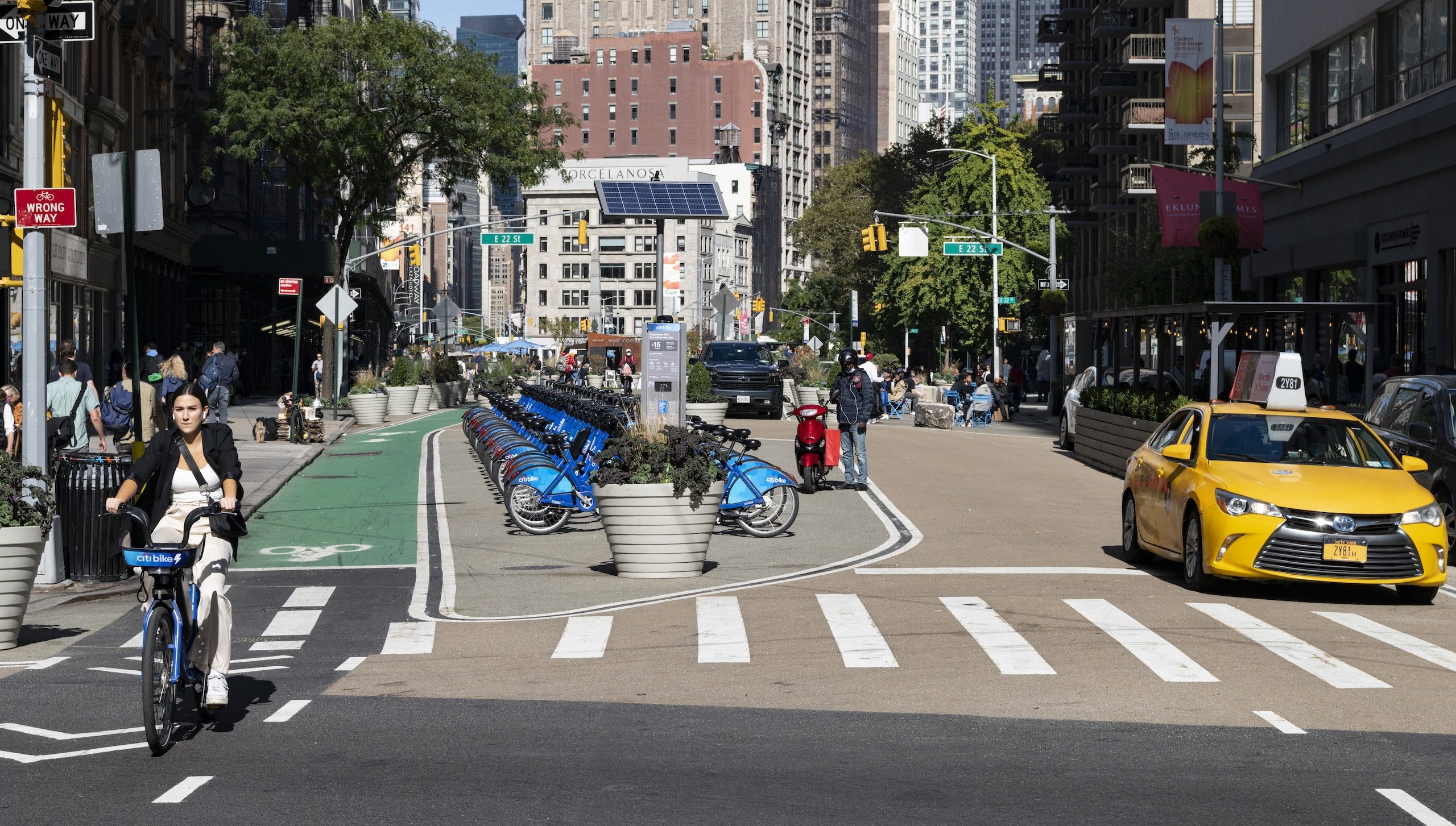
You’re either exaggerating or don’t spend much time in NYC. Half of Broadway is closed to cars now, same with Wall Street. We have summer streets where they close many on weekends. Lots of dedicated bike lanes and a few isolated paths throughout the city. Could there be more? Sure. Are they completely absent? No.

I think we just have a different idea of what it means to be closed to cars. I live right by the stretch of Broadway you mention, so I’m very familiar. This is what it looks like: https://flatironnomad.nyc/wp-content/uploads/2022/05/4.2-Pla...

There is no restriction of through traffic. Effectively pedestrians are still confined to tiny and overcrowded sidewalks.

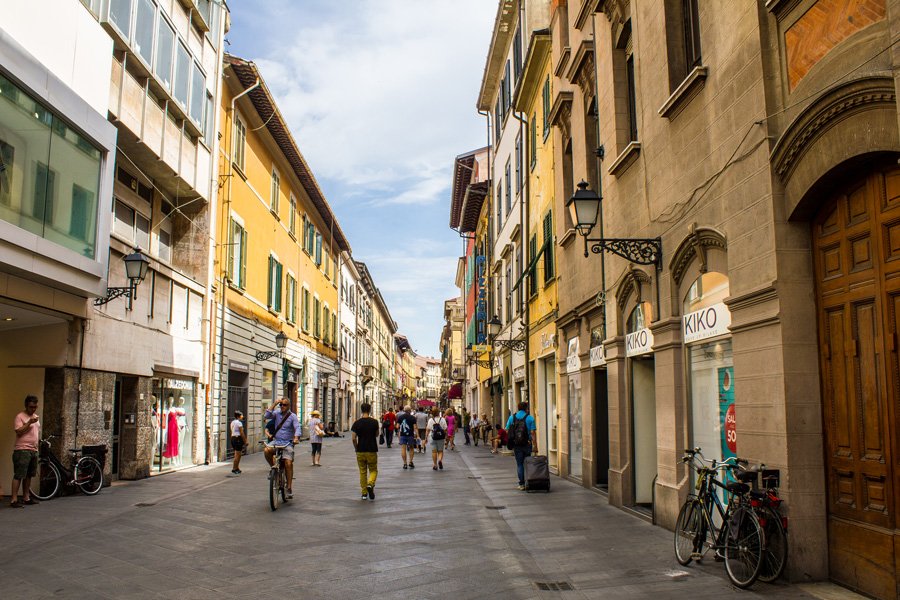
By comparison, here’s what a pedestrian street looks like in the non-US city I grew up in: https://sana.ae/wp-content/uploads/2020/04/Corso-Italia-Stre...

Keep in mind that cars are still allowed for emergency services and (night time) deliveries. But the difference is night and day.

This is exactly what “the US can't imagine itself without cars” means to me.

Re: Changes since congestion pricing started in New York

#475
post #13

Earlier quoted context omitted.

I lived in Manhattan, and was very well paid. I did not own a car, and loved it. This would have been great for me as well.

Did you have children or did you live alone?

> Did you have children or did you live alone?

With regards to children, some couples do have them and concluded that a car in the city is not worth the hassle; famous example:

* https://www.instagram.com/cargobikemomma/

* https://www.youtube.com/watch?v=5PoKcQRlDGs (interview)

Car share would also be handy in some situations. Or even going from two cars to one.

Re: Changes since congestion pricing started in New York

#476

Earlier quoted context omitted.

In Japan there are almost only private buses. many are run by and around the private train companies as a way to get their trains to be more useful to more people like when a 25 minute walk from the closest station is a 10 minute bus ride and the busses come often enough to be convenient

The train companies in Japan, while private in name, can only be described as hybrid. They have massive gvmt concessions for land to build their malls and make profit. The gvmt also has a lot of direct and indirect influence on them (and the other way around). In fact I'm literally now in one cafe in one of those malls, I haven't used the train today but still a part of my money goes to the train company thanks to th…

Yeah, the big JR (Japanese Railways) companies that were created when the JNR (Japanese National Railways) state owned company was privatized really do seem to operate in some form of hybrid way - not really either private or public/state owned.

But its also important to note there are other still big but much more private players like Kintetsu, Hankyu, Keio or Tobu that also follow the same playbook - having not just rail lines but also malls, hotels and other businesses, like: * cableways (like the Kintetsu Beppu Ropeway) * zoos (Tobu Zoo) * theaters (Takarazuka Revue - all-female musical theatre troupe based in Takarazuka - a division of the Hankyu Railway company - all members of the troupe are employed by Hankyu)

And you can see this replicated on the smallest level - when we went to Izumo, we found out the Ichibata company does not just run the line to the Izumu shrine, but also owns a hotel next to the Izumo station, runs local buses and even runs the gift shop in the Izumo museum. :)

I think this can to a degree explain why public transport is so well connected with other services in Japan & why the stations are clean and convenient - it has a direct benefit for all the many side businesses the public transit companies have.

Re: Changes since congestion pricing started in New York

#477

Earlier quoted context omitted.

> Converting all of NYC into a huge pedestrian-only zone obviously isn't going to work The dreamer in me immediately asks “why not?” and while I agree it will never happen, it felt good to imagine it.

How do you get all the food in? Manhattan is an island. Without constant food deliveries by truck it will die. This food is delivered to countless restaurants and grocery stores, not to some central warehouse, so delivery by train doesn't work.

[deleted]

Re: Changes since congestion pricing started in New York

#478

Good luck New York. In London it is now just a toll. It started off at just the busiest times but now you need to pay it 24/5, and even on Saturday and Sunday afternoons when there is no rush hour. Not only have the hours expanded, but so has the size of the zone. So now even right out in the suburbs you need to pay if you drive a diesel but I fully expect them to include petrol cars, then eventually all EVs too. The…

I've never understood what people mean when they say public transportation is "dirty". I've never had to sit or stand in or near muck or sick or anything like that. If there's a bit of grime in the corner or animals or something... Okay? I don't have to touch any of that. I care about as much as getting onto a slightly groady amusement park ride, or seeing bugs or squirrels in the park; it's not going to so traumatiz…

> I've never understood what people mean when they say public transportation is "dirty".

They are forced to share air with obviously poor and non-white people and that is simply intolerable...

One of the biggest adjustments I went through in moving from SF to London was accepting that busses were a viable mode of transit for any time of day. In SF I would crawl over broken glass to avoid having to take a Muni bus while in London my wife and I have taken a bus in dinner jacket and couture dress to an event at a club. There will doubtless be people to chime in with examples of bus systems that are better, but TfL busses are not 'awful and unreliable and slow and dirty and just terrible' by any possible metric.

Re: Changes since congestion pricing started in New York

#479
post #325

Earlier quoted context omitted.

Lots of places in the world run public bus systems - it seems by far the most common to me. It's hardly a thing of 'socialism' (always a bad word on HN).

I don't know about Chile, but I think the issue isn't so much the system being public , as in run by some form of government. Rather, the issue is in how "socialists" tend to run systems: everything is great until they run out of other people's money. Now, I'm not in the "free market will solve all our woes" camp, either, especially when it comes to what we call "public service" in France. Over here, transit systems…

Look, if you're that uninformed, why bother commenting at all? Especially if you're in France, your takes on what constitutes socialism are weird to say the least.

SNCF operate those unprofitable routes in the middle of nowhere only because they get told and paid to do so by the state (Intercités) or the regions (TER). Private operators can bid to operate those routes too, and some do (soon Keolis, an SNCF subisdiary operated as a private company, will operate the first non-SNCF TER network).

Besides that, any operator with a license can apply to operate any route they deem profitable. And so far this has been a roaring success, with Trenitalia on Paris-Lyon (and now Marseille) and Paris-Milan being better and cheaper than SNCF. SNCF added low cost (Ouigo) trains on multiple popular routes mainly because they knew competition is coming (postponed by Covid), they probably wouldn't have bothered otherwise. This is a win-win-win for the average user.

The services that need to be maintained will be, regardless of who is the operator. Some of the profits of the private operators will pay for them (because they pay for network access, which covers the costs of the infrastructure + profit margin).

Re: Changes since congestion pricing started in New York

#480
post #472

Earlier quoted context omitted.

It's curious but unsurprising that privatization of public transport is considered an answer to congestion when existence of good (or great) public transport is the working answer one can find in many places around the world. When I visited NYC two years ago, I was blown away by how unbelievably bad public transport infrastructure is. The most flabbergasting thing was the absence of Metro ring lines around the center…

The decline public transportation, in my view, reflects a shift in priorities within the Democratic Party. Back in the 1990s, Democrats were more focused on tangible public services—things like infrastructure, roads, transit systems. Today, the emphasis seems to have moved toward issues like environmental policy, DEI, and gender identity. As someone who’s deeply frustrated by the lack of progress on projects like hig…

> So I just think: screw it, I’m a Republican now.

Complain and vote all you want but the best way to fix the government is to become the government.

Post reply on HN