Drummond adds: We cannot say this more clearly—the government does not have access to Google servers—not directly, or via a back door, or a so-called drop box. Nor have we received blanket orders of the kind being discussed in the media. It is quite wrong to insinuate otherwise. We provide user data to governments only in accordance with the law. Our legal team reviews each and every request, and frequently pushes ba…
Eric Schmidt: CNET gets it right on the NSA/Google issue
41–50 of 82 posts
Re: Eric Schmidt: CNET gets it right on the NSA/Google issue
#42Earlier quoted context omitted.
Google Chief Legal Officer: "the government does not have access to Google servers—not directly, or via a back door, or a so-called drop box" https://plus.google.com/+google/posts/TMh6gUVrwMq
Nobody said they have access to Google servers. We are worried about what data google to sending them (by whatever means).
What are you talking about? Almost every story reporting on this originally said that. The Washington Post backed down, but the originating reporter is still quoting some NSA source(s) as saying it:
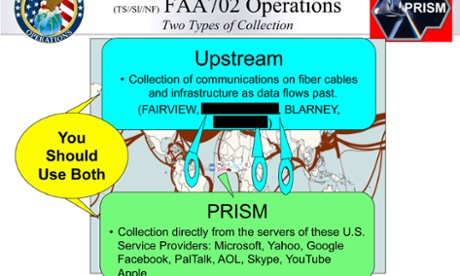
'Just one more time: NSA on PRISM: "Collection directly from the servers of these US service providers: Microsoft, Yahoo, Google, Facebook.."'[1]
[1] https://twitter.com/ggreenwald/status/343423727066824705
Re: Eric Schmidt: CNET gets it right on the NSA/Google issue
#43Eric Schmidt would be the last person I'd believe on matters related to privacy. He's well-known for basically claiming that we're not entitled to any privacy ("if you don't want anyone to know blah blah ... ") and for later being a vindictive fool when CNET published some of his personal details found through Google. Besides, he's not even CEO anymore, why would he know anything about highly confidential dealings wi…
Whether you trust Eric or not has zero to do with if you trust CNet's claim that "The National Security Agency has not obtained direct access to the systems of Apple, Google, Facebook, and other major Internet companies, CNET has learned." Inferring he is no longer CEO and might not know about these matters is just an informal fallacy and has zero to do with whether or not Google, Facebook, etc. is telling the truth…
What have they done to earn your trust so that you believe them?
In matters of espionage and mass surveillance, I expect lying to be the default response for the government and corporate players involved.
Re: Eric Schmidt: CNET gets it right on the NSA/Google issue
#44Eric Schmidt would be the last person I'd believe on matters related to privacy. He's well-known for basically claiming that we're not entitled to any privacy ("if you don't want anyone to know blah blah ... ") and for later being a vindictive fool when CNET published some of his personal details found through Google. Besides, he's not even CEO anymore, why would he know anything about highly confidential dealings wi…
Whether you trust Eric or not has zero to do with if you trust CNet's claim that "The National Security Agency has not obtained direct access to the systems of Apple, Google, Facebook, and other major Internet companies, CNET has learned." Inferring he is no longer CEO and might not know about these matters is just an informal fallacy and has zero to do with whether or not Google, Facebook, etc. is telling the truth…
Re: Eric Schmidt: CNET gets it right on the NSA/Google issue
#45Earlier quoted context omitted.
Google Chief Legal Officer: "the government does not have access to Google servers—not directly, or via a back door, or a so-called drop box" https://plus.google.com/+google/posts/TMh6gUVrwMq
Nobody said they have access to Google servers. We are worried about what data google to sending them (by whatever means).
Re: Eric Schmidt: CNET gets it right on the NSA/Google issue
#46From Glenn Greenwald's twitter, https://twitter.com/ggreenwald : Allow me to quote from the NSA document we just published defining PRISM: "COLLECTION DIRECTLY FROM THE SERVERS" Our story was written *from the start* to say NSA claimed this, telecoms deny-we wanted them to have to work it out *in public* what they do We reported - accurately - what the NSA claims. We reported - accurately - what the companies claim.…
edit: It's just one new slide (http://static.guim.co.uk/sys-images/Guardian/Pix/pictures/20...) which says "directly from the servers"...but since Google is ostensibly arguing that the slides are poorly worded, hopefully the Guardian believes the other unreleased slides elaborate? The blog post ends with "A far fuller picture of the exact operation of Prism, and the other surveillance operations brought to light, is expected to emerge in the coming weeks and months...", which means that they will be releasing bombshell by bombshell, or that they think other revelations will be independently reported?
(original comment below:)
I immensely respect Greenwald, but he's setting up presumptions for his reporting that make it unassailable, no matter what the facts are.
1. Our reporting is accurate.
2. The fact that the companies involved deny it is proof that our reporting is accurate, because our reporting said that they would deny the report.
3. Therefore, our reporting is accurate.
It's possible that the reporting is accurate on its face, but the most relevant details (i.e. the ones that would separate this from, egregiously and surprisingly evil to, well, just more of the same) were not reported correctly. Has either the Guardian or the WaPo released the entire slide set?
Re: Eric Schmidt: CNET gets it right on the NSA/Google issue
#47From Glenn Greenwald's twitter, https://twitter.com/ggreenwald : Allow me to quote from the NSA document we just published defining PRISM: "COLLECTION DIRECTLY FROM THE SERVERS" Our story was written *from the start* to say NSA claimed this, telecoms deny-we wanted them to have to work it out *in public* what they do We reported - accurately - what the NSA claims. We reported - accurately - what the companies claim.…
Re: Eric Schmidt: CNET gets it right on the NSA/Google issue
#48From Glenn Greenwald's twitter, https://twitter.com/ggreenwald : Allow me to quote from the NSA document we just published defining PRISM: "COLLECTION DIRECTLY FROM THE SERVERS" Our story was written *from the start* to say NSA claimed this, telecoms deny-we wanted them to have to work it out *in public* what they do We reported - accurately - what the NSA claims. We reported - accurately - what the companies claim.…
edit: doh, I misread the tweet. Looking over the new slides at that story just posted http://www.guardian.co.uk/world/2013/jun/08/nsa-surveillance... edit: It's just one new slide ( http://static.guim.co.uk/sys-images/Guardian/Pix/pictures/20... ) which says "directly from the servers"...but since Google is ostensibly arguing that the slides are poorly worded, hopefully the Guardian believes the other unreleased slid…
He explicitly states in those tweets that he reported the claims of both sides, which he was fully aware were in conflict, in the hopes that the truth of the reality would come out.
Re: Eric Schmidt: CNET gets it right on the NSA/Google issue
#49Eric Schmidt would be the last person I'd believe on matters related to privacy. He's well-known for basically claiming that we're not entitled to any privacy ("if you don't want anyone to know blah blah ... ") and for later being a vindictive fool when CNET published some of his personal details found through Google. Besides, he's not even CEO anymore, why would he know anything about highly confidential dealings wi…
"But if you really need that kind of privacy, the reality is that search engines, including Google, do retain this information for some time. And it’s important, for example, that we are all subject in the United States to the Patriot Act. It is possible that that information could be made available to the authorities."
Re: Eric Schmidt: CNET gets it right on the NSA/Google issue
#50Does any government, US or otherwise, their agents, representatives, contractors or NGO's have access, directly or indirectly, through any means, to DATA, FILES, COMMUNICATIONS, LOGS or any other information having any relationship whatsoever to users?
This could be, and probably should be, refined, IANAL.
The point is simple: We don't care about "direct access to servers". We care about access to data. And this can be provided through many channels, direct and indirect. It can even be provided via daily tape backup dumps. Of course, it can be provided to organizations peripherally working for or with a government yet not directly to a government agency. And, finally, it could be provided to another government that, in turn, can pipe it back to US governnment agencies or collaborators.
Anyone can say "The US government does not have direct access to our servers" while still feeding them a firehose of information through alternative means.