Live data from Hacker News

IPhone Will Fail in a Late, Defensive Move (2007)

bloomberg.com

31–40 of 59 posts

Re: IPhone Will Fail in a Late, Defensive Move (2007)

#31
post #27

Earlier quoted context omitted.

> My phone has never, ever, ever had a privacy issue... Has everyone forgotten about CarrierIQ?

That was on a small subset of phones and was placed on by specific carriers and manufacturers. But yes, I did forget.

I seem to remember it was on most Android phones, and sent quite a lot of data back to the carriers.

Re: IPhone Will Fail in a Late, Defensive Move (2007)

#32

Earlier quoted context omitted.

> let's not forget that it brought about a "touch-revolution." And let's not forget that when the iPhone was released it was not the first app enabled touch screen phone. I would say that Palm did just as much (if not more) for the touch revolution. It just did it in a bit more clunky way. The iPhone brought the sexy into the mix.

there were a lot of touch devices pre iphone. I owned the nokia 770 http://en.wikipedia.org/wiki/Nokia_770_Internet_Tablet around 06 and sony p900 around 04 http://en.wikipedia.org/wiki/Sony_Ericsson_P900 . The biggest difference was the capicitive screen vs resistive screen and the requirement of a stylus for most things.

I remember being very excited about these devices (and others like the Treo) before they were released, then invariably found myself profoundly disappointed (or at the very least underwhelmed) when I actually got my hands on one.

None of them really succeeded in delivering anything more than an iPaq or a Palm Pilot and a mobile phone awkwardly squashed together in an ugly package, and they all required you to use a stylus that all-too-frequently got lost or broken. In the case of the 770, it didn't even have a phone! (To be fair though, in its favour it was the first device I saw that had a really good mobile web browser app).

Until the iPhone, "smartphone" really meant putting "groupware" [1] functionality in a mobile phone, and just having an Outlook-a-like on a phone clearly wasn't appealing enough for the mass market: in fact it was just downright boring...

The biggest difference with the iPhone aside from the capacitive touch was that it delivered an excellent mobile web browser alongside a reasonably decent phone, and all that other stuff was just an afterthought.

In retrospect I'm amazed that nobody else realised that the web - the same technology that transformed the internet from a niche technology into a must-have in the mid-90's - was the killer app for a smartphone (As I alluded to above though, kudos to Ari Jaaksi's team for at least trying with the N770 etc., even though the rest of Nokia seemed to be utterly clueless).

[1] http://www.jwz.org/doc/groupware.html
Re: IPhone Will Fail in a Late, Defensive Move (2007)

#33

Hindsight, of course, is 20/20--but to be fair to this journalist, there were some very real reasons to think the iPhone wouldn't really succeedn (at least not in an industry shifting way). At the time, the carriers maintained almost full control over the whole ecosystem and if entrenched players like Nokia couldn't force their hand on anything, what reason did people have to believe Apple could? Moreover, the initia…

I think the simultaneous rise of successful social networks like Facebook played an incredibly large role in making people want to have the Internet with them all the time.

Re: IPhone Will Fail in a Late, Defensive Move (2007)

#34
Keep in mind this was right after the iPhone announcement. Although he lays it on a bit thick with the "Apple cult" nonsense, it's understandable given the extreme level of hype at the time. The analysis of the state of the industry was good, and really it's an amazing accomplishment that the iPhone was good enough that none of the powers that be could stop it.

The only part where he goes off the rails is this:

> Lastly, the iPhone is a defensive product. It is mainly designed to protect the iPod, which is coming under attack from mobile manufacturers adding music players to their handsets.

This is just a blatant misunderstanding of how Apple operates that anyone could have refuted in 2005, 2000, 1995 (maybe not quite as strongly here), 1990, or 1985. The potential of the iPhone as a smartphone was obviously a lot more than a simple music player even if its feature set seemed weak compared to Blackberry.

Re: IPhone Will Fail in a Late, Defensive Move (2007)

#35
post #30

Earlier quoted context omitted.

there were a lot of touch devices pre iphone. I owned the nokia 770 http://en.wikipedia.org/wiki/Nokia_770_Internet_Tablet around 06 and sony p900 around 04 http://en.wikipedia.org/wiki/Sony_Ericsson_P900 . The biggest difference was the capicitive screen vs resistive screen and the requirement of a stylus for most things.

Let's not forget a number of PocketPC touch (stylus) devices were also phone-capable. That was YEARS before the iPhone. It had "apps" too, but we simply used to called that "programs" at that time. And there was no central market/appstore or anything. Most of these devices were very open.

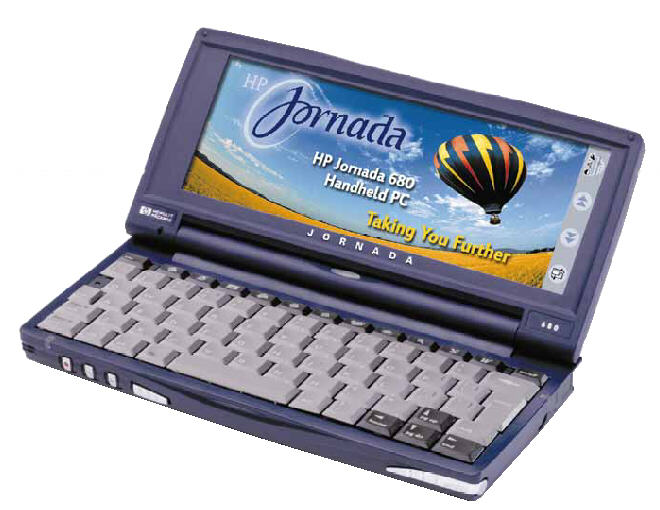
The interface on those was more of a barely usable desktop experience, that happened to use a stylus. You could not call it a "touch interface". My brother had a HP Jornada, and while he used through college, it was kind of sucky. It ran Doom, though.

http://www.pocketpcfaq.com/wce/21/jornada680.JPG

Re: IPhone Will Fail in a Late, Defensive Move (2007)

#36

Keep in mind this was right after the iPhone announcement. Although he lays it on a bit thick with the "Apple cult" nonsense, it's understandable given the extreme level of hype at the time. The analysis of the state of the industry was good, and really it's an amazing accomplishment that the iPhone was good enough that none of the powers that be could stop it. The only part where he goes off the rails is this: > Las…

It was both "defensive" and "offensive". Rather than standing still milking profits of the iPod until the entire market slowly dwindles as other mobile devices begin to incorporate music players as well, Steve Jobs moved onto the next thing with one foot firmly planted in the portable music player.

It was exactly how Steve Jobs operates, from the Apple II to the Macintosh (personal computer), from the Mac to the iPod (hardware + software), from the iPod to the iPhone (mobile device, battery). All transitions were done from positions of strength, stride to stride.

Re: IPhone Will Fail in a Late, Defensive Move (2007)

#37

When you get past the author's ridiculous pooh-poohing of Apple's products, the actual analysis of the cell phone industry that he quotes is pretty well right on the mark and sadly still applies to the industry in 2012. While the iPhone 1.0 lagged well behind established smart phones like the BlackBerry in a lot of areas, the iPhone was revolutionary in its overall quality, its user interface, and its web browser. It…

"Nobody would have predicted that in January 2007." To be fair, plenty of people did. Plenty of people didn't, of course: http://tech.fortune.cnn.com/2008/10/22/revisiting-the-dumbes... The fact that so many people couldn't wrap their heads around the iPhone's success is rather shameful. Sure, there's a lot of solid reasons why there was plenty of friction and many hurdles, but at the end of the day money is supreme.…

I think it's forgiveable, the success just didn't seem obvious until you touched one of them. I remember being unimpressed by the iPhone until I actually used it. And then I opened the browser and that was it for me, that was my a-ha! moment.

Re: IPhone Will Fail in a Late, Defensive Move (2007)

#38
post #35
post #30

Earlier quoted context omitted.

Let's not forget a number of PocketPC touch (stylus) devices were also phone-capable. That was YEARS before the iPhone. It had "apps" too, but we simply used to called that "programs" at that time. And there was no central market/appstore or anything. Most of these devices were very open.

The interface on those was more of a barely usable desktop experience, that happened to use a stylus. You could not call it a "touch interface". My brother had a HP Jornada, and while he used through college, it was kind of sucky. It ran Doom, though. http://www.pocketpcfaq.com/wce/21/jornada680.JPG

I disagree. Those devices were very usable but, of course, you needed 2 hands to do anything with them. You could do a lot of stuff with it, and a number of apps were way more advanced than what you see on android and ios nowadays. The finger interface has got much better, but a stylus was way more precise for many purposes. The surface covered by a finger induces great limitations to the interfaces you can create. There's no miracle.

Re: IPhone Will Fail in a Late, Defensive Move (2007)

#39
Clearly these people did not see the same Jan 2007 demo that I did. Grown men were going apeshit in the audience and millions around the world were glued to their computer frantically refreshing live blogs. My entire office officially stopped working to "watch" the keynote. Hundreds of thousands were already talking about dropping Verizon for the iPhone. Hindsight is 20/20, but no one in their right mind would've predicted it would fail. Apple sealed the deal when they finally subsidized the iPhone in Sep 2007.

Re: IPhone Will Fail in a Late, Defensive Move (2007)

#40
post #19

Earlier quoted context omitted.

> What about iOS feels ahead of it's time? -iOS doesn't crash as often as Android -iOS doesn't have nearly as many security/privacy issues/virus/spyware -iOS is not(as) fragmented like Android -iOS is faster (no lags) and not as buggy as Android -iOS developer and user support way better than Android -iOS ecosystem/app market way better than Android -iOS user interface is simpler/easier to use/more straightforward th…

I struggle to think of a single time Android has crashed on me. The iOS browser, on the other hand, crashed 3 times in my first day with an Apple device. But the primary reason I use Android is that it has features iOS doesn't; proper cross-app integration with intents, a replaceable launcher, a user accessible file system and best of all, I never have to deal with iTunes. I absolutely loathe iTunes. I've never had p…

User accessible file system? Are you kidding me? It's one of the great things to get rid of this thing. I see no advantage in there. Especially on mobile devices. Only another thing to understand and handle to get things done.
Post reply on HN