Live data from Hacker News

Pascal's Mugging (2009) [pdf]

nickbostrom.com

31–40 of 71 posts

Re: Pascal's Mugging (2009) [pdf]

#31

I don't know the background to this but if I understand correctly, it kind of pivots on the probability that the mugger is indeed an Operator from the Seventh Dimension, that Pascal places at 1 in a quadrillion. In that case, I have to wonder where this estimate comes from? I get that it's just an arbitrary number and that any number would do, as long as it wasn't zero, but that's exactly the point: why can't Pascal…

If you set the probability at zero, you won't be convinced when they actually are an operator from the seventh dimension. That is to say, you run into the opposite problem of being Pascal's Muggle [1]. 1: https://www.lesswrong.com/posts/Ap4KfkHyxjYPDiqh2/pascal-s-m... > A wind begins to blow about the alley, whipping the Mugger's loose clothes about him as they shift from ill-fitting shirt and jeans into robes of inf…

In no particular order:

* Helping a googleplex of people immediately vs over a period of time are two different complexities of action.

* Recall that hypotheses are selected from an ambient pool of possibilities. Then we might imagine that some hypotheses dominate others, so that regardless of how much evidence is offered, we always insist that the evidence supports a simpler alternative. To wit:

"Well, if I'm not a Matrix Lord, then how do you explain my amazing powers?" asks the Mugger.

"Street magic," you say. "Very impressive sleight of hand. Perhaps some smoke, mirrors, lasers, assistants."

* A Matrix Lord asking $5 of a person on the street in order to commit miracles is inherently irrational. If they just wanted $5, or wanted to deprive the person of $5, or wanted to humiliate and embarrass the person, or force them to accept certain philosophical truths, then those all could be achieved via Matrix Lordery. Therefore the Lord in this story is being a pointless dick, and it's silly to expect rational arguments to be part of the conversation. To wit:

"Just give yourself $5. Give yourself any reward you like, for helping people; it's not my place to set or fulfill the price of such powerful entities, is it?" you ask.

"But...but don't you want the feeling of doing good?" asks the Mugger.

"Not really, no," you reply. "I have investments and equity already, and those dollars already have ripples that affect people far beyond my direct control. I don't feel much of anything about those investments. And it would be irrational for me to value a $5 investment more than $5. Really, if you can do all of this good, then you should turn yourself into an exchange-traded fund, and let people buy your time to do good in the world," you muse.

"But...but this offer is for you, and you alone," the Mugger insists.

"Okay, but why me? Let's talk about the Self-Sampling Assumption!" you say. The Mugger groans.
Re: Pascal's Mugging (2009) [pdf]

#32

I don't know the background to this but if I understand correctly, it kind of pivots on the probability that the mugger is indeed an Operator from the Seventh Dimension, that Pascal places at 1 in a quadrillion. In that case, I have to wonder where this estimate comes from? I get that it's just an arbitrary number and that any number would do, as long as it wasn't zero, but that's exactly the point: why can't Pascal…

Why, instead of the probability being 0 or 1 in a quadrillion, is the probability not simply undefined?

Maybe I am not well-versed in Bayesian thinking, but I am unable to understanding assigning probabilities to events that have not occurred before, and to which there is no related numerical data.

Making the probability of Pascal's number being undefined renders any calculation of the risk involved null and solves the problem, while making it possible for future evidence to assign a defined probability (say you were previously approached by 10 Pascal's muggers and 2 turned out to be telling the truth).

Re: Pascal's Mugging (2009) [pdf]

#33

I don't know the background to this but if I understand correctly, it kind of pivots on the probability that the mugger is indeed an Operator from the Seventh Dimension, that Pascal places at 1 in a quadrillion. In that case, I have to wonder where this estimate comes from? I get that it's just an arbitrary number and that any number would do, as long as it wasn't zero, but that's exactly the point: why can't Pascal…

If you set the probability at zero, you won't be convinced when they actually are an operator from the seventh dimension. That is to say, you run into the opposite problem of being Pascal's Muggle [1]. 1: https://www.lesswrong.com/posts/Ap4KfkHyxjYPDiqh2/pascal-s-m... > A wind begins to blow about the alley, whipping the Mugger's loose clothes about him as they shift from ill-fitting shirt and jeans into robes of inf…

I would agree, that is not enough evidence. Some sort of advanced display technology causing the apparition provides the exact same explainability, and would require no changes to our understanding of the universe and the laws of physics.

Re: Pascal's Mugging (2009) [pdf]

#34
post #15
post #8

Earlier quoted context omitted.

I have noticed this pattern before: Someone mentions a topic deep inside a thread on HN and next thing you know that topic is on the front page.

It could also be confirmation bias, though. The Baader-Meinhof thing.

Looking forward to seeing the Baader-Mainhof phenomenon on the front page later today or tomorrow.

Re: Pascal's Mugging (2009) [pdf]

#35
post #20
post #13

Earlier quoted context omitted.

Yes, but it is still not trivial to formalize mathematically without running into trouble: https://www.lesswrong.com/posts/a5JAiTdytou3Jg749/pascal-s-m...

It is pretty simple to formalise - if there is a pool of people who routinely accept positive-expected-value gambles where there is a P = 99.999999999% chance of going broke then we expect everyone in that pool will be broke unless the size of the pool is comparable to 1/(1-P). Tighten up the bounds on 'comparable' a bit and that is formalised. The mistake is accepting uncritically that expected value is the best met…

You need to maximize expected utility. In order to avoid this, you need utility to be bounded: there must be some multiple of your current utility that's impossible to ever have regardless of what happens.

Re: Pascal's Mugging (2009) [pdf]

#36
post #15

Earlier quoted context omitted.

It could also be confirmation bias, though. The Baader-Meinhof thing.

Looking forward to seeing the Baader-Mainhof phenomenon on the front page later today or tomorrow.

I only had to wait for the next comment.

Re: Pascal's Mugging (2009) [pdf]

#38
post #11

Paradoxes such as this one point at some rarely discussed assumptions about the utility function. The major one is that it exists. Or exists as something more than a model which is only good for a range of payoffs.

The point of paradoxes like this is to demonstrate that even in our incredibly simple toy models of agents, we still run into issues. These paradoxes help point out weaknesses of the models and act as new desiridata for better models.

Re: Pascal's Mugging (2009) [pdf]

#39

Earlier quoted context omitted.

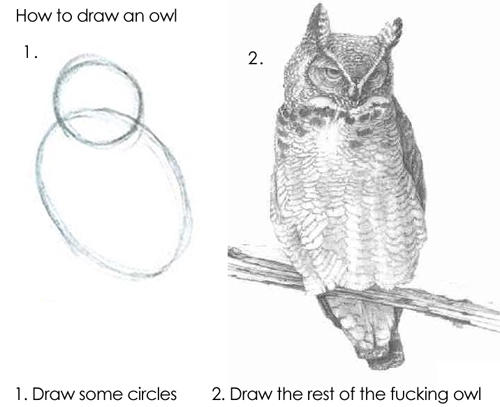
What owl?

reddit.com/r/restofthefuckingowl

Linking to examples of the meme without linking the actual meme doesn't really explain what "draw the rest of the owl" means. https://i.kym-cdn.com/photos/images/newsfeed/000/572/078/d6d...

Re: Pascal's Mugging (2009) [pdf]

#40

In case someone is not familiar with Pascal's wager , here is a table that shows the expected values: https://en.wikipedia.org/wiki/Pascal%27s_wager#Analysis_with... (the appearance of infinity breaks the decision theory...)

Pascal's Wager fails for the simpler reason that it ignores the possibility that believing in god could send you to hell. I see a similar problem here. Pascal should consider the possibility that the mugger will use his (Pascal's) silly action as the basis for punishment, in place of the promised reward. Slim probability, potentially very high cost. The fact that this risk has gone unstated doesn't mean it isn't ther…

I agree. This problem is still useful though, because to analyse a lot of counterfactual muggers, you must be able to analyse one mugger!
Post reply on HN