Live data from Hacker News

Rooms can be as bright as the outdoors

benkuhn.net

291–300 of 317 posts

Re: Rooms can be as bright as the outdoors

#291

> For instance, cancer progresses much faster in summer than in winter [edit: cancer progresses much faster in constant light: winter vs. summer is complicated] I don't know you, you make a very successful app that people really swear by. I have no qualms about people using f.lux, if you want to take your $4,600 laptop and $1,400 phone, on which people spent decades perfecting color reproduction, and you're paying $1…

You can't post in the flamewar style like this to HN, and we ban accounts that do it. Would you please review https://news.ycombinator.com/newsguidelines.html and stick to the rules when posting here? Note this one: Have curious conversation; don't cross-examine.

We detached this subthread from https://news.ycombinator.com/item?id=21661852 and marked it off-topic.

Re: Rooms can be as bright as the outdoors

#292

> For instance, cancer progresses much faster in summer than in winter [edit: cancer progresses much faster in constant light: winter vs. summer is complicated] I don't know you, you make a very successful app that people really swear by. I have no qualms about people using f.lux, if you want to take your $4,600 laptop and $1,400 phone, on which people spent decades perfecting color reproduction, and you're paying $1…

I'm just commenting to save what might be the saltiest comment I've ever seen on HN. I bet you're very fun at parties.

Please don't cross into personal attack, even if another comment was bad for HN.

https://news.ycombinator.com/newsguidelines.html

Re: Rooms can be as bright as the outdoors

#293
this is a cool idea, but, the "is this bad for the planet" question seems like it's saying it isn't, but the comparison seems to indicate that actually it's quite bad for the planet, like very bad as far as lifestyle choices go? not to say that alone makes it a bad idea to do, but that a sane society would make buildings that capture and use more sunlight from the actual sky.

Re: Rooms can be as bright as the outdoors

#294
post #19

Earlier quoted context omitted.

When it gets dark by 3:30pm and there’s so much cloud cover it never gets past dusk, you’ll appreciate the crutches. Biggest downside to living in seattle atm.

You exaggerate. Seattle looks bright compared to half of Europe. Compare the sunset times with London, Copenhagen, Oslo. You had 1½ hours more daylight today than Copenhagen.

Compared to Copenhagen sure. I’m from California - the lack of daylight is not something I’m used to at all.

Re: Rooms can be as bright as the outdoors

#295

Earlier quoted context omitted.

Ugh yeah I wanted to kill myself more and more every year I spent in Seattle. Moved somewhere sunnier and that urge just vanished .

Yup. Half my life is now managing that problem. I’ve gotten better at it but I really do need to move somewhere sunnier, especially for the winter.

A 2’ square sun lamp from the Indoor Sun Shop helped but only so much.

Re: Rooms can be as bright as the outdoors

#296
post #155

Earlier quoted context omitted.

Have you considered manufacturing f.lux for home lighting, such as a wall-mounted controller for Hue or Ikea bulbs that changes color spectrum depending on time of day? Or possibly bulbs with f.lux build in, so no external controller is required?

YES YES YES. I've been looking for a hardware solution to this problem so long. I would kill to have like a programmable dimmer knob that can progressively adjust both temperature and power set to a fixed temperature and power at start (ie: 3750k at 100%) and finish (ie: 2500k at 10%) positions then it auto-calculates the right spot in-between. Does anyone know if I could do this on a Pi?

Phillips makes a bulb that does this with those temperatures almost on the mark. I put them in every fixture in my home and got lutron casetta smart dimmable switches. Drops to 50% at sunset and 20% at bedtime.

Re: Rooms can be as bright as the outdoors

#297
post #259

Earlier quoted context omitted.

Not sure if it generalizes. And if it does, not sure if it does do all ADDs: I'm ADHD without the Hyperactive component, subclinical, ADD or (ADHD-PI or Inattentive-ADHD more precisely). Or with the H component purely mental/internal, which kind of sucks because you get the "benefits" of ADHD plus a higher propensity to slide into an unhealthy ultra-sedentary lifestyle.

That too seems familiar. I'm not sure if I am hyper or not I used to be but I think I outgrew it finally but it took decades. The ultra-sedentary lifestyle seems very accurate. I make a plan for example study for my CCNA and here I am six month later finally doing it. This is with daily reminders to myself, set alarms, notes, collecting study material etc. not just thinking but some prep. And when I am in the zone I…

then sharing what helped me a lot: (1) forcing yourself to do physical exercise: running + gym + ~ twice a month mountain hiking works for me, (2) drop ALL refined sugars (caffeine and other stuff can stay, even some alcohol, but NO SUGAR!) [after ~3 months of (1) + (2) your brain will be totally reshaped and waay better performing], (3) probably the most important: build external accountability - like in make sure there are friends/lovers/family/clients/employees/etc. that know about your goals like "study for my CCNA" and will shame you, hold you accountable or even sue you for failing to do what you said you'll do, (4) meditation (mindfulness) - it's important to get it that when you feel the absolute least inclined to meditate and you couldn't stand doing it is when you most actually need it and you'll get the biggest benefit from it, and (5) a general more "stoic" attitude of accepting that "life is pain" and of "learning to love the types of pain that lead to growth and development"... for me mostly the pain of forcing myself to finish stuff and to stay-on-track instead of goind sideways or starting something new again and again.

Re: Rooms can be as bright as the outdoors

#298
post #126
post #66

Earlier quoted context omitted.

The blue sky's spectrum doesn't have a giant spike like this: https://www.benkuhn.net/img/lux/ledspec.png

Yes it does! A giant spike in the blue region is literally what makes the sky blue in the first place. If there weren't such a spike the sky would be white. When you look up at the sky on a typical clear day, you're getting more blue light than almost any one of these indoor setups.

I see your point, I was thinking of daylight in general. But even the blue sky is not quite as spiky:

https://en.wikipedia.org/wiki/Diffuse_sky_radiation#/media/F...

If you look at 460-470 nm where the spike is in the LED spectrum, it's much lower in the blue sky spectrum.

I think the concern is something about the relative amounts of blue light. Not sure what exactly but something like, the human perception of brightness and therefore the self protection of the eye is calibrated for natural light, so the pupil contraction, looking away, etc, is not done correctly in with that unnatural distribution. Anyway I don't know if that's a real effect, but that's what people (should) mean when they're talking about "too much blue".

Re: Rooms can be as bright as the outdoors

#299

Earlier quoted context omitted.

Exactly. 24h 50m is the average I calculated after tracking my sleep for over a year. On average, the time that I wake up and go to sleep gets later by 50 minutes each day relative to a 24 hour day . I'm currently waking up around 2am local time. In two weeks, I'll be waking up around noon. If I lived on Mars, where the day length is 24h 37m, I would feel right at home (aside from the lack of breathable air).

Could you please briefly explain the way you cam calculate your cycle based on average time sleeping? I have to get up using alarms at times that are not related to how my body is feeling about waking up, so I don't see how tracking that would help. I tend to start sleep later and later until I reach some dynamic equilibrium between sleep deprivation due to fixed wake up times and the tendency to delay sleep onset.

I almost never use an alarm anymore - there's no need to, my body knows exactly when to wake up because of my circadian rhythms (that's the way humans were supposed to work after all - we didn't evolve to use alarm clocks). Of course, the time my body "knows" to wake up is almost an hour later than it should, and that's the whole problem.

The way I calculated the length of my circadian rhythm cycle wasn't by tracking the duration of my sleep, it was by tracking the exact time I naturally woke up every day. I then calculated the difference in the time I woke up each day (the daily "drift" in my sleep cycle). The median of those "drift" values turned out to be around 50 minutes, which means my sleep cycle is 24h 50m on average.

It might seem like not using an alarm clock would bias those measurements, but that's actually not the case. Even assuming the fact that I don't use an alarm clock makes me sleep in (it doesn't, but for the sake of argument), that would only effect the average time that I wake up every day, not the average drift in my sleep cycle. There are a number of other biases that would have to be accounted for if this was an actual study, but for my purposes that's accurate enough.

In reality, everybody has a different natural circadian rhythm cycle. If that cycle is close enough to 24h, then you'll have a "normal" sleep cycle. If it's long enough to cause insomnia / delayed sleep onset but your body can still "compensate" (that "compensation" mechanism is called entrainment in chronobiology), then that's called Delayed Sleep Phase Syndrome (I'm not a doctor, but that sounds like what you're describing). If your natural circadian rhythm cycle is so long that your body isn't capable of "compensating" to a 24h cycle, then that's called Non-24-Hour Sleep-Wake Disorder. Delayed Sleep Phase Syndrome is far more common than Non-24.

As for this point:

> I have to get up using alarms at times that are not related to how my body is feeling about waking up, so I don't see how tracking that would help.

I'm afraid tracking it didn't really help me at all - I simply tracked it because I was curious. My "solution" was simply to let my body do it's thing, but that's not an option for most people who have fixed work schedules or other commitments every day.

Re: Rooms can be as bright as the outdoors

#300
post #274

Earlier quoted context omitted.

Even on a cloudy winter day the sun's luminocity is about 20 times higher than a very bright phone display. My point is that it is not reasonable to assume a strong physical reaction if the artifical light is so much weaker. Note I'm not denying that there isn't a small effect! But it is probably dwarved in comparison to a change in eating habits, anti stress methods like meditation, sports and so on. > It's 100% a f…

Campfires are not artificial light. This is about blue light after all. You need to show some data to back your statements besides hand-waving all existing studies in one swoop.

Campfires are artifical as in they are not the sun, and people were exposed to their radiation for millenia. A fire obviously emits most of its electromagnetic radiation in the IR band, but it the emission goes down right into UV. This is not exactly rocket science, just point a UV/Vis spectrometer at a fire and see for yourself.

I'm not quite sure why you think I should provide data - I'm not the person postulating the effect of blue light. But anyway. You can find examples of the sun's illuminance all over the net, for example Wikipedia has a list here: https://en.wikipedia.org/wiki/Illuminance

Illuminance usually only covers the VIS part of the EM spectrum, so all of about 380-700nm. So 1/4 to 1/3 of that is the cold light part.

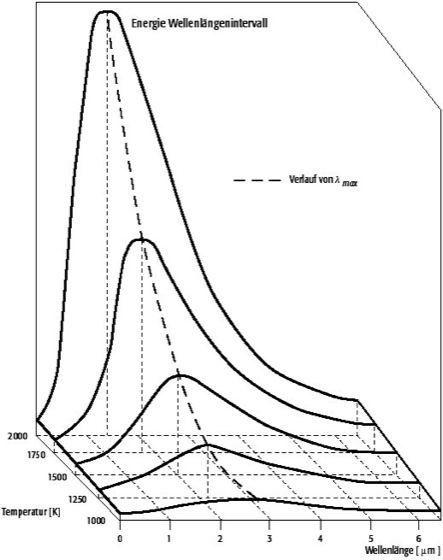
The radiation emmited from a heat source can be determined using Planck's law. A campfire is about 1400K. Here you can see that the higher the temperature, the more the maximum radion shifts into smaller wavelengths: https://www.spektrum.de/lexika/images/geo/f4f1653_w.jpg

So obviously the sun with about 6000k has way more UV and blue light parts, but a campfire is still hot enough that the absolute amount of blue light emitted trumps every phone screen. Yes, probably more than 95% will be IR, but than again the overall luminocity of a campfire is about 10kW.

For light therapy and winter depression I refer you to the excellent chochrane review: https://www.cochrane.org/CD011269/DEPRESSN_light-therapy-pre...

As to my criticisms regarding most studies about the effects of light: You can look them up yourself, most of them apply to the studies linked at f.lux's research links: https://justgetflux.com/research.html

For example the top two studies there:

"Exposure to Room Light before Bedtime Suppresses Melatonin Onset and Shortens Melatonin Duration in Humans" used 8h room light and didn't check for blue light at all. Neither did they look at actual sleep patterns.

"The human circadian system adapts to prior photic history" : 6.5h of exposure, no blue light specifically, only melatonin, no actual sleep measurments.

Again: I'm not the person making claims here. I would be delighted to see some proper studies showing the effects of blue light.

Post reply on HN