Campfires are artifical as in they are not the sun, and people were exposed to their radiation for millenia. A fire obviously emits most of its electromagnetic radiation in the IR band, but it the emission goes down right into UV. This is not exactly rocket science, just point a UV/Vis spectrometer at a fire and see for yourself.
I'm not quite sure why you think I should provide data - I'm not the person postulating the effect of blue light. But anyway. You can find examples of the sun's illuminance all over the net, for example Wikipedia has a list here: https://en.wikipedia.org/wiki/Illuminance
Illuminance usually only covers the VIS part of the EM spectrum, so all of about 380-700nm. So 1/4 to 1/3 of that is the cold light part.
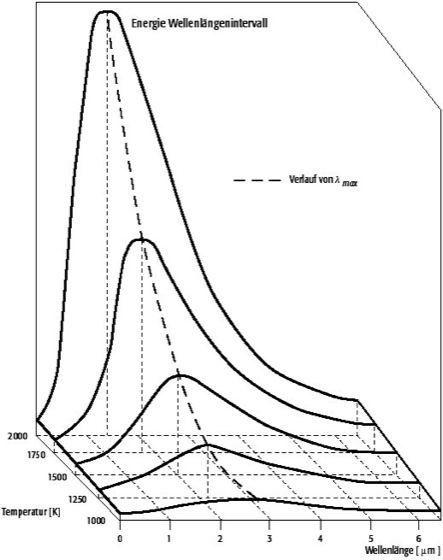
The radiation emmited from a heat source can be determined using Planck's law. A campfire is about 1400K. Here you can see that the higher the temperature, the more the maximum radion shifts into smaller wavelengths: https://www.spektrum.de/lexika/images/geo/f4f1653_w.jpg
So obviously the sun with about 6000k has way more UV and blue light parts, but a campfire is still hot enough that the absolute amount of blue light emitted trumps every phone screen. Yes, probably more than 95% will be IR, but than again the overall luminocity of a campfire is about 10kW.
For light therapy and winter depression I refer you to the excellent chochrane review: https://www.cochrane.org/CD011269/DEPRESSN_light-therapy-pre...
As to my criticisms regarding most studies about the effects of light: You can look them up yourself, most of them apply to the studies linked at f.lux's research links: https://justgetflux.com/research.html
For example the top two studies there:
"Exposure to Room Light before Bedtime Suppresses Melatonin Onset and Shortens Melatonin Duration in Humans" used 8h room light and didn't check for blue light at all. Neither did they look at actual sleep patterns.
"The human circadian system adapts to prior photic history" : 6.5h of exposure, no blue light specifically, only melatonin, no actual sleep measurments.
Again: I'm not the person making claims here. I would be delighted to see some proper studies showing the effects of blue light.