Earlier quoted context omitted.
'too cheap to meter' was always nonsense and is nonsense now. the only time you're getting unmetered energy is if you have so much distributed generation and storage that transmission is unprofitable to build except for unusual cases. for example, most people with a household solar system with storage have unmetered energy during the day the numbers you saw for solar in 01975 were wrong, based on at most five years o…
Hi Kragen, small world! At an individual scale, I think plan B is pretty much always a small tri-fuel generator. At a society scale, it's probably a natural gas turbine. If batteries continue to follow their own price curve down, storage may well be a viable answer to 95%+ dunkelflautes at some point in our lifetimes. I'm curious about the land use analysis and the embodied energy. Given the capacity factor inherent…
not just in our lifetimes; within a decade
as for embodied energy, the energy payback time on solar panels has been on the order of a few months to a year or two for decades now; see https://iea-pvps.org/snapshot-reports/snapshot-2024/ for a comprehensive overview, http://www.mdpi.com/1996-1073/9/8/622/htm for a detailed analysis from 02016, or https://www.nrel.gov/docs/fy05osti/37322.pdf for an easily digestible but outdated explanation from 02004. you're right that it depends on capacity factor! according to https://www.spglobal.com/marketintelligence/en/news-insights... the capacity factor across the border from you in kentucky is better than 25%, which is about as good as you can expect anywhere, but in much of your area only 10–15%, so you might need to multiply those payback times by as much as 2. https://atb.nrel.gov/img/electricity/2021/p19/v1/solar-annua... provides more detailed ghi (global horizontal irradiance) data for the usa which makes it look like it ought to be more like 20%. i'd be very interested in actual numbers by us state
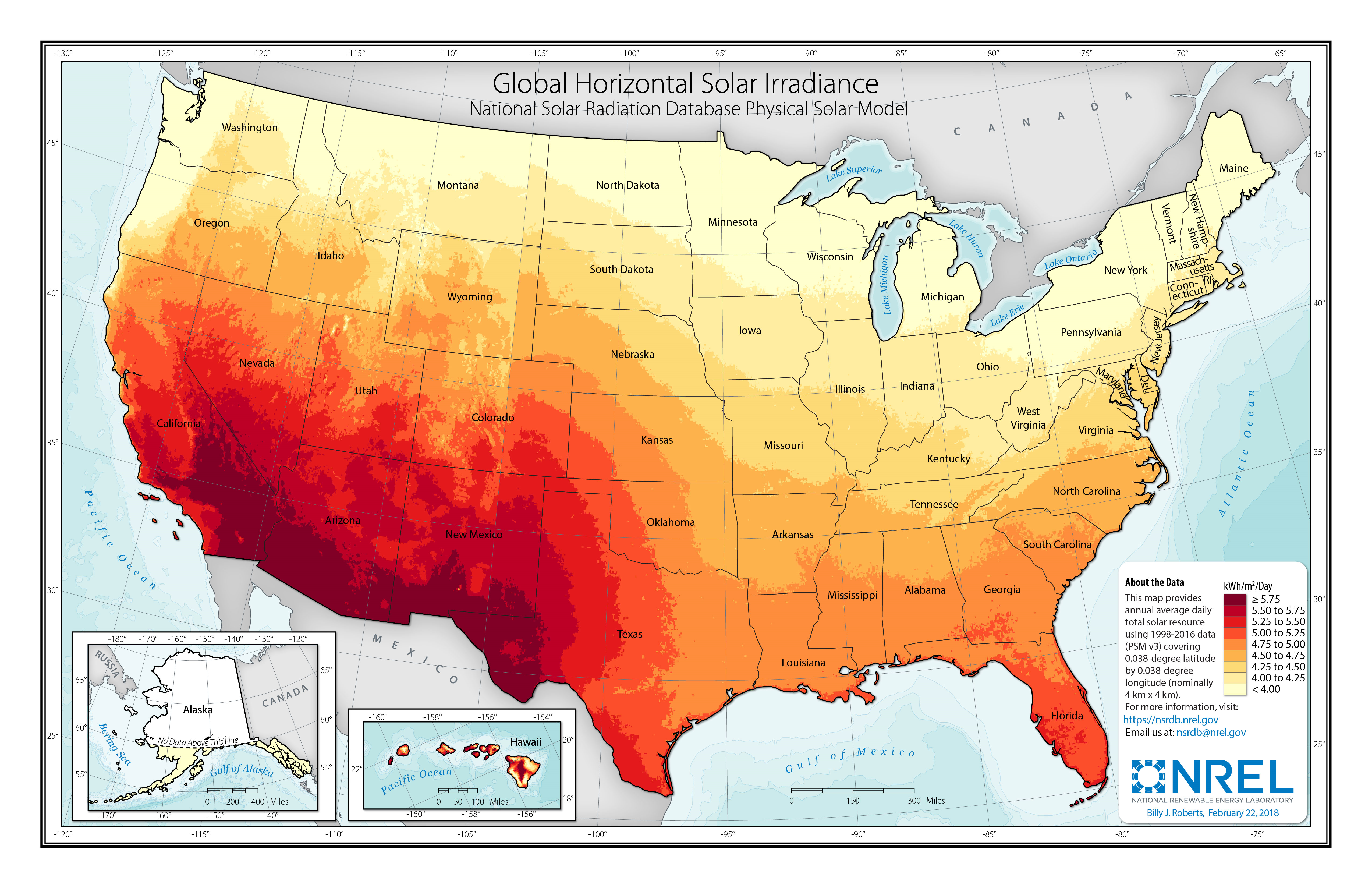
batteries use an insignificant amount of land, but probably overprovisioning of solar production is cheaper than batteries until you get into those 95th percentiles you're talking about. so probably we're talking about something like 10× the land use for solar panels that would be needed to meet demand on average? it depends a lot on how much demand flexibility there is; will dunkelflaute electrical grid demand be 20% of average grid demand, 2%, or 0.2%? that's a question that depends on things like what new designs people come up with for aluminum smelters and haber-bosch fertilizer plants, which is impossible to anticipate ahead of time