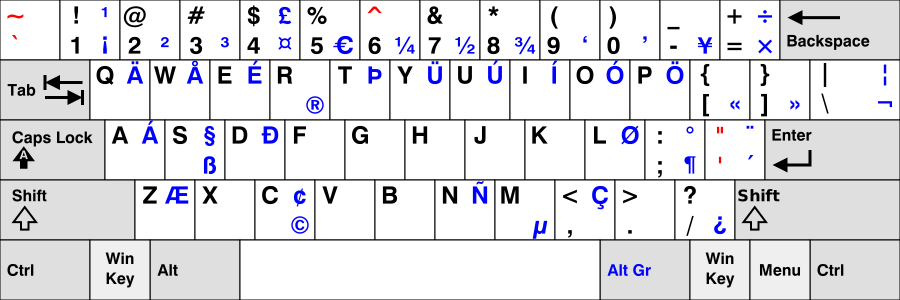
On a related note, I find it interesting how modern US-ANSI layout keyboards (even the International version [1]) still has such a limited set of characters.
We have ¼, ½, and ¾, but not en (–) and em (—) dashes; and I get that (') and (") are leftovers from typewriters and ASCII, but wouldn't it be nice to have proper 6-9 (‘…’) and 66-99 (“…”) quotation marks?
Then again, you often see Europeans online misusing acute (´) and grave ( `) accents as apostrophes (writing don´t or don`t, instead of don't or don’t). So perhaps the availability of more similar looking keys would just lead to even more misuse?
[1]: https://upload.wikimedia.org/wikipedia/commons/2/22/KB_US-In...