Live data from Hacker News

Dogs can remember names of toys years after not seeing them, study shows

theguardian.com

151–160 of 225 posts

Re: Dogs can remember names of toys years after not seeing them, study shows

#151

I've had my Labrador for 12 years, she was about 1 when we rescued her. In the first week I was walking her and passed a bus stop mainly used by school kids. There's a small wall behind it and she dashed around and emerged with half a sausage roll hanging out of her mouth. To this day, every time we pass that spot she enthusiastically pulls and goes round to inspect.

That's cool but dogs remembering names is more insightful in an exciting way, let me elucidate on why it's pretty fascinating!

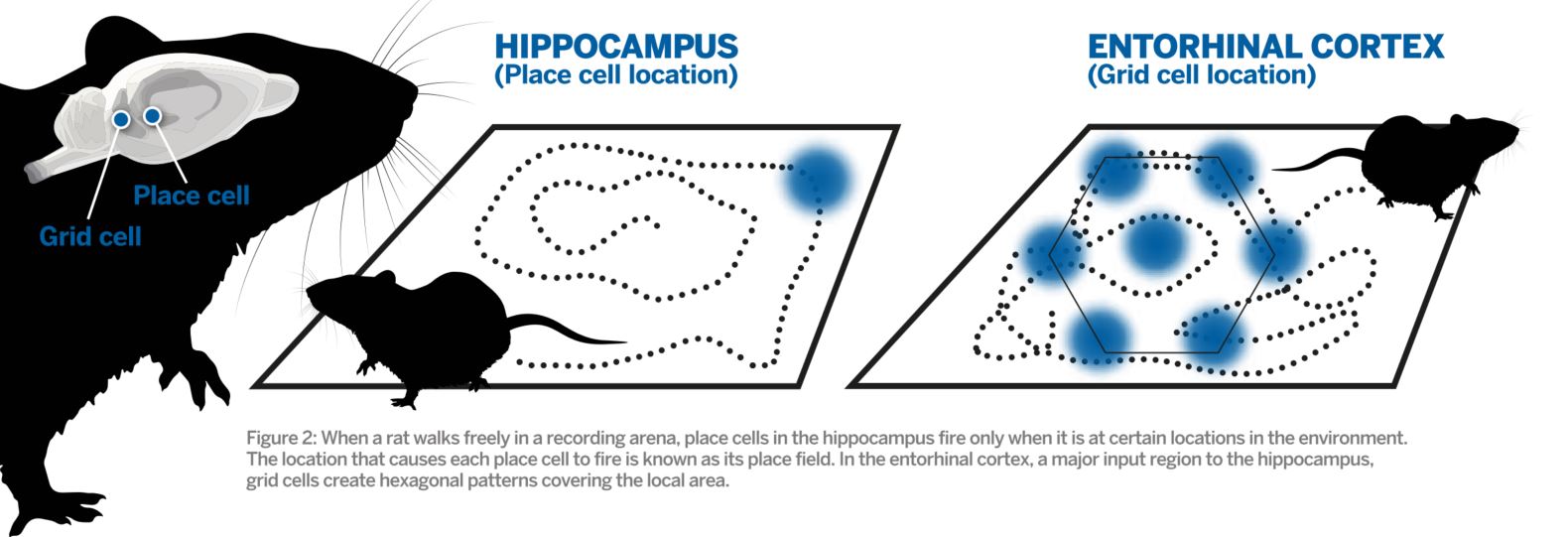
We know how place memories work quite well, Place and Grid cells specifically. There is a natural and almost physical level of 1:1 mapping at various scales[1] from location (based on different tracking systems - point integration, landmarks, your own steps) to activating cells in your brain. Simple co-activation alongside reward, like a literal map, sets down "good stuff here" signs in your brain.

Once attenuated and activated by Dopamine, the place cells to triangulate (at different "distances") that position have basically fewer mechanims and binding opportunities for neurotransmitters to change upon other interaction(they have little input beside place + pleasure + pain), so they do not result in loss of their attenuation or association (part of why place stays longest in Alhzeimers patients association).

Memory of sounds however, isn't so clearly mappable, there is no obvious grid/comparable formulation of sound memories in any kind of "order" like there is with location and places in Place Cells. And clearly we humans forget many of the sounds we have heard (e.g. songs, lyrics). That's why it's quite interesting that dogs remember toys names for a long time. It makes you ask questions like "If we had less sounds/named things to remember, could we remember the ones we do remember for much longer, with less forgetting?". "What is the difference between permanent, event and temporal memories?", "Could we resolve neurodegenerative diseases by modifying neurons to be longer lasting or impervious to future modification in strategic areas of the brain? Could be retain some learning?"

[1] http://www.rsb.org.uk/images/biologist/Features/Grid_mouse_d...
Re: Dogs can remember names of toys years after not seeing them, study shows

#152
post #127

Earlier quoted context omitted.

Yeah that is why I think dogs that don’t learn tricks are the smart ones not the ones who obey on the first ask. But humans want obedient dogs not ones that have their own opinions :)

What has food motivation or desire to please have to do with intelligence? I view them as completely orthogonal. A dog can be an idiot and not be food motivated or have a desire to please and conversely a dog can be really smart and be food motivated and eager to please.

Just like parent poster story - dog did not want treat from person it did not like.

That's a smart dog, while I can imagine someone observing such occurence calling the dog dumb.

Re: Dogs can remember names of toys years after not seeing them, study shows

#154

Earlier quoted context omitted.

Every time I encounter resistance to your points here, I feel like an alien among humans. I think it cuts so deep into people's psychology, and frequently religion. The very notion that we are not the apex of anything. And that we no longer need to eat other animals to live and be healthy. Too much to bear for many, so it frequently results in low-quality conversation, laden with emotions. The fact remains, however.…

never seen a dog using a computer

on the other hand, never seen a dog use javascript

Re: Dogs can remember names of toys years after not seeing them, study shows

#155

It's not too surprising as they (in movies and also my dog) respond well after years to just the call of names of people they had a deeper relationship with. So if we associate the name of a toy, eg. "go get the penguin" and they played with it for long period of time, it makes sense that they form a relationship with the toy as well and had memories of it. Dogs dream (I imagine the noise and movements they make whil…

I think the key difference isn't the memory, but the recall. Humans can recall memories at will, while dogs often require a prompt or stimulus, and there's not a clear indication that they're self-recalling information to think about things beyond a period of persistence.

That's not diminutive of them, more a reflection that we've been selecting dogs for this behavior and other "breed traits" (which I think of as specific hereditary OCD) for thousands of years, so it makes sense they're primed for this from a context- or direction-giver.

It's why if you teach a dog a trick that it's still able to recall years later, it won't go off and practice it on its own or teach it to other dogs.

Re: Dogs can remember names of toys years after not seeing them, study shows

#156

I've had my Labrador for 12 years, she was about 1 when we rescued her. In the first week I was walking her and passed a bus stop mainly used by school kids. There's a small wall behind it and she dashed around and emerged with half a sausage roll hanging out of her mouth. To this day, every time we pass that spot she enthusiastically pulls and goes round to inspect.

I've never understood people who say dogs are hard to train. They are SO motivated by food

Dogs actually don’t need food for training. It’s an effective, but “lazy” way to train dogs. The best practice is behavioral, to show you are the leader in the dog’s pack. Then you won’t need to ever give a treat for good behaviour. And even in my case where I do give a treat some times, my dog completely obeys me “organically”. PS.: I’m a veterinarian.

Re: Dogs can remember names of toys years after not seeing them, study shows

#158
post #119

Earlier quoted context omitted.

Reminds me of the search and rescue dogs used for finding people in collapsed buildings after, say, an earthquake. Apparently the dogs get depressed after finding nothing but dead people, so the humans seed the rubble once in a while with a live human for the dogs to find. https://allcreatureslargeandsmall.wordpress.com/2011/09/09/t... "As time passes without survivors found, search-and-rescue dogs — especially those…

I am half serious and wondering if they do the same for drug-sniffing dogs.

When I'm banging my head against a problem too long I'll do a small task to have a small success. Same thing I guess.

Re: Dogs can remember names of toys years after not seeing them, study shows

#160
post #127

Earlier quoted context omitted.

Yeah that is why I think dogs that don’t learn tricks are the smart ones not the ones who obey on the first ask. But humans want obedient dogs not ones that have their own opinions :)

They're animals, you want predictable behavior (as much as is possible - because they're animals).

Eh, I had a Scottish terrier that was incredibly smart, learned every trick on practically the first attempt, then would just not do them again after mastery.

Independent, great explorer and hiker, hated clear objects like she had an intifada against them and never got into trouble or destroyed stuff.

She was a good dude and would have been less fun if she was more obsequious or eager to please and predictable.

Post reply on HN