I've had my Labrador for 12 years, she was about 1 when we rescued her. In the first week I was walking her and passed a bus stop mainly used by school kids. There's a small wall behind it and she dashed around and emerged with half a sausage roll hanging out of her mouth. To this day, every time we pass that spot she enthusiastically pulls and goes round to inspect.
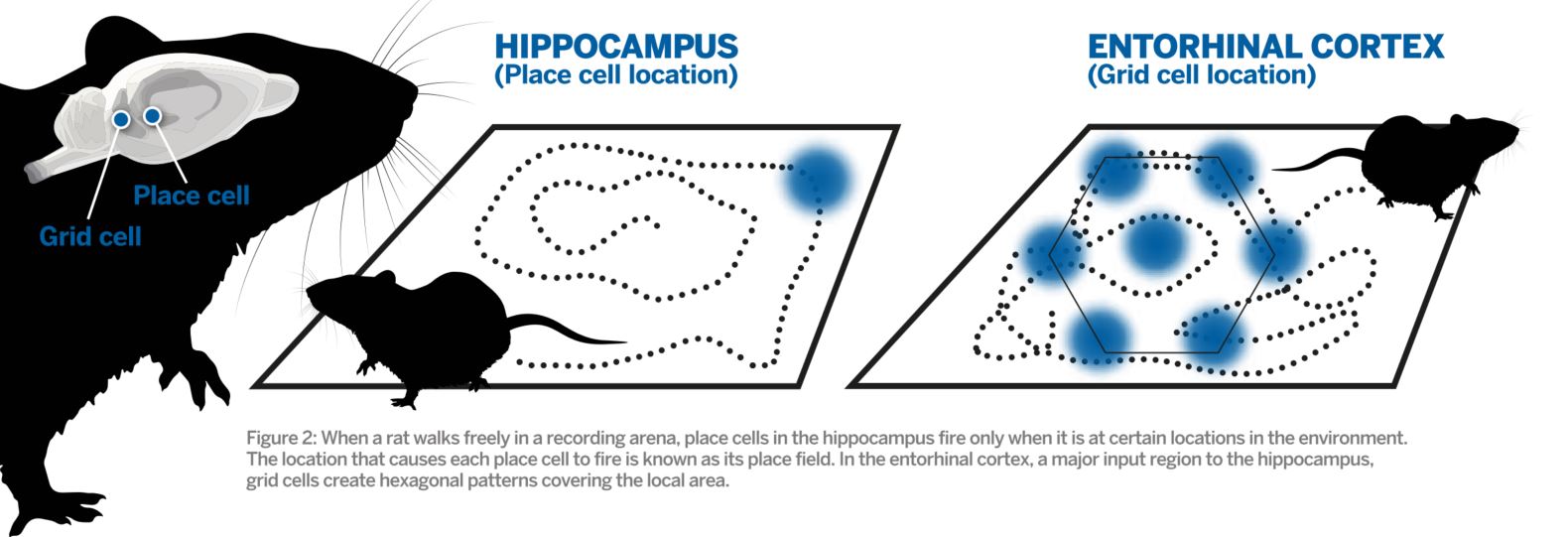
We know how place memories work quite well, Place and Grid cells specifically. There is a natural and almost physical level of 1:1 mapping at various scales[1] from location (based on different tracking systems - point integration, landmarks, your own steps) to activating cells in your brain. Simple co-activation alongside reward, like a literal map, sets down "good stuff here" signs in your brain.
Once attenuated and activated by Dopamine, the place cells to triangulate (at different "distances") that position have basically fewer mechanims and binding opportunities for neurotransmitters to change upon other interaction(they have little input beside place + pleasure + pain), so they do not result in loss of their attenuation or association (part of why place stays longest in Alhzeimers patients association).
Memory of sounds however, isn't so clearly mappable, there is no obvious grid/comparable formulation of sound memories in any kind of "order" like there is with location and places in Place Cells. And clearly we humans forget many of the sounds we have heard (e.g. songs, lyrics). That's why it's quite interesting that dogs remember toys names for a long time. It makes you ask questions like "If we had less sounds/named things to remember, could we remember the ones we do remember for much longer, with less forgetting?". "What is the difference between permanent, event and temporal memories?", "Could we resolve neurodegenerative diseases by modifying neurons to be longer lasting or impervious to future modification in strategic areas of the brain? Could be retain some learning?"
[1] http://www.rsb.org.uk/images/biologist/Features/Grid_mouse_d...