Earlier quoted context omitted.
I'd argue that for most, living in a suburb is in fact the worst of both worlds. You are neither rural nor city. You have none of the benefits and many of the drawbacks. For me my decision to live in the city is one of safety (driving cars is dangerous) and time. When I lived in the burbs I spent something like 30-40 full days a year sitting in my car. That's 10% of each year in my car. That's just not a trade I'm wi…
Funny you mention safety in the city, I often hear about moving to the burbs for safe neighborhoods with sidewalks.
The old suburban office park is the new American ghost town
191–200 of 371 posts
Re: The old suburban office park is the new American ghost town
#192Earlier quoted context omitted.
One of the chief advantages of suburban life is cost. I don't like suburbia, but I deal with it because I'm not rich enough to live close to work. Sure, I have the additional cost of maintaining and fueling a vehicle[1], and the stress of a 2+ hour commute each way, but that's far outweighed by housing being 3X cheaper, and the decent public schools (I don't have to pay for private schooling for the kid). 1: which is…
> One of the chief advantages of suburban life is cost. And that's entirely a function of bad city design. When I lived in New York, I lived in a Westchester suburb satellite city over 20 miles away from the city. I had a 35 minute commute by train right to Manhattan. There are tons of such suburbs in Westchester, because they have train lines running through the whole area. Meanwhile, my parents live in D.C. suburbs…
Re: The old suburban office park is the new American ghost town
#193Earlier quoted context omitted.
While those ex-Dominicks buildings are for lease ("rent/buy for a song"), I have yet to see anyone acquire them at their old Bartlett, Schaumburg, or Algonquin locations.
Head up to Milwaukee and you'll see plenty of old Kohl's supermarkets that have all been sitting vacant ever since the chain shut down over a decade ago.
Re: The old suburban office park is the new American ghost town
#194Earlier quoted context omitted.
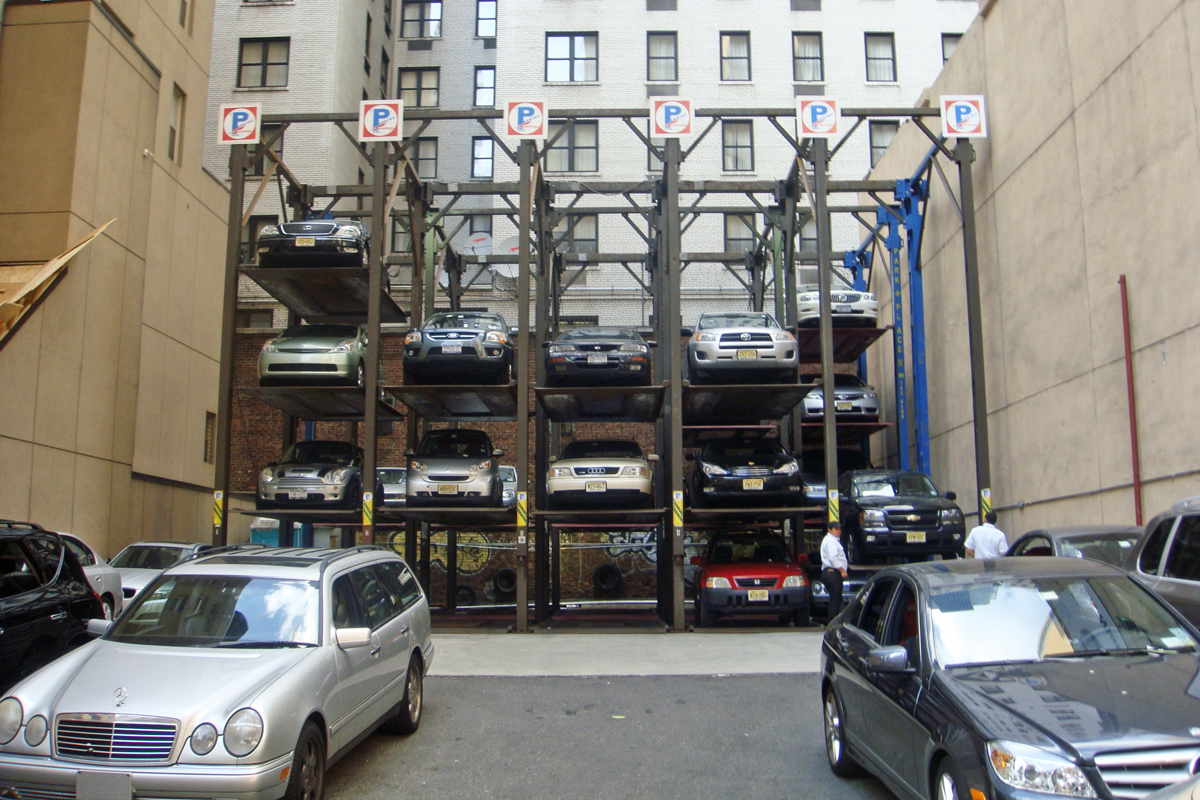
Automated cars require less parking than the manual cars we drive now, especially since they don't require to be parked near their passengers during off hours and can spend most of their product lives on the road. I'm not saying we shouldn't develop cities with pedestrians in mind, just that it's much easier to adapt a fleet of cars than rebuild an entire city.
This seems commonly stated but not actually examined. > "especially since they don't require to be parked near their passengers during off hours and can spend most of their product lives on the road." I'd argue that both of these points aren't actually true. The nature of on-demand cars (human-driven or otherwise) is that they be quickly available. Automated cars might eliminate the need for the car to be figurativel…
Ubers are rarely parked when on-duty and in a city this doesn't seem to be an issue.
> considering how bursty transportation usage is
I would like to introduce you to the Bay Area and LA freeways, where there is a lull from approx. 11am-2pm, and the roads are fairly packed until 8pm. In large metros the traffic is less bursty than you think.
> in exchange we get massive parking structures tying up a lot of space
We're already doing automated stacked parking in some high-density areas (I've personally seen it in Berkeley and NYC). It could become the norm: https://upload.wikimedia.org/wikipedia/commons/7/7e/Multi-le...
Re: The old suburban office park is the new American ghost town
#195Earlier quoted context omitted.
I didn't mean capitalists in terms of a job - I'm a tech guy too - but in terms of being ok with capitalism and making money.
> but in terms of being ok with capitalism and making money. That's exactly what I mean as well. I'm a socialist looking to replace jobs with cheap renewable energy, software, and robotics automation. Definitely not a capitalist. To each their own.
Re: The old suburban office park is the new American ghost town
#196My girlfriend worked for a 'beltway bandit' in Rockville Maryland for a while after college, exactly in the midst of the office parks described in this article. Everything about the environment of metro-DC suburban Maryland was absolutely repellent to me. Miles and miles of office parks, housing developments and strip malls, over and over and over. I couldn't stand the idea of having a daily routine of sitting in 8 l…
Re: The old suburban office park is the new American ghost town
#197I think this article perhaps misses the real story. That being, office parks first built in 25+ years ago are reaching an age where their long term leases are expiring and they need to be renovated for the first time since being constructed to attract new tenants. While it makes sense to renovate an old factory and turn it into trendy office space with exposed brick and vintage architectural details from decades past…
One common occurrence where I live is that county and cities are buying up the old office parks and even strip malls to convert them into government buildings. Most are ideally located as well as being offered up for sale cheaply. Seen even a few charitable organizations buy up parts of a strip mall for the cheap space by square foot. Besides the age a lot of REITs cashed out awhile ago and I am not sure the market i…
Re: The old suburban office park is the new American ghost town
#198Earlier quoted context omitted.
Freedom isn't the word that I would associate with being bound by train schedules and routes. Old cities, like NYC or London were established before the existence of the automobile. It makes sense that they were designed to move large numbers of people without automobiles. I don't live near such a city. The geography of my area prevents the kind of mass transit system that exists in NYC.
I can sympathize, Austin TX is built upon a giant rock of limestone which extremely difficult to develop into. All of our mass transit options that have come up connect to no-where.
Re: The old suburban office park is the new American ghost town
#199Earlier quoted context omitted.
I look forward to this industry realizing everything doesn't have to happen in SF.
Network effects are powerful. Silicon Valley largely runs (today) on monetizing network effects, and network effects are also why Silicon Valley is all concentrated in the Bay Area. The primary factor is concentration of capital: it is exponentially easier to raise money in the Bay. The second is concentration of talent and peers -- early customers, beta testers, development partners. The Internet was supposed to mak…
SF, Seattle, NYC, DC, Boston, etc., are still the major magnets, but "hip" urban living isn't as confined to the coasts as it used to be IMO.
Re: The old suburban office park is the new American ghost town
#200I see this as a buy low opportunity for those that could afford such a thing. Let me paint a picture of the future: - In five to ten years, 20 and 30 somethings of today who have mostly flocked to metropolitan areas don't leave when they are at the age of starting a family. The lack of space is still trumped by the a near zero commute and the cultural landscape that surrounds them. - Right around that time, self-driv…