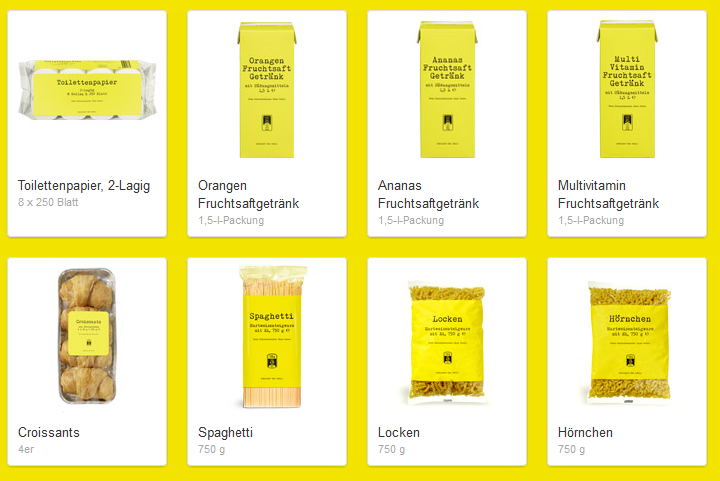
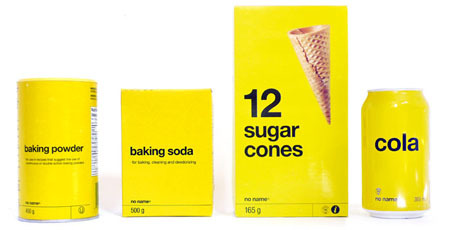
This would only be truely anti-establishment, if multiple companies were doing it using the same brand without any brand protection. Lack of branding is still a brand...
This would only be truely anti-establishment, if multiple companies were doing it using the same brand without any brand protection. Lack of branding is still a brand...
I came here to say basically this. BIER is only going to get recognized for being the beer brand without a brand.
Of course, that becomes just another brand gimmick, right? It would be interesting to see what would happen if another company started using the same packaging to make a clearly inferior (or even just different) beer. Last thought: reminds me of repo man (the one from the 80s), a great movie you should probably go watch right now, I mean come on, it's Sunday, relax.
Germany has VERY strict laws on what can go in beer - which means its all high quality but rather bland when compared to Belgium which has much more variety.
For some definitions of "high quality". It doesn't contain any random crap, but that doesn't mean it necessarily tastes good. Which of course is quite subjective, but IMHO really the thing that matters, and as others have mentioned a big problem with "non-branded" beer: I don't want to buy "a beer", but either try something new or buy something that I know I'll like. Unless they make it a feature (buy a bottle and get something random, with just a small marking to later figure out what it was) this won't work generally.
This would only be truely anti-establishment, if multiple companies were doing it using the same brand without any brand protection. Lack of branding is still a brand...
I came here to say basically this. BIER is only going to get recognized for being the beer brand without a brand.
And then somebody else calls their beer BIER and copyright lawsuits ensue.
As an American living in Berlin: thank you for posting this! I always wondered what the deal was with "BIER". I'd assumed it was some kind of home-brewed concoction. I guess I'll give it a try now.
It's a concept that's been done before: http://i.imgur.com/wteBl.jpg
It's also been done in actual reality. For example, one of Sweden's largest supermarket chain is the consumer co-operative Coop [1]. Their own line of budget private-label products had a very minimal "no-brand" design, though in 1979 they started using the name "Blåvitt", referring to the blue-white colors of the minimal design. I found a picture [2] of some of their products (coffee, detergent, tooth paste, tea, soa…
One of Canada's largest grocery chains has a similar brand, actually named "No Name"