Live data from Hacker News

Poor land use in the world’s greatest cities carries a huge cost

economist.com

41–50 of 151 posts

Re: Poor land use in the world’s greatest cities carries a huge cost

#41
I may live in the densest neighborhood of any HN participant: North Battery Park City [1] in Lower Manhattan. As an example, my son's 500 kid elementary school serves 9 buildings.

And I'm here to tell you, the future feels great. Specifically, living vertically has all sorts of wonderful aspects in terms of community (the kids can trick-or-treat without leaving the building), access to resources (my kids can ride the elevator barefoot to the waterpark out the back door in the summer) and environmentally (we live in the first LEED platinum residential building in the US).

The only problem is that it is expensive, and it doesn't need to be as expensive as it is. Building lots more residential skyscrapers, eliminating parking minimums [2], and reducing the incentive to warehouse vacant lots through land taxes or similar can all make New York City even more livable than it already is.

[1] http://en.wikipedia.org/wiki/Battery_Park_City [2] http://www.streetsblog.org/2012/03/21/report-details-how-one...
Re: Poor land use in the world’s greatest cities carries a huge cost

#42
post #21

Earlier quoted context omitted.

No, they are forced to move to these areas because they want to have a bearable commute. Your solution is to jam everyone into a more confined area. Another solution is to make commuting from a "long distance" (e.g. 60-120 miles) more bearable. In NYC, for instance, subways could be built to NJ. Faster trains (low-speed maglevs) could be built like what's being done in China ( http://en.wikipedia.org/wiki/Line_S1,_BC…

> In NYC, for instance, subways could be built to NJ. http://en.wikipedia.org/wiki/PATH_%28rail_system%29

Yes? That's about 100 years old and not part of the NYC subway. It also requires you to leave and pay again on the NYC Subway. It's a great system, and about a 12 minute walk from my apartment, but not what I meant. Not sure where you're going with this?

Anyway, I was thinking more along the lines of extending the 7 to NJ.

http://www.nj.com/news/index.ssf/2015/03/could_the_new_port_...

Enter the train at Secaucus, for example, then be able to go to Grand Central Station. Part of the hassle of mass transit is that if you need to make 3 transfers, and have to wait 10 minutes at each one, your commute gets long fast. Extending the NYC Subway in NJ would have several benefits, including reducing the slow crawl through the Lincoln tunnel, where almost 7000 busses cram in daily.

Re: Poor land use in the world’s greatest cities carries a huge cost

#43
post #2

> Lifting all the barriers to urban growth in America could raise the country’s GDP by between 6.5% and 13.5%, or by about $1 trillion-2 trillion. It is difficult to think of many other policies that would yield anything like that. And it would also reduce the real but unaccounted-for environmental and social externalities of our sprawling homogenous suburbs. Someone living in New York has half the energy footprint o…

Seriously cutting one's energy footprint is not free, it comes with serious cost increases elsewhere. The average American can't afford to live in NYC without curtailing much of what constitutes average living conditions.

A large part of that is that NYC is a world city and one of the globally most desirable places to live.

If other cities were built to similar density, you could have a similar (or even better) energy footprint compared to a New Yorker without the necessity of having to live in NYC itself. Now, there would be a change in lifestyle (fewer people owning cars, more people walking and using transit, fewer people owning detached houses) but most of those benefit quality of life anyway.

Re: Poor land use in the world’s greatest cities carries a huge cost

#44
post #33

> Land taxes are efficient. They are difficult to dodge; you cannot stuff land into a bank-vault in Luxembourg. Whereas a high tax on property can discourage investment, a high tax on land creates an incentive to develop unused sites. Land-value taxes can also help cater for newcomers. New infrastructure raises the value of nearby land, automatically feeding through into revenues—which helps to pay for the improvemen…

The harm for the owner in leaving the lot vacant for a decade is opportunity cost. If he is in a valuable spot, it would be advantageous to sell and just do something else with the money.

Imagine high land taxes in the middle of the desert. Is it an incentive to build? Quite the contrary.

Re: Poor land use in the world’s greatest cities carries a huge cost

#45
post #15

Earlier quoted context omitted.

Also too much paved surface area.

I keep wondering when building over roads will become common. Traffic only needs a couple stories of vertical space; everything above that should be profitably/affordably usable (once ventilation is addressed).

There are already buildings built over railways (as well as many railways tunnelled under things). But they're much safer (hardly any accidents, trained people who know evacuation routes etc) and the noise and smell isn't as bad as it would be for a road.

The examples I think I've seen are hard to verify on Google Maps, it's a brown-grey mush, and in any case they're all odd buildings rather than a 'tunnel' created out of buildings.

Re: Poor land use in the world’s greatest cities carries a huge cost

#46
We need to do a few things. I agree on shutting down the NIMBYs. It's zero-sum activity that hurts young families and contributes to the generational screw-over that Generation X and Millennials have experienced.

We also need to block nonresident foreigners from buying real estate here. They can stay in hotels. Until housing is cheaper than 0.35% of the median annual income per SF (at that level, you can afford 1200-1500 SF on a median income) it is a crime to let these nonresident foreigners (often laundering dirty money) buy properties that will go uninhabited for 11 months each year.

Finally, there's a capital allocation problem. Look at Silicon Valley itself. It takes in passive capital from all over the country-- teachers' pension funds from Ohio, firefighter AD&D funds from Georgia-- and distributes the job-creation in a tiny geographic area: Silicon Valley. Jobs disappear in Ohio and Georgia, while NorCal booms. Now, the passive capitalists would be fine with this if that were a working investment strategy. It's not, though: VCs have been losing money for more than a decade. The concentration of funds into the Bay Area (which makes that area unaffordable, because housing creation is always slower than job creation) has more to do with feudalism than any sound investment policy.

Re: Poor land use in the world’s greatest cities carries a huge cost

#47
post #15

Earlier quoted context omitted.

Also too much paved surface area.

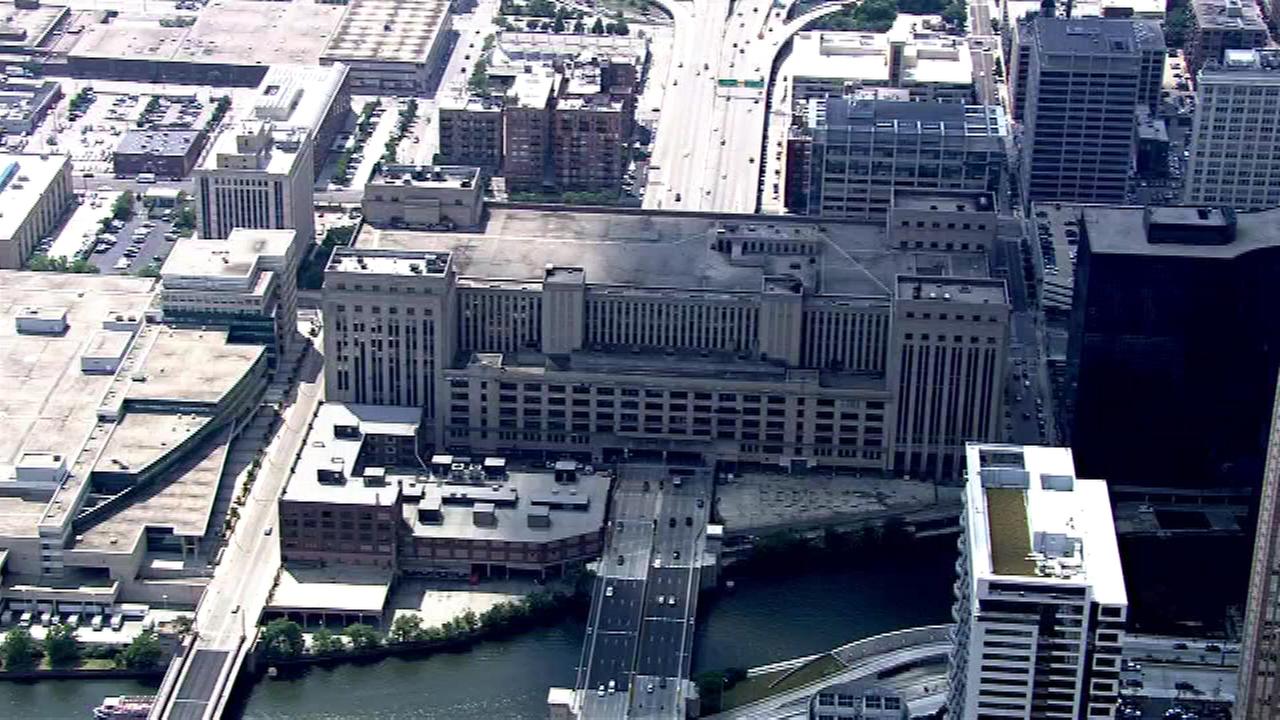
I keep wondering when building over roads will become common. Traffic only needs a couple stories of vertical space; everything above that should be profitably/affordably usable (once ventilation is addressed).

I-290 in Chicago runs through the Old Chicago Main Post Office: http://cdn.abclocal.go.com/content/wls/images/cms/124812_128...

Re: Poor land use in the world’s greatest cities carries a huge cost

#48

I may live in the densest neighborhood of any HN participant: North Battery Park City [1] in Lower Manhattan. As an example, my son's 500 kid elementary school serves 9 buildings. And I'm here to tell you, the future feels great. Specifically, living vertically has all sorts of wonderful aspects in terms of community (the kids can trick-or-treat without leaving the building), access to resources (my kids can ride the…

What's odd is that Manhattan's population density has on a long timescale been declining rather than growing, despite quite a bit of construction. In the 1900 census the population was 1.85 million (density ~80,000/sq mi), and it reached its peak of 2.33 million (~100,000/sq mi) in the 1910 census. Since then it's on the way down, with some bumps here and there: 1.96 million (~85,000/sq mi) in 1950, and all the way down to 1.54 million (~70,000/sq mi) by the 2000 census, having lost a full 1/3 of its population since 1910. The 2013 census estimate does put it at least on a growth trajectory again, to 1.63 million, but it'll be a while before it climbs up past 2 million again at that rate.

The main reasons, as far as I can gather, seem to be: 1) lower-class residential towers are being replaced by higher-end residential towers with larger units and fewer people per sq ft; 2) even given the same units, people are living fewer to a unit (fewer children, fewer multigeneration households); and 3) commercial real estate is crowding out residential real estate.

Re: Poor land use in the world’s greatest cities carries a huge cost

#49
post #33

> Land taxes are efficient. They are difficult to dodge; you cannot stuff land into a bank-vault in Luxembourg. Whereas a high tax on property can discourage investment, a high tax on land creates an incentive to develop unused sites. Land-value taxes can also help cater for newcomers. New infrastructure raises the value of nearby land, automatically feeding through into revenues—which helps to pay for the improvemen…

I don't wish to be confrontational, but in my view, taking other people's property without their voluntary consent is wrong.

As I understand the last paragraph of your comment, you wish to see the owner of the vacant lot forced into a situation where he had to act in some way other than how he currently chooses to act.

In other words, you want to substitute your judgment for his, when it comes to the use of his property.

Again, I don't mean to be confrontational, but this is how I see the situation.

How do you see it?

Re: Poor land use in the world’s greatest cities carries a huge cost

#50
post #49
post #33

> Land taxes are efficient. They are difficult to dodge; you cannot stuff land into a bank-vault in Luxembourg. Whereas a high tax on property can discourage investment, a high tax on land creates an incentive to develop unused sites. Land-value taxes can also help cater for newcomers. New infrastructure raises the value of nearby land, automatically feeding through into revenues—which helps to pay for the improvemen…

I don't wish to be confrontational, but in my view, taking other people's property without their voluntary consent is wrong. As I understand the last paragraph of your comment, you wish to see the owner of the vacant lot forced into a situation where he had to act in some way other than how he currently chooses to act. In other words, you want to substitute your judgment for his, when it comes to the use of his prope…

That the value of land is substantially based on the environment around it, one that is largely driven by societal factors. 1 acre of land in Manhattan is extremely expensive. 1 acre of land 20 miles north of Manhattan is not expensive. The difference is everything surrounding the land.

If the people in a community have decided to spend a lot of their money to reduce crime, improve transit, improve schools, and improve the economy, every land owner benefits. Yet the way that we do taxes (based on the improved value of the land), means that those that sit on the sidelines and do nothing gain quite a bit of value by freeloading on those around them.

If we figured out the taxes based on the underlying value of the land, then the vacant lot owner would be paying as much as the person that just invested in building a new business next store. That seems fairer to me considering that the vacant lot is now worth more due to its proximity to a shiny new building.

Post reply on HN