Live data from Hacker News

Monsanto Weedkiller Is ‘Probably Carcinogenic,’ WHO Says

bloomberg.com

71–80 of 123 posts

Re: Monsanto Weedkiller Is ‘Probably Carcinogenic,’ WHO Says

#71
post #53

Earlier quoted context omitted.

I did. It doesn't really defend or accuse Roundup, it just gives a bunch of quotes from both sides. And that's ok. My issue is that there's no attempt at specifying the significance of the problem. Saying "it (maybe) causes cancer" doesn't say absolutely anything about how dangerous it actually is - both in absolute terms and relative to alternatives. I think that "X causes cancer" articles should be considered harmf…

I get what you're saying. However, the article having a high degree of brevity isn't really cause to shoot the messenger in this case. What was reported was factually correct. Bloomberg isn't obligated to provide in-depth context and analysis of the issue. If people want to take interest in the underlying science, they can. If people want to be stupid and jump to conclusions to support whatever biased position they h…

It is the article's problem. A ballpark range of the risk is necessary to even get close to understanding the issue. Reporting without that is worse than nothing. It leaves people further from informed than they previously were.
Re: Monsanto Weedkiller Is ‘Probably Carcinogenic,’ WHO Says

#72

Earlier quoted context omitted.

I did. It doesn't really defend or accuse Roundup, it just gives a bunch of quotes from both sides. And that's ok. My issue is that there's no attempt at specifying the significance of the problem. Saying "it (maybe) causes cancer" doesn't say absolutely anything about how dangerous it actually is - both in absolute terms and relative to alternatives. I think that "X causes cancer" articles should be considered harmf…

>I think that "X causes cancer" articles should be considered harmful. Well then your opinion is highly un-intelligent and socially specious, because cancer sucks and if people can avoid it by being educated about the nature of what causes it, thats a good thing. Why would you like the world to get more cancer?

Car accidents also suck, but no one is proposing to ban all the cars. The idea is to make them safer. High speed accidents are more dangerous than low speed accidents, but people still complain that they like to drive faster.

Talking with the cell phone while driving increase the accident rate, it' banned in some place, but I think it's not banned in USA. IIRC texting while driving is not banned in USA, even when it's clearly more dangerous because you have to put your eyes on the phone instead of the road.

The word is full of tradeoff.

A mammography increase slightly your cancer risk, but it can detect small cancers so it increase the life length. But if the mammographies are too frequent, the chance to detect a new cancer decrease (because it has no time to appear) and the chance to create a new cancer increase (because you get more radiation). A few years ago, they reduced the recommendation from one mammography each year to one mammography every two years, because once a year was too much.

(Check the current recommendation with your medical doctor, it depends on the age and other factors.)

Re: Monsanto Weedkiller Is ‘Probably Carcinogenic,’ WHO Says

#74

This article (not the study) is total trash. Every other thing on this planet - from water to oxygen to sunlight to common cold[0] to turning a light on when you go pee at night [1] apparently causes cancer. People read bullshit like that, start being afraid of everything they interact with, and then newspapers are surprised we have anti-vaccine movements, or that the general population doesn't trust science at all.…

The reason this is important to discuss is that Roundup is out there, in massive quantities, and if it is determined that it can cause cancer in much higher rates than previously expected - then something must be done about it, because of the sheer magnitude of the market penetration of this product . If it is discovered that Roundup-poisoned regions have extraordinarily high rates of cancer - and this is yet to be d…

>if it is determined that it can cause cancer in much higher rates than previously expected - then something must be done about it

Even that is going too far! "much higher rates than previously expected" could still be miniscule.

I want to discuss the issue. But a prerequisite is a risk ballpark. Anything before that is useless guesswork.

I suppose we could split off five different threads to discuss what to do in each risk bracket. But that seems terribly inefficient. There's no way to have a good unified discussion about "might exist somewhere in these eight orders of magnitude"

Re: Monsanto Weedkiller Is ‘Probably Carcinogenic,’ WHO Says

#75
post #53

Earlier quoted context omitted.

I did. It doesn't really defend or accuse Roundup, it just gives a bunch of quotes from both sides. And that's ok. My issue is that there's no attempt at specifying the significance of the problem. Saying "it (maybe) causes cancer" doesn't say absolutely anything about how dangerous it actually is - both in absolute terms and relative to alternatives. I think that "X causes cancer" articles should be considered harmf…

I get what you're saying. However, the article having a high degree of brevity isn't really cause to shoot the messenger in this case. What was reported was factually correct. Bloomberg isn't obligated to provide in-depth context and analysis of the issue. If people want to take interest in the underlying science, they can. If people want to be stupid and jump to conclusions to support whatever biased position they h…

I disagree. The job of the press is - or should be - to inform people. It's not about "in-depth context and analysis"; what bundling everything under "causes cancer" does is provide negative information.

> If people want to be stupid and jump to conclusions to support whatever biased position they hold, they can do that too.

I understand that you can't be responsible for people being randomly stupid, but if the stupidity is systematic and predictable, then indeed it becomes your responsibilty if you know about it and play into it for profit.

Re: Monsanto Weedkiller Is ‘Probably Carcinogenic,’ WHO Says

#76
post #34
post #24

Earlier quoted context omitted.

Side question. If I wanted to explain with studies to someone that GMO hate is unfounded, do you have a recommendation on a place to gather facts or recent studies on it?

Well begin by the website of Monsanto, lol.

Well, why not? There are first to know the good arguments for their solutions. You can start there and then go look for independent analysis and verification of the claims.

Re: Monsanto Weedkiller Is ‘Probably Carcinogenic,’ WHO Says

#77
post #24
post #21

Earlier quoted context omitted.

I'm trying to provide a background because I have twenty plus years in the fertilizer business. I'm old enough that I remember when it was introduced. I don't know WHO's agenda but I've seen enough cycles on both pesticides and GMO's when someone makes a provocative statement based on early research and are usually proven wrong.

Side question. If I wanted to explain with studies to someone that GMO hate is unfounded, do you have a recommendation on a place to gather facts or recent studies on it?

I wrote a blog post defending GMOs awhile back, with examples of non-Monsanto GMOs that have saved papayas in Hawaii, promise to deliver food to Africa, and improve nutrition. The thing many people don't realize is that all food is GMO. There are no such things as tomatoes, peaches, apples, or corn in nature. These are all products of just a few thousand years of selective breeding. With GMOs, we are also constantly performing a massive ongoing experiment involving over 100 billion livestock animals, and livestock farmers have seen no deleterious effects in the health of their products:

http://ideonexus.com/2011/12/05/gmo-foods-and-the-promise-a-...

Re: Monsanto Weedkiller Is ‘Probably Carcinogenic,’ WHO Says

#78
post #49

Earlier quoted context omitted.

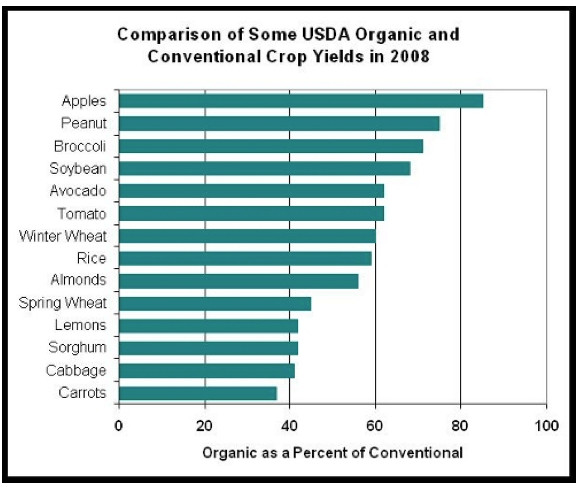
>Without it the world can still grow crops (we SOMEHOW have for thousands of generations). Historical yields were tiny compared to what we get from contemporary farms. I don't know if we need Roundup in particular, but if we went back to traditional farming methods half the world would starve. There's no going back.

Actually there is no evidence of this, a good proportion of of the food produced is actually used to feed animals which is the most inefficient way to produce food. Just by eating less meat (which makes sense because we are not supposed to eat so much meat), suddenly we don't need to product so much. The actual price of the food is so low currently that what you pay in a supermarket is mostly the externalities. Switc…

What about when the population doubles, and then doubles again?

http://geneticliteracyproject.org/wp-content/uploads/2015/01...

Re: Monsanto Weedkiller Is ‘Probably Carcinogenic,’ WHO Says

#79
post #53

Earlier quoted context omitted.

I get what you're saying. However, the article having a high degree of brevity isn't really cause to shoot the messenger in this case. What was reported was factually correct. Bloomberg isn't obligated to provide in-depth context and analysis of the issue. If people want to take interest in the underlying science, they can. If people want to be stupid and jump to conclusions to support whatever biased position they h…

It is the article's problem. A ballpark range of the risk is necessary to even get close to understanding the issue. Reporting without that is worse than nothing. It leaves people further from informed than they previously were.

Imagine if we were talking about a tweet, and that tweet simply mentioned the existence of the WHO report in question. I highly doubt it would be subject to the same level of condemnation.

The article may as well be the journalistic equivalent of that. Its purpose isn't to provide an in-depth understanding of the issue, it's simply saying an event occurred that is notable.

Re: Monsanto Weedkiller Is ‘Probably Carcinogenic,’ WHO Says

#80
post #53

Earlier quoted context omitted.

I get what you're saying. However, the article having a high degree of brevity isn't really cause to shoot the messenger in this case. What was reported was factually correct. Bloomberg isn't obligated to provide in-depth context and analysis of the issue. If people want to take interest in the underlying science, they can. If people want to be stupid and jump to conclusions to support whatever biased position they h…

I disagree. The job of the press is - or should be - to inform people. It's not about "in-depth context and analysis"; what bundling everything under "causes cancer" does is provide negative information . > If people want to be stupid and jump to conclusions to support whatever biased position they hold, they can do that too. I understand that you can't be responsible for people being randomly stupid, but if the stup…

>I understand that you can't be responsible for people being randomly stupid, but if the stupidity is systematic and predictable, then indeed it becomes your responsibilty if you know about it and play into it for profit.

Though I tend to agree, it's a bit of a stretch to conclude that an article, due to its brevity, was intentionally written that way for the sake of profit.

Post reply on HN