I went to Best Buy as well today and picked up a laptop to look into this further. The Superfish software is not properly passing the validation state of the public cert when it connects to a website like Bank of America as an example. There's no need to export their private and use it in a MitM transparent proxy. The software is simply not triggering appropriate warnings when provided an obviously fake certificate that has been generated in a way to bypass browser warnings. It's also not properly validating revoked certs. Both of these situations are very bad. Allowing any self-signed cert would lead me to believe that this could have easily been exploited in the wild without prior knowledge of this vulnerability.
I'm not going to provide a how-to guide on how to exploit users here. I have notified both Superfish and Lenovo of this issue and here's an example of the improper status pass through based on doing something that might be quite obvious to some:
This is what the browser should do when it encounters a self-signed cert delivered by an SSL/TLS MitM solution:
http://defaultstore.com/six.png
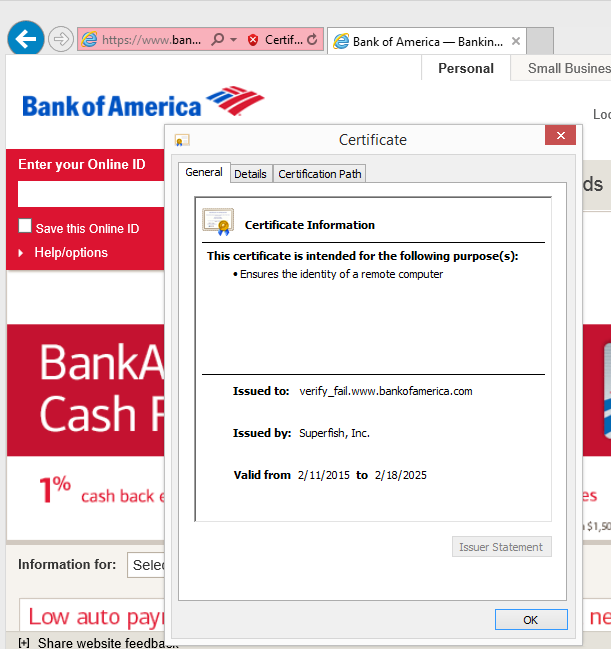
However, it's not doing this for this self-signed public cert:
http://defaultstore.com/four.png
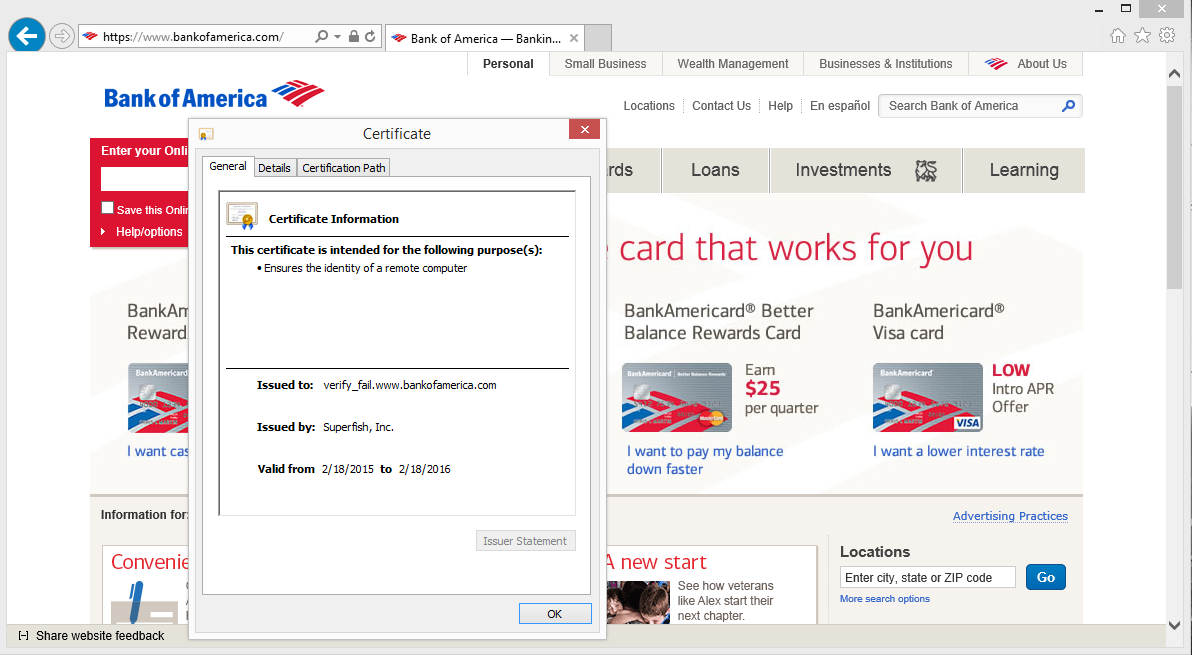
Note both certs show "verify_fail." at the beginning and those who know how browser cryptography works will understand what has gone wrong with their implementation.