Live data from Hacker News

Paper sizes

royvanrijn.com

141–150 of 206 posts

Re: Paper sizes

#141

When someone claims uncritically that the ratio of any two integers is √2, I get a little edgy. I'm also having a hard time following this simplification: A / √A = A × A / A = A Huh? This only holds if √A = A = 1. I haven't checked the rest, but this doesn't give me much confidence. Of course, knowing those Europeans, these sizes do probably make tons of sense on paper (see what I did there?), even if this isn't the…

He's written A / √A = A × A / A = A, but what he means is A / √A = √A × √A / √A = √A, which is actually true and is what he uses below

another way of writing the same thing is

    A / A^(1/2) = A^1 * A^(-1/2) = A^(1 + (-1/2)) = A^(1/2)
Re: Paper sizes

#142
post #128

Earlier quoted context omitted.

No. Try to layout a document on A4 while maintaining at least basic standard rules (e.g. lines of 8-12 words, a pretty text body layout, e.g. a "nice ratio" like 3/4 or 1/2, with standard margins, that is 1 on top, left and right and 2 on bottom). Since your font size will either be 11 or 12 pt on A4 because otherwise you use less than half of the paper or your font is really huge, you're not left with many options.

All of this is voodoo that you learned working with your preferred aspect ratio and size. None of these rules have any kind of objective basis.

I wouldn't be so hasty to dismiss hundreds, perhaps thousands of years of aesthetic tweaking by experts as voodoo simply to defend a page size and proportion whose primary advantage is not aesthetic but function.

Re: Paper sizes

#143

Earlier quoted context omitted.

To a point, but there are clues: 马 is mǎ, meaning horse. It's a picture of a horse, with 3000 years of adaptation. 女 means woman / female. It's a picture of a woman. Put them together and 妈 means "the female thing that sounds like mǎ", which is mā (a different tone), meaning mother. (I'm very much a beginner, but my teacher claims ~70% of characters follow this pattern.)

I'm guessing that the people who decided that those characters bore any resemblance to a horse or a woman are the same people responsible for naming the constellations.

That's because you're seeing them after literally thousands of years of evolution and simplification.

马, for example, is the simplified form of 馬, which is traceable back through the millenia to a pretty recognizable picture of a horse back around 1300 BCE or so. (http://en.wiktionary.org/wiki/%E9%A6%AC#Etymology)

Same with 女, which originally was a drawing of a stick-figure woman with breasts. (http://en.wiktionary.org/wiki/%E5%A5%B3#Etymology)

Re: Paper sizes

#144

Earlier quoted context omitted.

To a point, but there are clues: 马 is mǎ, meaning horse. It's a picture of a horse, with 3000 years of adaptation. 女 means woman / female. It's a picture of a woman. Put them together and 妈 means "the female thing that sounds like mǎ", which is mā (a different tone), meaning mother. (I'm very much a beginner, but my teacher claims ~70% of characters follow this pattern.)

I'm guessing that the people who decided that those characters bore any resemblance to a horse or a woman are the same people responsible for naming the constellations.

Quite the opposite. Once you have engraved in your brain the shape of these characters they become the very representative shapes of the things they draw. It is not a matter of resemblance, just as most caricatures do not resemble the model, but the model is still immediately recognized. Another analogy is the sign indicating lifts in airports: it do not resemble any kind of real life lifts, but everyone still understand it, without even having a sound for it. So are Chinese characters. If you don't believe me I'll pardon you: a long familiarity with them is required here.

Re: Paper sizes

#145

Earlier quoted context omitted.

I regularly print out A4 documents two-to-a-page side-by-side on my office printer. It saves paper, its easier to carry around, and it works just fine. No distortion. If your docs are US Letter, how well do they print out scaled down two-to-a-page side-by-side?

I do this a lot for printing out (research) articles, and the answer is that the text gets shrunk much more, and the margins increased to account for the difference. (This actually turns out to be useful in practice, since there's much more whitespace to take notes in.)

You are misunderstanding him. He's not saying that you can't shrink A4 down to A3. He's saying that aesthetically you can't do this without (of course) changing the font size. But if you want to retain readability, you may need to keep the font size larger, thus requiring a complete reformatting of the text. That is, you're talking about math and he's talking about the realities in dealing with humans as readers.

Re: Paper sizes

#146
While we're at it, couldn't we also wish for the US to adopt the ISO standard date format, YYYY-MM-DD That would be great. Thank you.

Re: Paper sizes

#147
Everyone who supports the A* sizes of paper (start with a square meter because it's nice and clean, then just declare that all other paper uses that humankind might ever need should be specific fractions of that square meter and no other sizes are ever needed) should also support Swatch time.

http://en.wikipedia.org/wiki/Swatch_Internet_Time

Alternately, if Swatch time seems dumb to you, then you might also accept that paper should be sized to fit a usage, not just a "clean" measurement scheme.

Does this hold true for other things as well? Should all cell phone screens be sized to be a specific fraction of a square meter, just because it's "cleaner"? Or should they be sized to fit, you know, people's hands and pockets?

And for that matter, the math isn't even right! Because SQRT(2) is not rational, you'll get noticeably different sizes if you actually started with 4A0 and sliced it in halves until you got to A10 versus directly cutting an A10 piece. That should drive you math-obsessives crazy.

Re: Paper sizes

#148
post #27

When someone claims uncritically that the ratio of any two integers is √2, I get a little edgy. I'm also having a hard time following this simplification: A / √A = A × A / A = A Huh? This only holds if √A = A = 1. I haven't checked the rest, but this doesn't give me much confidence. Of course, knowing those Europeans, these sizes do probably make tons of sense on paper (see what I did there?), even if this isn't the…

The article's not claiming that the ratio of any two integers is √2, he's claiming that when the ratio of the lengths of the sides (the aspect ratio) is √2 that it's easy to keep that ratio with smaller pages by cutting the longer dimension in half. As for your equation above, A/√A != A x A / A, but I'm not seeing where in the article you got this either.

> The size is 210 mm × 297 mm and has a ratio of √2 (math!).

That looks like a claim that the ratio of two integers is sqrt(2), but it's fairly obvious that he really means that it's very close.

Re: Paper sizes

#149
post #93

Anecdote: the office management/finance/HR people in the european office where I work really, really hate US Letter formats, because they don't really fit in "normal" binders. They're the ones who really suffer from this, because they're the only people who deal with paper format documents these days, I guess.

US Letter is shorter than A4, so it seems like they should fit fine? I guess it's 6mm wider but that is not much.

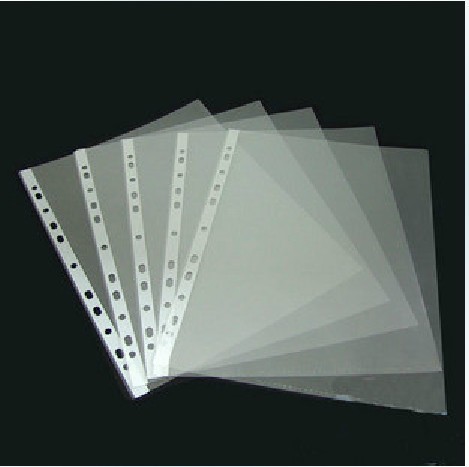
For some important documents that you want to preserve and/or don't want to pierce there is a solution: store it in a plastic sleeve like this one:

http://i01.i.aliimg.com/wsphoto/v0/1777660007/100-X-A4-CLEAR...

If you happen to receive US letter sized paper, it won't fit because of the width, that is too much for these, and they get crumpled.

Re: Paper sizes

#150

Earlier quoted context omitted.

To a point, but there are clues: 马 is mǎ, meaning horse. It's a picture of a horse, with 3000 years of adaptation. 女 means woman / female. It's a picture of a woman. Put them together and 妈 means "the female thing that sounds like mǎ", which is mā (a different tone), meaning mother. (I'm very much a beginner, but my teacher claims ~70% of characters follow this pattern.)

Yup, so in Mandarin you have a vague hint as to how to pronounce each word, based on writing. Same goes for English.

For most words you can "sound it out" in English. There are just a lot of exceptions.
Post reply on HN