Live data from Hacker News

Why Google is Hurrying the Web to Kill SHA-1

konklone.com

131–136 of 136 posts

Re: Why Google is Hurrying the Web to Kill SHA-1

#131
post #122

Understanding that this is a naive outsider perspective, I find it strange that it's any sort of emergency when a single collision has yet to be produced. And then, does the latest hash collision attack allow you to make a collision with a _specific_ target or just make a collision in general? Finally, even if you hit the target with some junk that happens to hash to the same thing, is it going to be in correct file…

When a collision is produced it will be too late. The time to act is before that happens.

I guess that's the surprising part. I figured that that's just the first hurdle, there's still the file length and format.
Re: Why Google is Hurrying the Web to Kill SHA-1

#132

One would think it would have been a good opportunity to change to SHA-2 after Heartbleed, since most websites had to get reissued certificates anyway. Since this process is a pain in the * then one could have killed two birds with one stone at the time. Alas

In fact, Heartbleed helped a lot: http://news.netcraft.com/archives/2014/05/05/sha-2-very-cryp... But there's a long way to go.

Re: Why Google is Hurrying the Web to Kill SHA-1

#133

"SHA1 and other hash algorithms generate a digital fingerprint that in theory is unique for each different file or text input they sign." ... and there it goes, any credibility I would give the author. There's dumbing down the content for a non-technical audience, and there's not understanding.

I could have said "practically unique", instead of "in theory is unique" there, but I make the distinction more clear just below that and note that there are always collisions out there.

Re: Why Google is Hurrying the Web to Kill SHA-1

#135
post #99

Earlier quoted context omitted.

I don't know if "10 years" falls in your definition of "next few years". For a viable rogue CA attack, you need a chosen-prefix attack. Current best research ( https://marc-stevens.nl/research/papers/EC13-S.pdf ) shows it should take 2^77.1 SHA-1 compression calls to do a chosen-prefix attack. Say this is improved to 2^65 within the next 10 years. Right now a good GPU (AMD R9 290) can do 3 billion SHA-1 compression c…

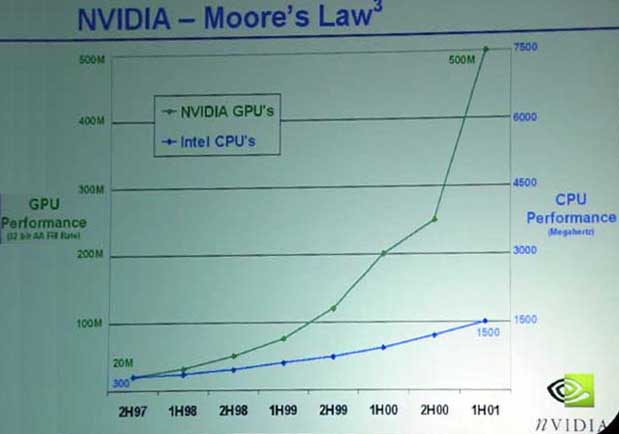
Firstly, GPUs haven't followed More. Secondly, multiple sha1 ASIC exists. Thirdly, WebGL has made it trivial to gain vast GPU resources. 20,000 viewers for two hours can be bought for $20. Fourthly, I don't care.

> Firstly, GPUs haven't followed More.

Yes they have. Any integrated circuit that tries to pack as many transistors as possible on a die is, by definition, following Moore's Law. To convince you: http://www.mumblegrumble.com/visual/roadmap/other/nvidia_moo...

Re: Why Google is Hurrying the Web to Kill SHA-1

#136
What does stop Google Chrome simply disallow new SHA-1 hashes that collide with known list of SHA-1 hashes for existing certificates?

That would allow non-colliding SHA-1 certificates function as usual and prevent millions of people from major headaches related to speedy certificate migration.

Post reply on HN