I'm not sure why the article is so obsessed with this "six-figure salary" thing (which seems to mean exactly $100,000). $100k 30 years ago after inflation is $288k now. Anyone earning $288k now is definitely rich enough to "live the american dream" (in the article they price that at $130k). It would have been a much more interesting article if it had just focused on cost of living increasing faster than inflation
Why a Six-Figure Salary No Longer Means You’re Rich
21–30 of 101 posts
Re: Why a Six-Figure Salary No Longer Means You’re Rich
#22As dual-income households have become more the norm, it's really the household income, rather than an individual's income, that's a better measure of (material) richness. For instance, you might have a family with a sole breadwinner who has a low six-figure salary, but that has to cover all the family's expenses. Meanwhile, even if his neighbors, a dual-income household, both earn less than him, their household incom…
That depends on how the income is spent. If people spend their extra income on leisure activities, luxury goods, etc then it'll absolutely mean that a high household income will be a good measure of richness. That's obvious.
However, if dual income households decide to spend their income on investing in a better house, what will happen is that it'll push house prices up - a finite supply of housing stock means there'll be competition for the best homes, so people will have to pay more for them. That demand side pressure will filter down the housing ladder and pull all the prices up. After thirty or forty years this will have had the effect on house prices that single income families just can't afford to buy. Further, it'll mean that dual income families have to retain two incomes, so parents wanting to stay at home when they have children simply won't be able to afford to.
This has already happened in the UK. Lots of pundits are predicting a crash because the first-time buyers can't afford to buy, meaning no one is buying the lower price houses, and that's going to pull the whole thing down.
Mind you, the pundits have been saying as much for about twenty years.
Re: Why a Six-Figure Salary No Longer Means You’re Rich
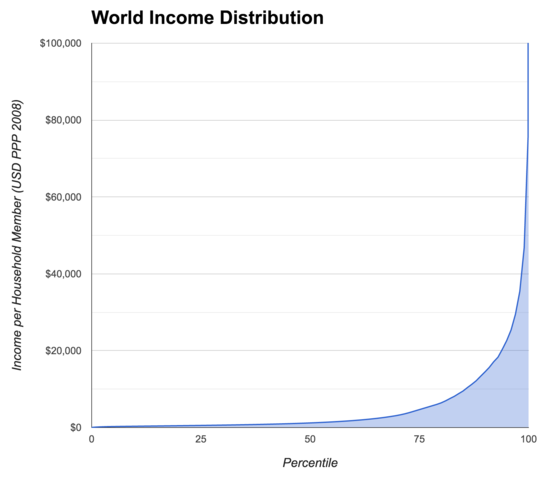
#23It sure as hell does mean you're rich. Median household income in the US is about $50k/yr. The average global income is about $10k/yr.
Re: Why a Six-Figure Salary No Longer Means You’re Rich
#24I'm not sure why the article is so obsessed with this "six-figure salary" thing (which seems to mean exactly $100,000). $100k 30 years ago after inflation is $288k now. Anyone earning $288k now is definitely rich enough to "live the american dream" (in the article they price that at $130k). It would have been a much more interesting article if it had just focused on cost of living increasing faster than inflation
Same thing with millionaires. A million dollar net worth is not the same thing it once was.
Re: Why a Six-Figure Salary No Longer Means You’re Rich
#25It sure as hell does mean you're rich. Median household income in the US is about $50k/yr. The average global income is about $10k/yr.
What if your job is in Manhattan where that means you are making negative income vs. your rent? And a good meal is ten times more than a beef soup shop in Taiwan? Or spending 2 hours every morning commuting into the city and back out on a bus to somewhere you can afford on $50k/yr? Is that still rich?
Re: Why a Six-Figure Salary No Longer Means You’re Rich
#26It sure as hell does mean you're rich. Median household income in the US is about $50k/yr. The average global income is about $10k/yr.
Don't forget to take into account the massive amount of student debt people have now, and also the vast cost of living in larger tech centric cities such as SF and NYC. I'm not talking fancy apartments either, I'm talking regular standard 1 br apartments.
Just because someones income is a certain amount on paper it doesn't take into account other financial responsibilities that lower the amount you have leftover at the end of the month.
Re: Why a Six-Figure Salary No Longer Means You’re Rich
#27It sure as hell does mean you're rich. Median household income in the US is about $50k/yr. The average global income is about $10k/yr.
What if your job is in Manhattan where that means you are making negative income vs. your rent? And a good meal is ten times more than a beef soup shop in Taiwan? Or spending 2 hours every morning commuting into the city and back out on a bus to somewhere you can afford on $50k/yr? Is that still rich?
Re: Why a Six-Figure Salary No Longer Means You’re Rich
#28Re: Why a Six-Figure Salary No Longer Means You’re Rich
#29It sure as hell does mean you're rich. Median household income in the US is about $50k/yr. The average global income is about $10k/yr.
Measures of wealth are just numbers until put in context of local costs of living.
Which addresses the reply to your post: $100K is wealthy in parts of the country, it's not wealthy in others. Getting paid $100K in small-town Idaho is a whole different ball game than getting paid $100K in SF.
The trick is that there are a lot more $100K jobs in one place than the other. What PhasmaFelis insists on calling "living beyond your means" is often nothing more than people looking for work.
Re: Why a Six-Figure Salary No Longer Means You’re Rich
#30As dual-income households have become more the norm, it's really the household income, rather than an individual's income, that's a better measure of (material) richness. For instance, you might have a family with a sole breadwinner who has a low six-figure salary, but that has to cover all the family's expenses. Meanwhile, even if his neighbors, a dual-income household, both earn less than him, their household incom…
As dual-income households have become more the norm, it's really the household income, rather than an individual's income, that's a better measure of richness. That depends on how the income is spent. If people spend their extra income on leisure activities, luxury goods, etc then it'll absolutely mean that a high household income will be a good measure of richness. That's obvious. However, if dual income households…