Live data from Hacker News

Exploring No Man’s Sky, A Computer Game Forged by Algorithms

technologyreview.com

31–40 of 123 posts

Re: Exploring No Man’s Sky, A Computer Game Forged by Algorithms

#31
post #28

Looks like it could be a good game either way, but I'm questioning their use of words when they say "every atom" is procedurally-generated, as in their first reveal trailer. http://www.youtube.com/watch?v=U6fCn8oB-sg From what they have demoed, they have not proven that anything actually is being generated. My best guess is that they randomly vary colors and textures (and generate the atmospheres, as they say), and r…

They've already talked (and showed) quite a bit about how stuff like animals, trees, ships etc are done. Essentially what they're doing is building a base model (a prototype, I guess) for everything that is then changed with something like the sliders in any character creator, but more extreme. So from the "cat" base model you'd get house cats, lions, leopards, tigers etc from that, in addition to really wild things.

Yeah I read a few more articles and it sounds a bit more promising. As mentioned above, I'd still like to see them actually demoing these things so I can make a more solid judgement of what is going on.

Re: Exploring No Man’s Sky, A Computer Game Forged by Algorithms

#33

The issue with a lot of procedurally-generated content is that overall things become same-y. Lots of breadth, little depth. When you have a set number of variable sliders, you don't have to see all the possible worlds to get a sense of how many sliders there are and what their ranges are. The problem only gets worse when moving away from planet/landscape generation (dumb matter) and getting into simulations of histor…

> The issue with a lot of procedurally-generated content is that overall things become same-y

Yes. It's easy for a developer to say "trillions of possible combinations" or "every x is unique with a high degree of certainty" but those statements mean very little without seeing the end product.

Creating vast numbers of combinations is completely trivial. E.g. http://jsfiddle.net/JpZ7s/3/ which has ~10 million possible combinations but most are garbage and they're all very samey.

> I'd be really interested in learning about any work in the "interestingness" of procedural content.

Given that selecting "interesting" content from a pool of procedurally generated content is essentially a curation problem, I imagine any such method might also be applied to select potentially interesting content from a pool of human-generated content. As publishing in all media grows easier and easier, curation is going to increase in importance and difficulty.

Re: Exploring No Man’s Sky, A Computer Game Forged by Algorithms

#34

The issue with a lot of procedurally-generated content is that overall things become same-y. Lots of breadth, little depth. When you have a set number of variable sliders, you don't have to see all the possible worlds to get a sense of how many sliders there are and what their ranges are. The problem only gets worse when moving away from planet/landscape generation (dumb matter) and getting into simulations of histor…

That's often a problem with what's sometimes called "constructive" PCG, i.e. manually writing an algorithm that generates variations of content. It's somewhat hard to craft an algorithm that produces a ton of variations that don't look trivially like variations, at least without a lot of careful tweaking.

> I'd be really interested in learning about any work in the "interestingness" of procedural content.

Some of the AI research on PCG goes in that direction. Instead of writing a constructive algorithm, you instead try to specify what content you want in some formal way, and then use a solver to generate content meeting the description (a genetic algorithm, constraint solver, etc.). I.e. start from the goal rather than from the algorithm. It is still difficult to quantify "interesting content" though! Instead it usually needs to be something more specific, like "a level with the following properties: A, B, C". As a shameless plug, two colleagues and I are working on a book that surveys the current research: http://www.pcgbook.com

Re: Exploring No Man’s Sky, A Computer Game Forged by Algorithms

#35

The issue with a lot of procedurally-generated content is that overall things become same-y. Lots of breadth, little depth. When you have a set number of variable sliders, you don't have to see all the possible worlds to get a sense of how many sliders there are and what their ranges are. The problem only gets worse when moving away from planet/landscape generation (dumb matter) and getting into simulations of histor…

Dwarf Fortress. Read about it. Play it. Marvel at it. http://www.bay12games.com

There is nothing same-y about a game where you can't hit a bogeyman with a hammer because he's too fast, but you can kick his ass with cranberry leaves because they're lighter and let you hit faster.

Or, how about the elephants roosting in trees? Or the vampirism that can take over a fortress? Of the possible were-versions of most creatures, with infections, meaning were-swallows, were-frogs, and plague-like invasions of were-spiders?

Dwarf Fortress is built to generate stories, not just monsters and treasure. Every dwarf has likes and dislikes, friendships, pets, belongings, all driven by a fairly simple AI that just takes these preferences into account when deciding whether or not the dwarf is drunk enough to actually do some work, or whether it's so depressed it wants to sit in its room and cry.

Re: Exploring No Man’s Sky, A Computer Game Forged by Algorithms

#36

I was impressed by the demo until I saw the very flat explosions that just faded out quickly, which took me out of the illusion immediately. Perhaps that's just a pre-production thing. Impressive product even if the article is sort of gushy and breathless...when I was playing Elite back in the 1980s the planets were just a circle with a smaller circle rotating on it for perspective XD

Did you know Elite is going to have a sequel end of this year?

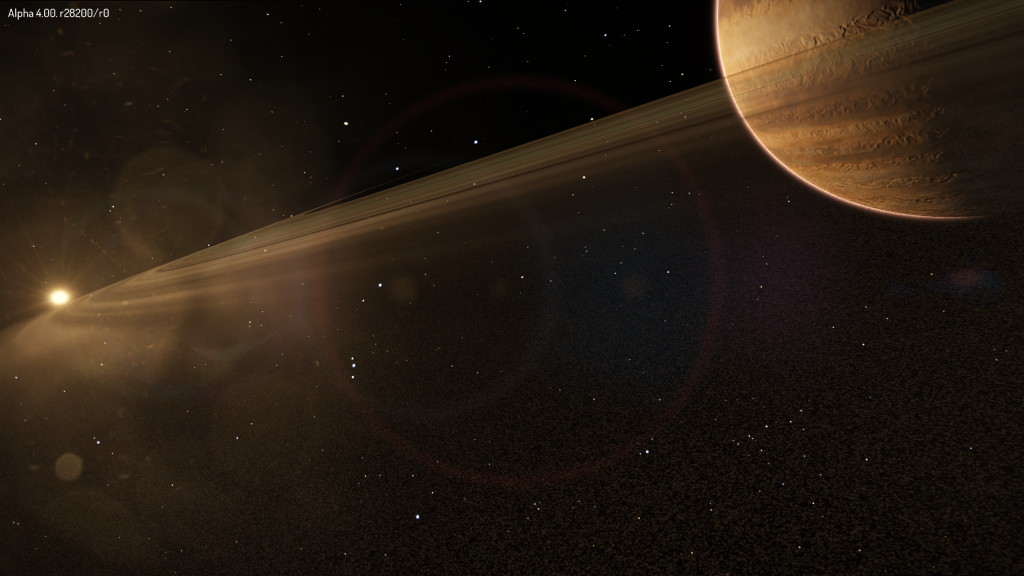
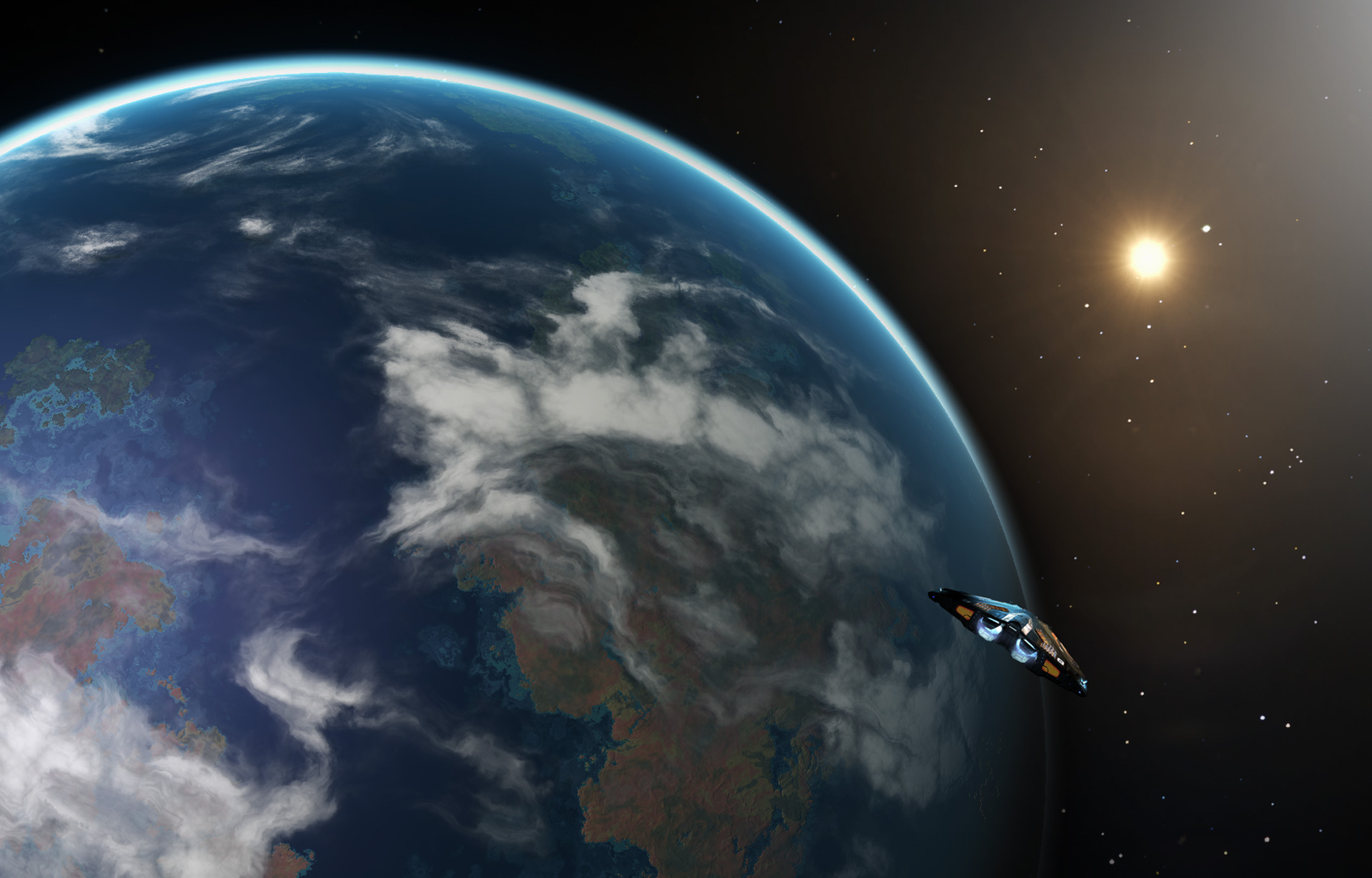
Planets looks a little better this time around:

http://img4.wikia.nocookie.net/__cb20140618220148/elite-dang...

http://img2.wikia.nocookie.net/__cb20140618220220/elite-dang...

http://i1242.photobucket.com/albums/gg522/frobitz/ed-rings-8...

Re: Exploring No Man’s Sky, A Computer Game Forged by Algorithms

#37

The issue with a lot of procedurally-generated content is that overall things become same-y. Lots of breadth, little depth. When you have a set number of variable sliders, you don't have to see all the possible worlds to get a sense of how many sliders there are and what their ranges are. The problem only gets worse when moving away from planet/landscape generation (dumb matter) and getting into simulations of histor…

Dwarf Fortress. Read about it. Play it. Marvel at it. http://www.bay12games.com There is nothing same-y about a game where you can't hit a bogeyman with a hammer because he's too fast, but you can kick his ass with cranberry leaves because they're lighter and let you hit faster. Or, how about the elephants roosting in trees? Or the vampirism that can take over a fortress? Of the possible were-versions of most creatur…

And if you haven't yet, you should read Roomcarnage

Start at Chapter I and don't spoil it, it isn't yet fully played out and the community anticipates the next installment

http://www.reddit.com/r/dwarffortress/comments/2b6up6/roomca...

Re: Exploring No Man’s Sky, A Computer Game Forged by Algorithms

#38
post #34

The issue with a lot of procedurally-generated content is that overall things become same-y. Lots of breadth, little depth. When you have a set number of variable sliders, you don't have to see all the possible worlds to get a sense of how many sliders there are and what their ranges are. The problem only gets worse when moving away from planet/landscape generation (dumb matter) and getting into simulations of histor…

That's often a problem with what's sometimes called "constructive" PCG, i.e. manually writing an algorithm that generates variations of content. It's somewhat hard to craft an algorithm that produces a ton of variations that don't look trivially like variations, at least without a lot of careful tweaking. > I'd be really interested in learning about any work in the "interestingness" of procedural content. Some of the…

> Instead of writing a constructive algorithm, you instead try to specify what content you want in some formal way, and then use a solver to generate content meeting the description (a genetic algorithm, constraint solver, etc.)

This is basically the difference between imperative programming and logical programming. Each has advantageous domains (basically which ever way is easier to implement).

Re: Exploring No Man’s Sky, A Computer Game Forged by Algorithms

#39

The issue with a lot of procedurally-generated content is that overall things become same-y. Lots of breadth, little depth. When you have a set number of variable sliders, you don't have to see all the possible worlds to get a sense of how many sliders there are and what their ranges are. The problem only gets worse when moving away from planet/landscape generation (dumb matter) and getting into simulations of histor…

Even though I am an advocate of procedural generation, I concur that this is a problem with procedural generation. Even though one algorithm can create millions of permutations, they are all based on the same algorithm (for example, you can vary the size and distance of Worley noise in many ways, but in the end it looks like variations on the same type of noise). For each really new thing you want to produce, you bas…

If the procedural system were only used as inputs for the initial state and the world were based on a chaotic model then the the starting game state (after some iterations of the world model) could be wildly different for very similar sets of input states.

As you mention, the challenge then becomes to define this sort of chaotic system in such a way that the resulting worlds are not 'nonsense'. Nonsense states could be culled using some fitness functions... sounds like fun :-)

Re: Exploring No Man’s Sky, A Computer Game Forged by Algorithms

#40

Earlier quoted context omitted.

Even though I am an advocate of procedural generation, I concur that this is a problem with procedural generation. Even though one algorithm can create millions of permutations, they are all based on the same algorithm (for example, you can vary the size and distance of Worley noise in many ways, but in the end it looks like variations on the same type of noise). For each really new thing you want to produce, you bas…

If the procedural system were only used as inputs for the initial state and the world were based on a chaotic model then the the starting game state (after some iterations of the world model) could be wildly different for very similar sets of input states. As you mention, the challenge then becomes to define this sort of chaotic system in such a way that the resulting worlds are not 'nonsense'. Nonsense states could…

Yes, in my mind there are at least two levels of procedural generation:

1) Generating the layout of the world, placement of entities, and other world states (such as available quests or plot devices).

2) The generation of the actual content itself (NPCs, items, terrain, flora, fauna, etc).

Here, I'm mostly referring to the second type. :)

As far as the first type, there is a LOT more you can do with chaotic systems because they are often AI-driven, and AI-driven things can (potentially) have emergent results (although even an AI-less system, like Conway's game of life, can produce many interesting results).

Post reply on HN