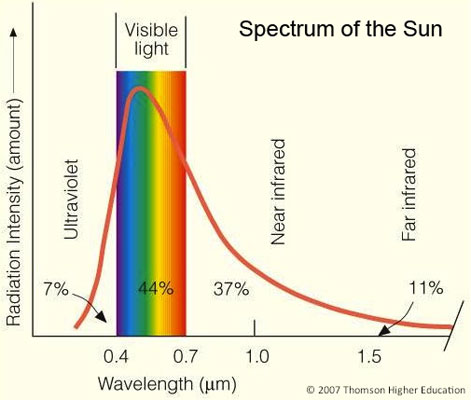
The LED grow lights seem to be a real game-changer; the most modest estimates put the power savings at ~%50 (over HPS).
Japanese Farmer Builds High-Tech Indoor Veggie Factory
11–20 of 46 posts
Re: Japanese Farmer Builds High-Tech Indoor Veggie Factory
#12Earlier quoted context omitted.
'The LED lights are a key part of the farm’s magic. They allow Shimamura to control the night-and-day cycle and accelerate growth. “What we need to do is not just setting up more days and nights,” he says. “We want to achieve the best combination of photosynthesis during the day and breathing at night by controlling the lighting and the environment.”' Also: 'He is also able to cut discarded produce from 50 percent to…
Additional productivity gains might be made by operating the "indoor farm" within dense urban areas and thus closer to the consumer, thereby removing transportation costs associated with a typical farm.
* I hate that term. So clumsy-sounding.
Re: Japanese Farmer Builds High-Tech Indoor Veggie Factory
#13Re: Japanese Farmer Builds High-Tech Indoor Veggie Factory
#14Earlier quoted context omitted.
However in the article's example there is only negative power savings as the plants used to get fed for free from the sun, now they're consuming electricity from the grid. Now that might be recoverable via reductions in waste and lower water consumption (see article) but it isn't automatically a net win, it might be a net loss overall. Need data.
'The LED lights are a key part of the farm’s magic. They allow Shimamura to control the night-and-day cycle and accelerate growth. “What we need to do is not just setting up more days and nights,” he says. “We want to achieve the best combination of photosynthesis during the day and breathing at night by controlling the lighting and the environment.”' Also: 'He is also able to cut discarded produce from 50 percent to…
A more immediate opportunity would be placing production close to the area of consumption. The developing and developed world will fail to address their problems with diabetes and obesity induced diseases as long as the population has limited access to fresh produce. Being rich in NYC or SF it is easy to take fresh produce for granted, in some major urban areas even if you are rich fresh produce is virtually non-existent.
Re: Japanese Farmer Builds High-Tech Indoor Veggie Factory
#15In countries/areas where land prices are very expensive, this might help. In the US I don't see this helping with common food stock (wheat/corn/cotton/soybean/tobacco/...). I could see this used for presentation foods (foods we judge more from looks) since you can control everything so much more you will likely get more products that can demand a premium price.
Re: Japanese Farmer Builds High-Tech Indoor Veggie Factory
#16In countries/areas where land prices are very expensive, this might help. In the US I don't see this helping with common food stock (wheat/corn/cotton/soybean/tobacco/...). I could see this used for presentation foods (foods we judge more from looks) since you can control everything so much more you will likely get more products that can demand a premium price.
or when aquifers run out of freshwater used to irrigate fields
Another good point is reduction or elimination of e coli & other pathogens caused by livestock runoff & workers shitting in the fields.
Re: Japanese Farmer Builds High-Tech Indoor Veggie Factory
#17Earlier quoted context omitted.
However in the article's example there is only negative power savings as the plants used to get fed for free from the sun, now they're consuming electricity from the grid. Now that might be recoverable via reductions in waste and lower water consumption (see article) but it isn't automatically a net win, it might be a net loss overall. Need data.
Agreed. More data is needed to see clearly if on a larger scale this is economically feasible to do. From my little experience with hydroponics, water and land use are the two major wins. Electricity can be a deal breaker but that depends on a lot of factors (type of produce, electricity prices, closeness to city, production vs consumption quantities, etc). From a personal point of view, I strongly support this type…
Re: Japanese Farmer Builds High-Tech Indoor Veggie Factory
#18Earlier quoted context omitted.
Additional productivity gains might be made by operating the "indoor farm" within dense urban areas and thus closer to the consumer, thereby removing transportation costs associated with a typical farm.
Those are overblown. Modern mega-scale logistics are stunningly efficient. Food shipped by freight-ship and truck are supposedly more efficient with less polution than a local farmer driving hir* produce to market in a car. * I hate that term. So clumsy-sounding.
He/She = They
His/Hers = Their.
Him/Her = Them.
Re: Japanese Farmer Builds High-Tech Indoor Veggie Factory
#19Re: Japanese Farmer Builds High-Tech Indoor Veggie Factory
#20Another interesting idea would be to create solar panels that only convert the lost spectrum into {electricty -> required spectrum} [3]
[1] http://bernardkatz.com/wp-content/uploads/2012/07/spectrum-o... [2] http://www2.estrellamountain.edu/faculty/farabee/biobk/pigme... [3] http://mitei.mit.edu/news/transparent-solar-cells