Live data from Hacker News

At

furbo.org

81–90 of 98 posts

Re: At

#81
post #6

For a very long time, I thought the "{" was called "birdwing" because that's how it was explained to me. When I try that now I get very odd looks. Related: http://carlos.bueno.org/brackets-of-the-world.pdf

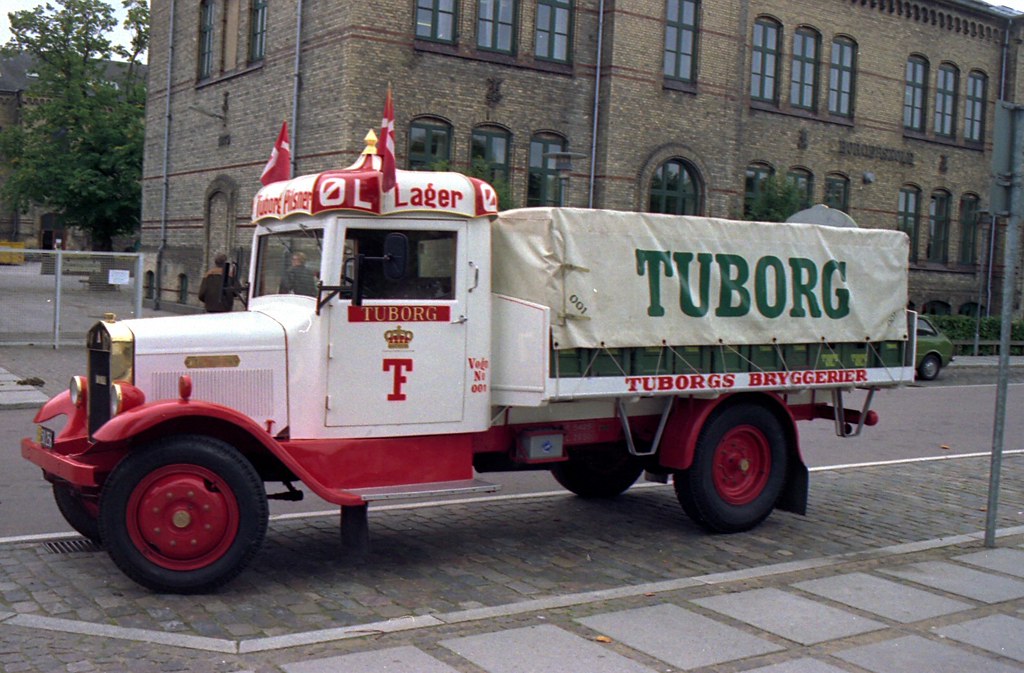
In Denmark the curly brackets are knows as tuborgklammer, literally Tuborg brackets. Tuborg is a danish brewery and the brackets are named after the roof of the cap on their old delivery trucks. http://farm4.staticflickr.com/3600/3516095666_fb53727c79_b.j...
Re: At

#82

In Norwegian the official name is "krøllalfa", meaning "curly alpha". Hip in the 90s, but I don't think I've heard anyone call it that in years. I was actually surprised when I learned that "at" was the proper English name and usage. I had always assumed it was a symbol that had been co-opted into network addresses because it was accessible from the keyboard and kinda looked like an a. One advantage of the internatio…

I always thought the English version was ampersat.

I think "ampersat" was first coined in the 90s (when email suddenly made the @ sign more common), presumably by analogy with "ampersand". The earliest reference I can find is a suggestion from a viewer writing in to CBS Sunday Morning in 1994 (paywalled link, I'm afraid): https://www.lexisnexis.com/uk/nexis/docview/getDocForCuiReq?...

This newspaper article from 1996 also shows someone proposing "ampersat" apparently as a novel suggestion: http://www.independent.co.uk/life-style/bits--bytes-1317440....

Re: At

#83
post #34
post #7

No one actually uses „Klammeraffe“ in German. It’s just „at“ (English pronunciation – most of the time). I wonder how widespread the use of those alternative names for “at” is in other languages he lists. In German „Klammeraffe“ is this weird, unwieldy nickname that used to be somewhat fashionable a long time ago (mid-nineties maybe, whenever many people where first confronted with email addresses). I remember it bei…

The Dutch one "money tail" is more widespread than "at", I would say.

I'm not so sure. I'm Dutch as well, and when I recite my email address I use the English "at", so "douwemaan at domain" rather than the unwieldy (4 syllables long!) "douwemaan apenstaartje domain".

In my experience most (if not all) people in my age group (18 - 25) simply pronounce it as "at". This could be a generational thing as most of us were raised with the internet and all these internet-y terms come quite naturally to us.

Re: At

#84

Earlier quoted context omitted.

I believe they were saying "at the rate".

Not sure why people are downvoting you. The @ symbol is hundreds of years old and originally meant "at the rate of" (as in, "10 boxes @ $1" means "10 boxes for $1 apiece"). It's perfectly possible that the Indian population could have picked this up and perhaps contracted it a bit during the reign of the British Empire. https://en.wikipedia.org/wiki/@_symbol

I think this is the most interesting thing I've learnt from this thread: that most other countries didn't use @ as "at the rate of", and hence had names for the funny symbol on their typewriters that only began to be used with email addresses.

Re: At

#85
post #83
post #34

Earlier quoted context omitted.

The Dutch one "money tail" is more widespread than "at", I would say.

I'm not so sure. I'm Dutch as well, and when I recite my email address I use the English "at", so "douwemaan at domain" rather than the unwieldy (4 syllables long!) "douwemaan apenstaartje domain". In my experience most (if not all) people in my age group (18 - 25) simply pronounce it as "at". This could be a generational thing as most of us were raised with the internet and all these internet-y terms come quite natu…

It could very well be an age thing, because I myself and friends of similar age (25-30) use both 'at', and 'apenstaartje', although primarily the former.

Re: At

#86
>A pictogram…, is an ideogram that conveys its meaning through its pictorial resemblance to a physical object.

By this definition, @ is not a pictogram just because it is named for a pictorial resemblance. It must convey meaning through that pictorial resemblance. A "monkey tail" or "elephant trunk" or "sea snail" does not convey the meaning of "at", unless I'm missing some cultural context.

木, on the other hand, conveys the meaning of "tree" through visual representation of roots below the ground and branches on top [1].

[1] https://en.wiktionary.org/wiki/%E6%9C%A8

Re: At

#87

>A pictogram…, is an ideogram that conveys its meaning through its pictorial resemblance to a physical object. By this definition, @ is not a pictogram just because it is named for a pictorial resemblance. It must convey meaning through that pictorial resemblance. A "monkey tail" or "elephant trunk" or "sea snail" does not convey the meaning of "at", unless I'm missing some cultural context. 木, on the other hand, con…

To be fair, the article does go on to explain that with regard to pictograms, "what we’ve seen happen with the @ symbol is the opposite."

Re: At

#89

In Bulgaria this is called "Monkey" (маймунка) or "Monkey A" (маймунско А) i've also heard few people cal it "rose" (розичка)

Also, some people in Bulgaria call the '@' sign "кльомба".

An interesting story about this sign, is that it had been used in a medieval Bulgarian chronicle dated at 1345. In it, the @ symbol is part of the word 'Амин' (amen).

http://bg.wikipedia.org/wiki/%D0%A4%D0%B0%D0%B9%D0%BB:19-man...

Re: At

#90
Technically in Italian: lumaca is slug and chiocciola is snail, but people often improperly use lumaca for snail as well.
Post reply on HN