Apart from the principles, there is also a practical problem with complying with such a request. How can one verify that the request is genuine? It could be a hacked email account from that domain. Or a rogue employee. Or someone who doesn't have sufficient authority within that company. How is the recipient of the request going to verify it?
Google is Breaking the Internet
271–280 of 306 posts
Re: Google is Breaking the Internet
#272Earlier quoted context omitted.
... Exactly. Someone took it upon themselves to hassle the OP to remove a link. Google has made a tool to allow you to have links that you don't vouch for to be not counted, but the webmaster in question decided to try and do it "manually". It used to be you would get sketchy emails asking you to link XYZ and now a few years in the future the sketchy emails are asking you to unlink XYZ.
I think you missed the point of the disavow tool. If Google hit you with a penalty, they still expect you to put in a good faith effort to remove the link naturally first. https://support.google.com/webmasters/answer/2648487?hl=en
it cannot possibly be your responsibility to remove links that other unrelated entities have towards you! (unless it's an obvious link scheme)
Re: Google is Breaking the Internet
#273Earlier quoted context omitted.
Links which are nofollowed are still seen by users & can still impact that user's experience with the website. Yet those are fine, even if they point at spam, because they don't have a significant impact on Google. So then what's the difference between disavows and having the links removed? Getting the links removed costs far more time & money. And it gives Google a data mining stream of feedback they can leverage to…
> So then what's the difference between disavows and having the links removed? Getting the links removed costs far more time & money. And it gives Google a data mining stream of feedback they can leverage to dish out further penalties. That's a good thing right? Pushing sources of bad links down through the basement, effectively nuking the source/network from the link graph. You know Google's ranking system is based…
If it were impossible for others to throw trashy links at your site in bulk for cheap it could perhaps be a good thing.
If Google didn't change policies overnight & then retroactively penalize you for things which were fine in the past http://searchengineland.com/guest-post-google-penalty-187707 then it could perhaps be a good thing.
Unfortunately, in reality, both of those ifs are hypothetical & untrue. Which means it is absolutely not a good thing.
>You know Google's ranking system is based on information, and adding more information leads to better results for the Web user.Quality of information matters as much as the volume of information. Look at Demand Media's current stock price for an example of this.
But in terms of links, you have to think through the impacts here...
Yes if Google freezes some activities they dislike then perhaps that is a net positive for relevancy, however the more they fear-monger about links the less natural linking goes on. Most of the major social sites put nofollow on almost all external links. And with the sea of fear approach to relevancy, in some cases magazines or newspapers will profile a person & not link to the source in spite of the entire article being about that source. I've spent many hours being cited by journalists where in spite of being good enough to be the primary source for their content, there was no link citation.
paraphrasing David Naylor's excellent recent video http://youtu.be/UdflGrCJxYc?t=1m50s "More and more high profile websites are having a no linking policy. Which really is kind of weird isn't it, because if that is a journalistic website and they are writing about your website surely those are the kinds of links Google would want to see. ... It seems kind of weird that the links Google actually wants you to get are the first links to dry up on the web." - David Naylor
The other important factor is the quality of the information created by those who are trying to do disavows and link removals. When people are irrationally driven by fear while in a harmed state, they are NOT acting rationally. Business owners who are selling off assets, firing employees, stalling with creditors, aligning predatory lending to try to keep things afloat, etc. are stressed out & are likely to make many poor decisions in that rushed & panicked state.
Thus some of that more information which is created is junk misinformation.
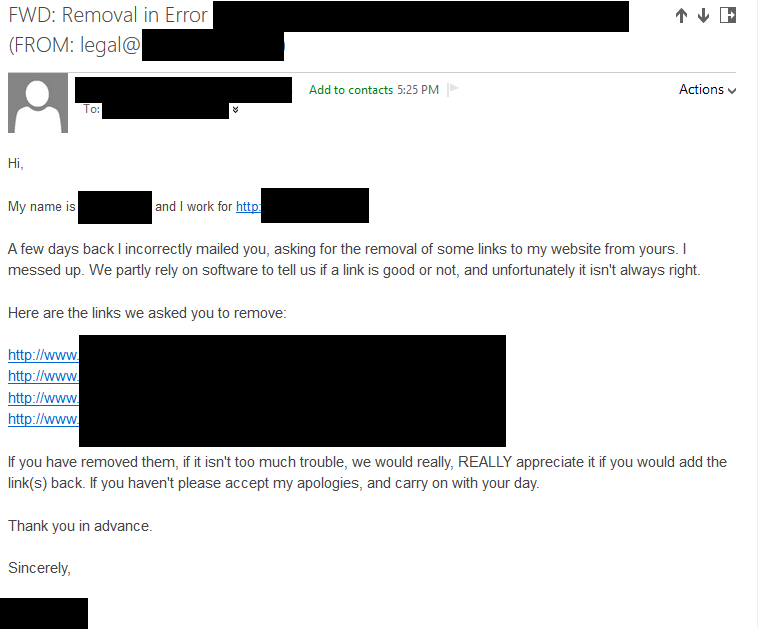
Consider this email: http://www.seobook.com/images/link-unremoval.png They asked the website to remove the link claiming it was unnatural, and then they emailed again to ask the website to ignore the removal request.
They don't know which links are "unnatural" and so they are using automation to try to sort through it all. Are their automated quick guesses (which are often driven by tools) more useful than all of Google's internal reviews & ratings data which has been built up for over a decade? Color me skeptical.
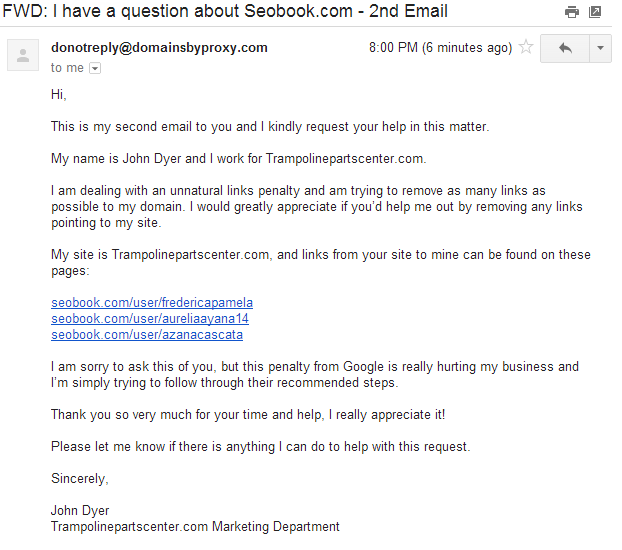
There's another factor with the disavow data as well. Look at this removal request http://www.seobook.com/images/trampolines.png Our site has about 20,000 unique linking domains referencing it. However over the years we have had well over a million registered user profiles. If only 2% of the registered user profiles were ignorant spammers who spammed our profile pages and then later added our site to a disavow file, we would have more people voting against our site than we have voting for it. And those profile pages were already not indexed & the links were nofollowed anyhow. Those pages are effectively outside the search game, yet those ignorant spammers can still create negative votes against our site based on the fear-mongering.
And as bad as that sounds, there's no reward for actually removing the bad links either. At some SEO conferences numerous SEO experts have gave the advice to "just disavow them anyhow" even if the links are removed. Thus this deluge of email spam offers publishers no value whatsoever, just sunk cost & wasted time - time which could have been spent creating useful information.
Re: Google is Breaking the Internet
#274Earlier quoted context omitted.
I think you missed the point of the disavow tool. If Google hit you with a penalty, they still expect you to put in a good faith effort to remove the link naturally first. https://support.google.com/webmasters/answer/2648487?hl=en
the doc says it's your responsibility to remove spammy back links that you (or a SEO you've hired) have introduced to improve your ranking. it cannot possibly be your responsibility to remove links that other unrelated entities have towards you! (unless it's an obvious link scheme)
The site that emailed to get a link taken down employed an SEO agency to improve their rankings and they created a bunch of spammy links to try to manipulate Google into ranking that site higher than others that probably deserve to rank higher due to their content. If Google did nothing about it we would get some crappy search results.
Also, if you read what Matt Cutts is saying, it implies that if they only had a few unnatural links then they wouldn't have received a webmaster tools warning telling them they had spammy links. They got the warning because their link profile suggested that it was obvious they had been trying to manipulate rankings, not because they had one or two iffy ones.
It's likely that the site then blanket emailed anything and everything that they weren't sure about to get the links taken down. Is it Google's fault that this is how the site decided to deal with the warning? Should Google just make it really easy for them by saying, "OK you disavowed those crappy links, you're off the hook now"? If the consequences are so weak and short-lived, where is the deterrent effect? No, Google doesn't own the internet but they own Google and the site is just trying to provide users with the most relevant results to their searches.
Re, the nofollow aspect. Google didn't "force" sites into using the nofollow attribute by scaring them into thinking that their rankings would drop. Nofollow was in place before there was any notion that who you linked to could harm you. Sites like Wikipedia and others were only too happy to add nofollow to links because it put spammers off from crapifying their sites.
Re: Google is Breaking the Internet
#275Earlier quoted context omitted.
Several places in the world have shown that to be effective. And that would be real physical harm.
When has terrorism been an effective way to invoke change in a democratic society?
Re: Google is Breaking the Internet
#276We have to acknowledge that Google has been performing up and down the perfect margin (but not getting it perfectly right), but it is because, presumably, they are in the last part of the equation to make it all perfect.
The only thing is they can't simply solve it relying only to technology because search engines deal with people. People are emotional beings, search engine robots, are, not bring funny, just robots.
Consider this as equation Neo (of the Matrix).
Re: Google is Breaking the Internet
#277Earlier quoted context omitted.
How is duplicate content made "for users"? Why would I want to find exactly the same prose in multiple places?
* Paginated content with different filters or sorting? Almost the same content on multiple pages * Product with a category name in url, or without, or under multiple categories Both are very useful for humans, but have to be massaged with canonical urls to please Google machines
Re: Google is Breaking the Internet
#278Earlier quoted context omitted.
Why? Why should anyone remove outbound links simply because the destination _thinks_ they are harmful? And even worse, if the destination is in fear of some other _third_ party which _might_ think they are harmful? In the bad old days of the Internet, web sites would complain if you linked to them, because they though they had some sort of a right to determine who linked to them. After court cases, etc. the issue was…
I explained why in the first post. To be friendly and a generally good person. Legality was not a reason given so I'm not sure why you feel that's an argument. In this case, the guy posting the link does have a bad reputation, which is no doubt the reason for the search ranking hit. His deliberate posting and refusal to remove it makes him a bit of an ass. And "Why" one should not behave as an ass is self evident in…
In those instances, even if you think you are being a good guy, there's a good chance you are wasting the one resource you can never recover (time) in an attempt to help someone who is likely going to attempt harming you AND waste your time.
Re: Google is Breaking the Internet
#279Earlier quoted context omitted.
> You can't buy links, but you can if you do it from us. What a scam. You seem to be confusing how Google's advertising work. You can't buy a page rank passing link from Google. Adwords and Adsense ads do not pass PageRank. No legitimate advertising does (for starters because they all want to track visits and send you through redirects, but also because it's usually injected remotely and not part of the page that can…
But that is my point what counts as legitimate advertising? Who decides whether a link is non passing advertising or not. Google is the gatekeeper here. They get to decide what links are "advertising" and what are naughty naughty black hat so. Are you saying that if the seo guys labeled their spam links as advertising it would be legit and google would just ignore the links? Now they are telling you how you should ad…
Re: Google is Breaking the Internet
#280It's incredible how google shaped my expectation of looks of a search page results. I was like - WTF is that page? - oh... I've changed my search engine... Go figure.