Live data from Hacker News

Space Colony Art from the 1970s

settlement.arc.nasa.gov

11–20 of 59 posts

Re: Space Colony Art from the 1970s

#11

The torus design really makes it so that it's uphill both ways. That would change the "Back in my day" jokes forever.

Except that it's _not_ "uphill" in a force sense, since the attraction is the result of centripetal force, acting outward perpendicular to the ring at any point, not gravity, which would focus in toward a center.

So, visually, yes. In fact, no.

Re: Space Colony Art from the 1970s

#12
post #3

Those "real" painted pictures give me always a kind of warm feeling compared to the sharp digital paintings. But it may have been caused by all that SciFi covers I've seen as a child.

i personally like painting/drawing over 3d rendering. There is something dull about the latest. I dont mind flawed or imperfect perspective for instance. It gives life to a painting.

And I love airbrushed pictures.

Re: Space Colony Art from the 1970s

#13
post #4

Many of these pictures are based on designs described in one of my favorite books of all time, The High Frontier , by Gerard K. O'Neil. In it, O'Neil, a Princeton physicist and founder of the Space Studies Institute, goes on to describe in great technical detail the feasibility of building artificial space habitats of varying sizes. I heartily recommend it to anyone even remotely interested in space. The ideas from t…

I was a member of the L5 society and continue to believe that low earth orbit habitats will be a better option than colonizing Mars.

Re: Space Colony Art from the 1970s

#15
post #4

Many of these pictures are based on designs described in one of my favorite books of all time, The High Frontier , by Gerard K. O'Neil. In it, O'Neil, a Princeton physicist and founder of the Space Studies Institute, goes on to describe in great technical detail the feasibility of building artificial space habitats of varying sizes. I heartily recommend it to anyone even remotely interested in space. The ideas from t…

I was a member of the L5 society and continue to believe that low earth orbit habitats will be a better option than colonizing Mars.

They are both extremely difficult to accomplish with current technology. The issue with Mars is that it has no magnetosphere [1], and as such, all habitats will have to be underground and/or shielded with very thick layers of lead, dirt and water.

Man made colonies will have the same problem, in addition to requiring space manufacturing and assembly at a level that is currently impossible.

If SpaceX brings the cost of space flight down to its basic energy costs, we will have solved one problem. The other problem is the power generation required to conduct space manufacturing at a large scale. Solar, although consistent, is low in power density and thus requires large amounts of surface area that is very difficult to maintain in space.

Until we crack compact, high yield fusion, I doubt we will make much progress in realizing our space-faring dreams. This was also the opinion of the late Robert Bussard, inventor of the Bussard ramjet and the polywell fusor.

1. http://www.space.com/24731-mars-radiation-curiosity-rover.ht...

Re: Space Colony Art from the 1970s

#18
post #15

Earlier quoted context omitted.

I was a member of the L5 society and continue to believe that low earth orbit habitats will be a better option than colonizing Mars.

They are both extremely difficult to accomplish with current technology. The issue with Mars is that it has no magnetosphere [1], and as such, all habitats will have to be underground and/or shielded with very thick layers of lead, dirt and water. Man made colonies will have the same problem, in addition to requiring space manufacturing and assembly at a level that is currently impossible. If SpaceX brings the cost o…

Mars colonies, at least, can rely on Nitrogen and CO2 from the Martian atmosphere. Orbital habitats have to import everything but sunlight.

Having the colonies underground may have an extra advantage, both on Mars and on the Moon, as they may be closer to sources of ice. I remember hearing something about the Moon being much less dry than previously thought. No running water nor blocks of ice, but maybe crunching rocks yields something useful.

Re: Space Colony Art from the 1970s

#19

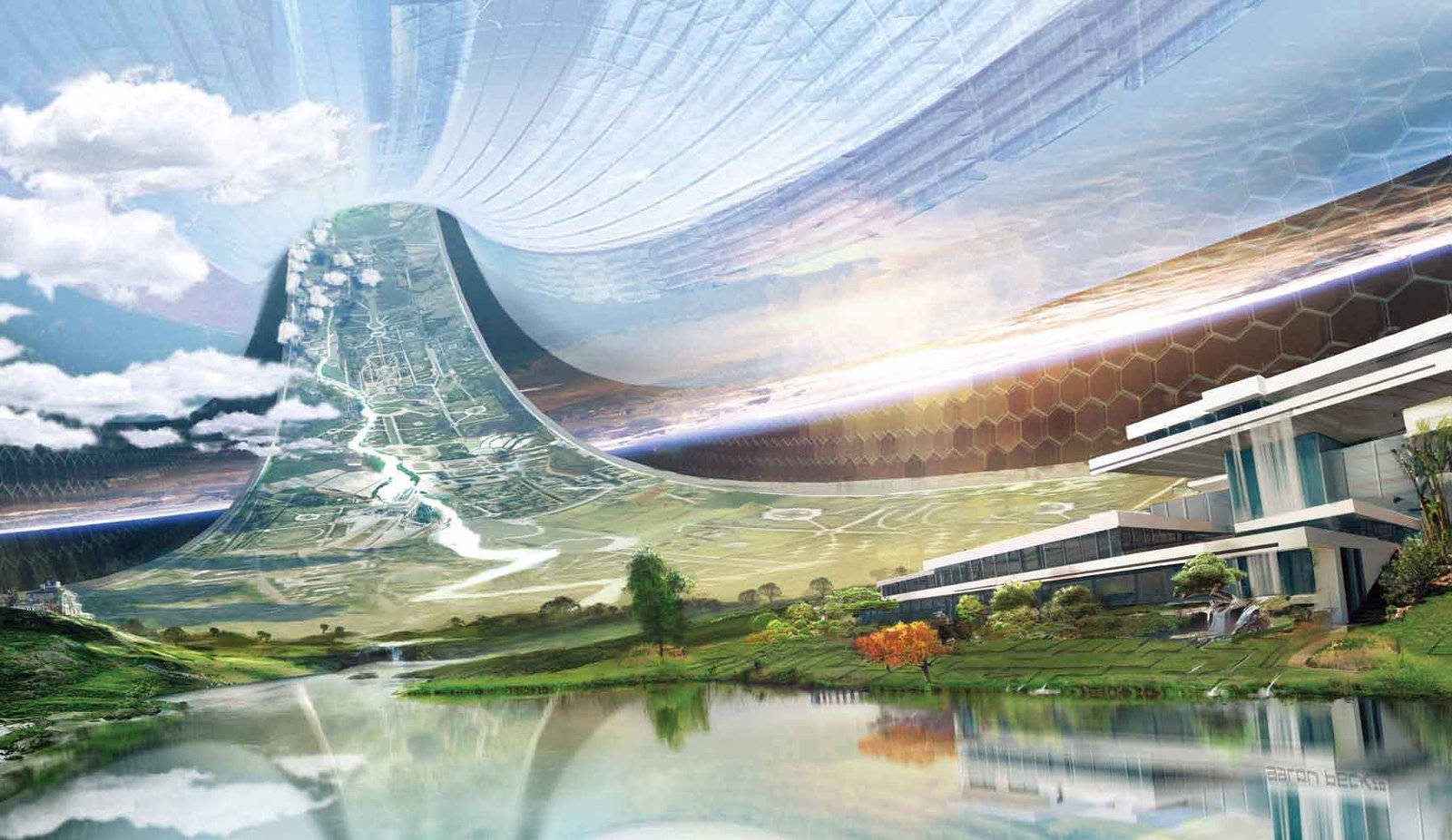
OMG, so this is where the Elysium creators got their inspiration from! Elysium art: http://actionflickchick.com/superaction/wp-content/uploads/2... http://www.geeksofdoom.com/GoD/img/2013/08/2013-08-09-elysiu...

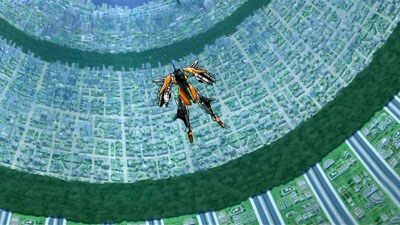
Or any number of other SciFi movies, cartoons, etc. For example the many Gundam[1] series have similar colonies (maybe inspired by the same material).

[1] Example: http://www.darkmirage.com/blog/wp-content/uploads/2007/12/16...

Re: Space Colony Art from the 1970s

#20
post #18
post #15

Earlier quoted context omitted.

They are both extremely difficult to accomplish with current technology. The issue with Mars is that it has no magnetosphere [1], and as such, all habitats will have to be underground and/or shielded with very thick layers of lead, dirt and water. Man made colonies will have the same problem, in addition to requiring space manufacturing and assembly at a level that is currently impossible. If SpaceX brings the cost o…

Mars colonies, at least, can rely on Nitrogen and CO2 from the Martian atmosphere. Orbital habitats have to import everything but sunlight. Having the colonies underground may have an extra advantage, both on Mars and on the Moon, as they may be closer to sources of ice. I remember hearing something about the Moon being much less dry than previously thought. No running water nor blocks of ice, but maybe crunching roc…

Right on. To add to this, early stage terraforming is in the immediate rather than long-term plan for Mars. As soon as we start producing CO2 on Mars, we're on our way.

I'm not against colonizing space itself, but early seagoing explorers didn't attempt to colonize the ocean. We need to establish ourselves in environments that allow easy production of oxygen, water, and food.

In the end, it is about money. It takes a lot of money to get setup on Mars, but after it is setup, it is a HUGE resource, which means much, much more money. The moon could also be a huge resource, but it is expensive to colonize because it can't hold atmosphere easily. Colonizing space itself without mining a resource in a way that eventually will pay off the initial investment is useless and a drain on our society.

Post reply on HN