Live data from Hacker News

Lens Blur in the new Google Camera app

googleresearch.blogspot.com

11–20 of 249 posts

Re: Lens Blur in the new Google Camera app

#11
I find it funny that this was one of the "exclusive features" of the HTC One M8 thanks to the double camera, and days after it's release Google is giving the same ability to every Android phones.

I'm sure the HTC implementation works better, but this is still impressive.

Re: Lens Blur in the new Google Camera app

#12
We had an interesting discussion about this a few nights ago at a Photojournalism talk.

In that field, digital edits are seriously banned, to the point multiple very well known photo journalists have been fired for one little use of the clone tool [1] and other minor edits.

It's interesting to think I can throw an f/1.8 lens on my DSLR and take a very shallow depth of field photo, which is OK, even though it's not very representative of what my eyes saw. If I take the photo at f/18 then use an app like the one linked, producing extremely similar results, that's banned. Fascinating what's allowed and what's not.

I find even more interesting is the allowance of changing color photos to B/W, or that almost anything that "came straight off the camera" no matter how far it strays from what your eyes saw.

[1] http://www.toledoblade.com/frontpage/2007/04/15/A-basic-rule...
Re: Lens Blur in the new Google Camera app

#14
post #10

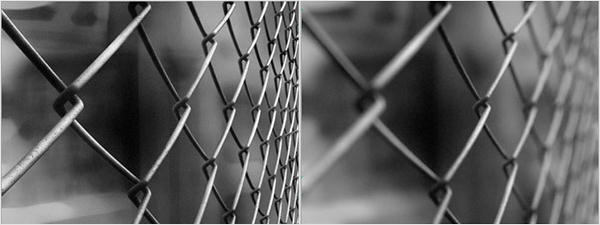
Is looking at the examples giving anyone else a headache? It's like the software blur falls into some kind of uncanny valley for reality.

It doesn't give me a headache, but to my eyes it isn't remotely convincing. There's no way I'd look at any of those example pictures and not realize the blurring was done with postprocessing.

Re: Lens Blur in the new Google Camera app

#15

So Google basically took what Lytro has been using hardware to achieve, and did it entirely in software. Pretty impressive.

The difference is that Lytro actually does it, instead of simulating it.

It'd be fun to play around with the software to see in which cases it breaks (perhaps taking a photo of a framed landscape photo with another landscape behind, for example)

Re: Lens Blur in the new Google Camera app

#16
post #12

We had an interesting discussion about this a few nights ago at a Photojournalism talk. In that field, digital edits are seriously banned, to the point multiple very well known photo journalists have been fired for one little use of the clone tool [1] and other minor edits. It's interesting to think I can throw an f/1.8 lens on my DSLR and take a very shallow depth of field photo, which is OK, even though it's not ve…

Radiologists are the same... You take a Computed Tomography series of images, doing all kinds of back-projection (duh) and volumetric anisotropic edge-preserving smoothing, and then you apply segmentation and false-color, semi-transparent transfer functions and lighting...

And then you apply one more post-processing effect to try to highlight something, and they freak out that you're no longer showing them the raw data!

That does not mean what you think it does.

Re: Lens Blur in the new Google Camera app

#17
post #12

We had an interesting discussion about this a few nights ago at a Photojournalism talk. In that field, digital edits are seriously banned, to the point multiple very well known photo journalists have been fired for one little use of the clone tool [1] and other minor edits. It's interesting to think I can throw an f/1.8 lens on my DSLR and take a very shallow depth of field photo, which is OK, even though it's not ve…

Photojournalism is a weird cross over of history/evidence collection and drifting in to art. They fit together like oil and water, for all the reasons you pointed out.

Re: Lens Blur in the new Google Camera app

#19

Isn't it interesting how, by diminishing the overall information content of the image by blurring it, it actually communicates more (in some ways, particularly depth) to the viewer?

Well, usually it's for a specific purpose (drawing attention to something) or aesthetic that you use a shallow depth of field. There have been artists in the past that tried to go extreme in the other direction, trying to capture as wide DOF as they could.

This is a good example: http://gallery.realitydesign.com/dof.jpg

Both of these are good individually. But what is best depends totally on what exactly you're going for. Stanley Kubrick did very interesting experimentation with this.

Re: Lens Blur in the new Google Camera app

#20
I may be wrong because I don't know much about image based algorithms, but this seems to be a pretty successful new approach to achieving this effect. Are there any other existing "lens blur" or depth of field tricks that phone makers or apps are using?

I'd love to see their code open sourced.

Post reply on HN