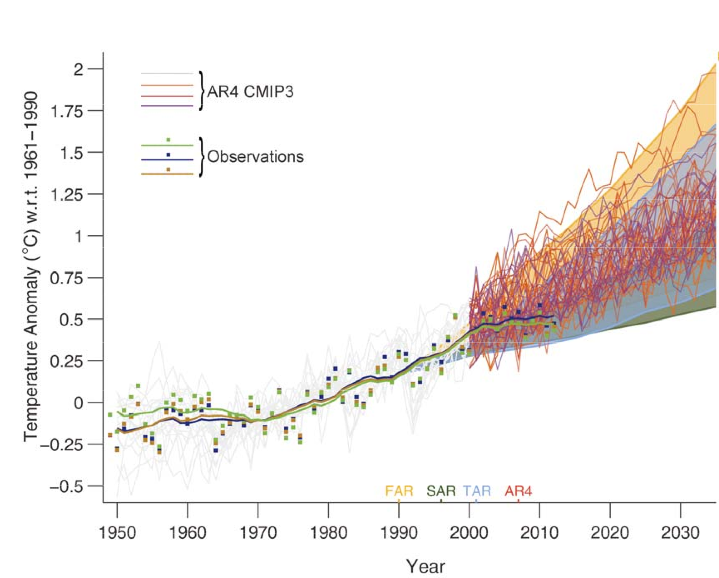
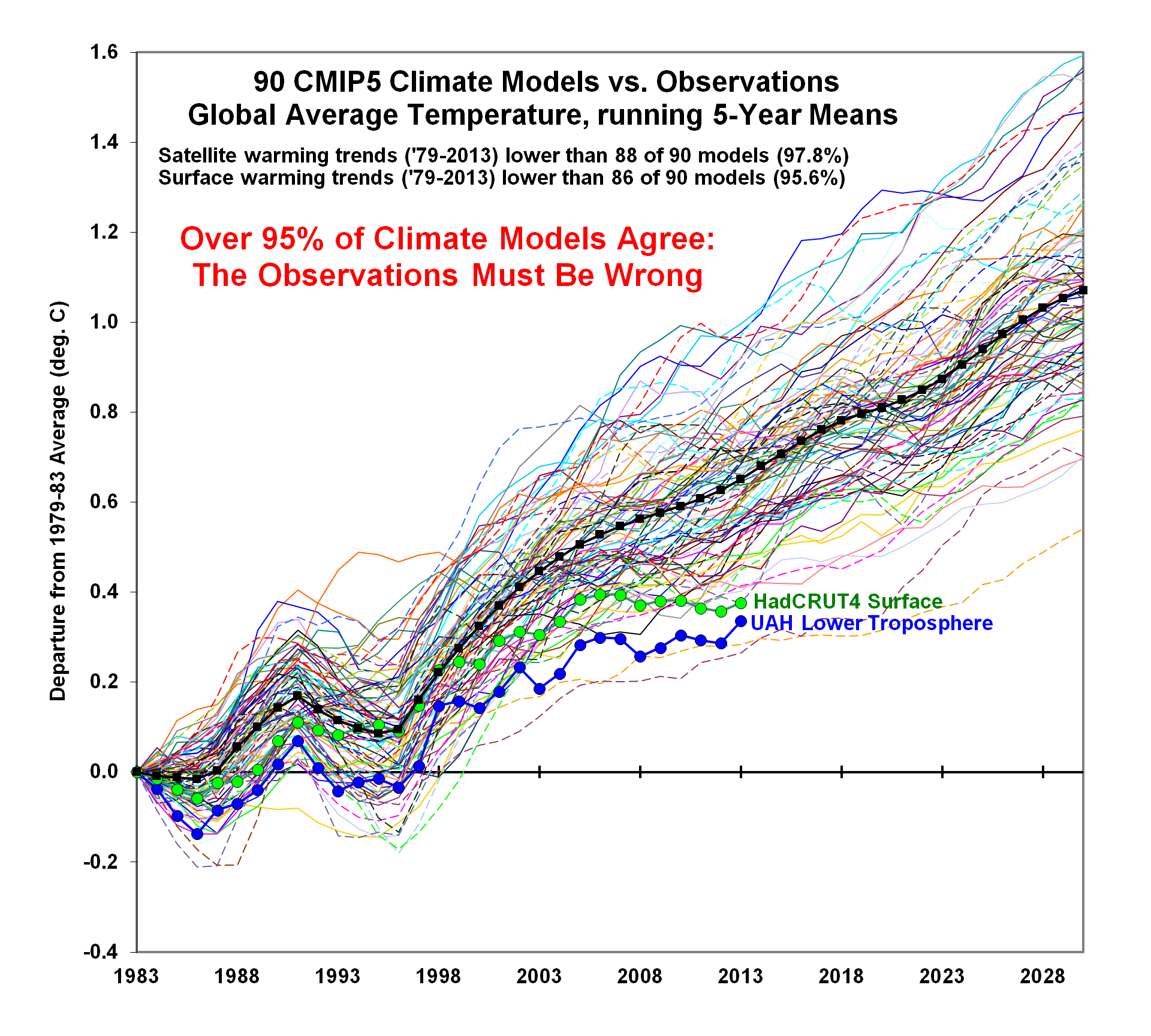
Earlier quoted context omitted.
> No, there's the exact same amount of reason. This isn't a morality play, who's "fault" it is doensn't matter. Of course it matters -- in terms of the amount of impact human activity has on the climate. The less impact it has, the less beneficial you can expect energy policies to be to the environment. Since these policies have a non-trivial cost in terms of human suffering (less energy for heating, growing food, et…
It doesn't matter in a moral sense. If someone proves that CO2 emissions don't cause global warming, then yeah, it makes it less effective to focus on CO2 emissions. But we still want to stop warming from happening, so we'd increase our efforts on whatever they pinpoint as the alternative cause. The linked article I was rebutting wasn't making that utilitarian case, they were making a moral case about not being oblig…
I re-read the article and I don't understand how you arrive at this interpretation. This appears to be something you're assuming. The article is precisely about the utilitarian argument: the trade-off between the expected effectiveness of energy policies and their cost.