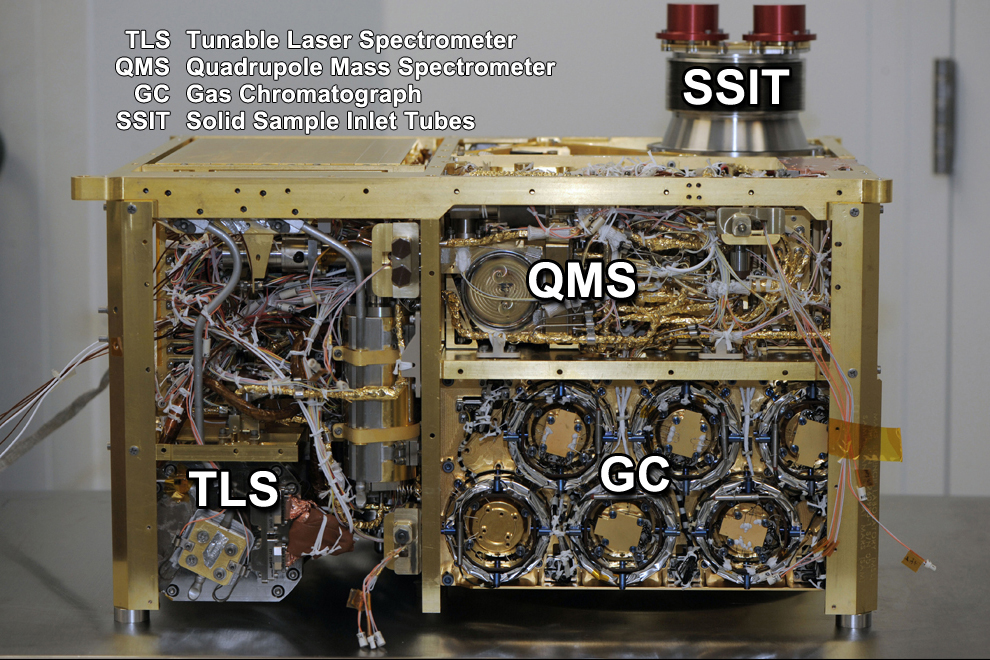
SAM (Sample Analysis at Mars) then uses this energy to heat the soil and analyze it. I recommend everyone to read about the SAM, it's a fascinating instrument. Arguably the most complicated instrument we've (humans) ever built.
One of the central costs of a round trip to Mars is the fuel for the return flight. With enough water at Mars we can manufacture all the methane/oxygen rocket fuel we need on site. The Mars Direct mission architecture and the NASA Johnson Space Center's Design Reference Mission derived from Mars Direct both assume we send hydrogen from Earth to manufacture rocket fuel for the return trip at Mars, combining it with at…
Are there benefits to methane/oxygen outside what you referenced?
Liquid hydrogen has what Elon Musk calls the pain-in-the-ass factor. It requires much higher volume tank at much lower temperature, adding lots of mass to the rocket, and it's impossible to effectively seal. RP-1 kerosene has the inconvenience of requiring your planet to have been covered with life a hundred million years ago. So, methane is the liquid fuel of choice for future martians.
The irony - water everywhere yet the inhalation (or ingestion?) of space dust proves detrimental to the thyroid system. Wonder what else is in that crazy dust?
"If you think about a cubic foot of this dirt and you just heat it a little bit - a few hundred degrees - you'll actually get off about two pints of water - like two water bottles you'd take to the gym," Dr Leshin explained. This is huge for Mars exploration by humans. 1. We can send unmanned expeditions to stockpile large tanks of water. 2. This would allow us to literally 3D print structures on the surface and allo…
Transporting material to Mars isn't going to be an issue with SpaceX's reusable rockets. Though 3D printing structures is a good idea and option to consider. And preemptively capturing water for use is smart.
"If you think about a cubic foot of this dirt and you just heat it a little bit - a few hundred degrees - you'll actually get off about two pints of water - like two water bottles you'd take to the gym," Dr Leshin explained. This is huge for Mars exploration by humans. 1. We can send unmanned expeditions to stockpile large tanks of water. 2. This would allow us to literally 3D print structures on the surface and allo…
>2. This would allow us to literally 3D print structures on the surface and allow us to significantly decrease the amount of materials we need to transport to the surface in order to build a habitat.
Could you explain the connection here? What does water have to do with 3D-printing?
"If you think about a cubic foot of this dirt and you just heat it a little bit - a few hundred degrees - you'll actually get off about two pints of water - like two water bottles you'd take to the gym," Dr Leshin explained. This is huge for Mars exploration by humans. 1. We can send unmanned expeditions to stockpile large tanks of water. 2. This would allow us to literally 3D print structures on the surface and allo…
>2. This would allow us to literally 3D print structures on the surface and allow us to significantly decrease the amount of materials we need to transport to the surface in order to build a habitat. Could you explain the connection here? What does water have to do with 3D-printing?
I think he is using 3D printing synonymously with on-site fabrication of components. Not quite the same, but similar.
It's nuclear. You can read about it here: http://en.wikipedia.org/wiki/Curiosity_(rover)#Specification... SAM (Sample Analysis at Mars) then uses this energy to heat the soil and analyze it. I recommend everyone to read about the SAM, it's a fascinating instrument. Arguably the most complicated instrument we've (humans) ever built. (If you're curious about the SAM, read this article: http://www.planetary.org/blogs/em…
>2. This would allow us to literally 3D print structures on the surface and allow us to significantly decrease the amount of materials we need to transport to the surface in order to build a habitat. Could you explain the connection here? What does water have to do with 3D-printing?
I think he is using 3D printing synonymously with on-site fabrication of components. Not quite the same, but similar.
Or he means literally 3D-print structures using water, which will freeze in the Martian atmosphere to form water ice - which is actually a pretty great structural material if used appropriately.
I think he is using 3D printing synonymously with on-site fabrication of components. Not quite the same, but similar.
Or he means literally 3D-print structures using water, which will freeze in the Martian atmosphere to form water ice - which is actually a pretty great structural material if used appropriately.
Unfortunately, exposed ice will sublimate pretty quickly. You could possibly use it as a bulk structural material when covered, and certainly for radiation shielding.