Live data from Hacker News

Ideas for Computing

github.com

51–60 of 101 posts

Re: Ideas for Computing

#51
post #25
post #15

Earlier quoted context omitted.

Doesn't zsh do something like this? At the very least, it seems to be extensible enough that you could provide completion+manpage documentation if you wanted to.

Zsh certainly does something like this. Here's what my autocompletion looks like: http://leukensis.org/files/zsh-autocomplete.png The program has to provide its autocomplete files, but it's very powerful. My 'kill' autocompletes with a ps-like output, for example.

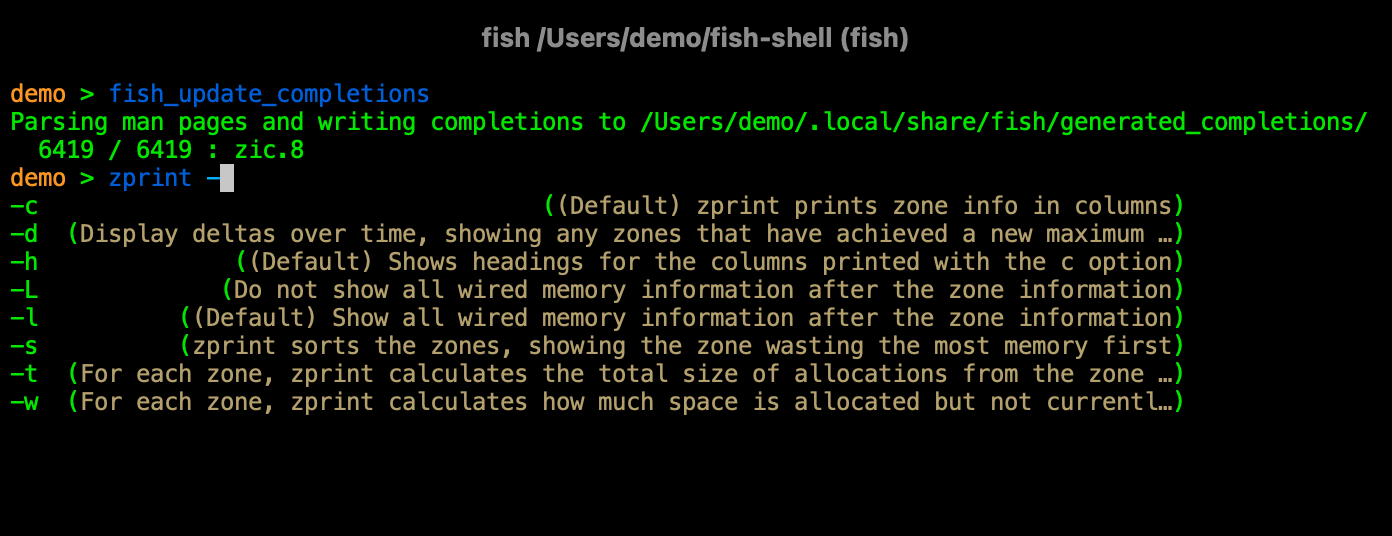
Does zsh support matching long and arguments? That's what I want. A bit like fish (http://fishshell.com/assets/img/screenshots/man_completions....) and finalterm which others have mentioned.
Re: Ideas for Computing

#52
post #44

Earlier quoted context omitted.

I agree about the need for sharing, it's disappointing that those with profit driven motivation can ruin it for us though. Anyone with plenty of money could take one of your brief idea descriptions, implement the basic idea and apply for a patent on the idea - preventing you from using your own idea in future even. Those small descriptions do not serve as prior art in the US patent system. Putting ideas out there lik…

The HN community could form an idea hub to host and protect ideas and monetize them as products to fund further ideas and products.

Interesting proposition, but do you have any idea how this could actually work? Where would funding come from initially? Would this be a for-profit or non-profit organization? How would we reach a consensus on anything, given the diversity of the community and other communities? How would we protect ideas, other than developing them? (since this can already be done by anyone, given the resources).

I can't picture how we could create such system in a society built around the complete opposite, where the government backs corporations and fails to acknowledge the innovations of individuals, unless they pay for it.

On a side note, I have many ideas that I've not released, not because I'm worried about someone stealing them, but because they're so far outside any mainstream convention that I'd be seen as a raving lunatic by many if I published them.

Re: Ideas for Computing

#53
post #31

Earlier quoted context omitted.

The problem is most modern computing is driven by the single question: "How can I monetize this idea?" It's only hobbyists and academics that really try to improve the state of computing, rather than having a primary focus on revenue. It's unfortunate that groundbreaking ideas are usually not the moneymakers, else we'd see innovation at a quicker rate. Software patents are another hindrance to innovation too. Often t…

Author of the article here. If everyone monetized everything our industry would collapse. It's a balance. Innovation and monetization are different beasts. Some ideas are so awesome they just have to be shared. Techies are smart enough to think bigger if they really wanted and make computing better. I hope my example sets a precedent. Sharing your idea may make technology better than if you kept it secret.

I'd love you to check out Airdispatch (http://airdispat.ch) - we are hoping to solve both #1 and #2.

Any feedback would be appreciated!

Re: Ideas for Computing

#54
post #45

I've thought of some of these independently. (It's good to see somebody else did too.) We could probably make more progress if we all kept a list like this publicly. Or even privately, with snippets shared where appropriate. I know if I went through some old journals I could scrounge up a decent list myself. One I had: Bash scripting in the style of hypercard. Hypercard was described to me as a system that had a set…

> Bash scripting in the style of hypercard. It sounds like the Clojure library Stevedore [1] does what you're looking for there. [1] https://github.com/pallet/stevedore

Is it a graphical interface? There aren't any screenshots. Or do you mean the library would be useful in building the tool?

Re: Ideas for Computing

#56
No. 36 Reminds me of Knuth's literate programming, which I attribute as the major reason for the continuing success of TeX/LaTeX. It needs a major rethink/revamp to move it on to the full spectrum of computer languages (what is available in python or haskell) is not fully satisfactory and has not really caught on.

Re: Ideas for Computing

#57
post #52

Earlier quoted context omitted.

The HN community could form an idea hub to host and protect ideas and monetize them as products to fund further ideas and products.

Interesting proposition, but do you have any idea how this could actually work? Where would funding come from initially? Would this be a for-profit or non-profit organization? How would we reach a consensus on anything, given the diversity of the community and other communities? How would we protect ideas, other than developing them? (since this can already be done by anyone, given the resources). I can't picture how…

>On a side note, I have many ideas that I've not released, not because I'm worried about someone stealing them, but because they're so far outside any mainstream convention that I'd be seen as a raving lunatic by many if I published them.

This is a very good reason for why your idea should be put up for everyone to see. No, I don't mean that they should think you're a lunatic, but because of how awesome it would be if someone just picks up the tiniest bit and develops it.

Re: Ideas for Computing

#58
on the Package Manager-Package Manager front (idea 12), i bet you could bastardize chef to do this. it already has the translation layer for multiple package managers (yum, apt, pkg-add, etc).

Re: Ideas for Computing

#59
post #31
post #22

This reminds of this: http://www.squidi.net/three/ which attempts to define a large number of computer game gameplay mechanics. Maybe we need more forwarding-reaching fiction in our world. More essays on computing futurology, grand envisioning of what we can achieve with software. Even ambitious prototypes of a new way to do something (like Lighttable) A lot of what I see are tooling details, lot of boring effort dup…

The problem is most modern computing is driven by the single question: "How can I monetize this idea?" It's only hobbyists and academics that really try to improve the state of computing, rather than having a primary focus on revenue. It's unfortunate that groundbreaking ideas are usually not the moneymakers, else we'd see innovation at a quicker rate. Software patents are another hindrance to innovation too. Often t…

I actually quite strongly disagree here. A LOT of startups start of as: "how can we make something people want" and not "how can we sell people something." Look at history of all the big companies who didnt start with a business model: Google and Facebook for example. Only later when they grew did they start looking for ways to monetize. Dont get me wrong, I am not saying that there arent companies which do do this, but rather that not all are like this (including some of the very successful ones).

Re: Ideas for Computing

#60
post #31
post #22

This reminds of this: http://www.squidi.net/three/ which attempts to define a large number of computer game gameplay mechanics. Maybe we need more forwarding-reaching fiction in our world. More essays on computing futurology, grand envisioning of what we can achieve with software. Even ambitious prototypes of a new way to do something (like Lighttable) A lot of what I see are tooling details, lot of boring effort dup…

The problem is most modern computing is driven by the single question: "How can I monetize this idea?" It's only hobbyists and academics that really try to improve the state of computing, rather than having a primary focus on revenue. It's unfortunate that groundbreaking ideas are usually not the moneymakers, else we'd see innovation at a quicker rate. Software patents are another hindrance to innovation too. Often t…

> The problem is most modern computing is driven by the single question: "How can I monetize this idea?" It's only hobbyists and academics that really try to improve the state of computing, rather than having a primary focus on revenue. It's unfortunate that groundbreaking ideas are usually not the moneymakers, else we'd see innovation at a quicker rate.

That is an absolute silly notion. Money is a token of value, so if you're creating value for someone, it shouldn't be too hard to get some money for it.

Examples: The Internet, while initially a public research project, did not take off until it was commercialized. Personal computers and mobile phones - completely transformational technologies, the innovations of which went hand-in-hand with making tons of money. Google and Apple both innovates like crazy and they're two of the most valuable companies on the planet because of it. Much of the best open source software projects are off-shoots of commercial ventures.

Post reply on HN