Things work differently for different minds, I find that Courseras model of commitment works better for me. I tried 2 Udacity classes which are self-paced, I actually did quite a lot of the modules but somehow I moved on. On Coursera you have to live with the class and at least try to make all assigments and such on time. I think one thing that works good for me is the feeling of having a special oportuinty and "if i dont do this I will be left behind in the new age". Dont get me wrong I would love to be the kind of person I thought I was; searching the web, finding places and things most people would not assume were there and then putting them together. But I need the feeling of being on a "quest" and building up a illusion of "if I make this, things will change". Latter rambling is maybe more general, my point is some people (me) just cant handle the notion of almost force-feed overflow of accesible information and thinking that everybody doing it, so why bother (if the retention in the article is true that should be instrumentaly good for my crazy notion). Sorry for the crazy rant, if only the mind lacked biases. Maybe I should atleast try those mentioned in the article instead of being overpowered by strange thoughts.
Online Education's Dirty Secret - Awful Retention
71–80 of 165 posts
Re: Online Education's Dirty Secret - Awful Retention
#72My wife also wanted to take that Introductory Human Physiology course. She's a freelance medical translator, so improving her knowledge of that subject matter will have a direct positive impact on her career. She's not among the people who Daphne Koller said "never really intended to seriously take the class in the first place" - she bought the suggested books ahead of time, marked it all down on her calendar, and pl…
> What she found was that the course was way more difficult than the description suggested, and proved to be well above what she could understand with her current background. She watched the first video and found that it was going to take way more time than the course description predicted, because she would have to try to fill in a tremendous amount of background knowledge that the teachers presumed.
It's quite possible that this is a function of having so little open content out there right now. I can imagine a future where the background your wife needed would be easy to get from the platform itself, so that the profs' demanding teaching could serve audiences both with and without that background. Right now many of these courses must feel like skyhooks but once they're embedded in a web of knowledge (an earlier commenter called these 'nodes') they'll be more accessible i think.
There's still a huge problem of collecting and sequencing these nodes and I think many students will need direct contact with instructors of some sort to do this.
Re: Online Education's Dirty Secret - Awful Retention
#73MOOC providers could enhance engagement and retention by providing audio-only content in addition to or even instead of video-based content. I've got a couple hours per DAY where I crave quality audio content but am physically unable to watch videos at that time. In contrast, I've only got a couple hours per WEEK that I can watch videos.
This is an interesting approach. I think if they paid more attention to where and when exactly people would engage with content they could increase retention. I also have more time for audio than video and would love lectures of some sort delivered to my mobile. This could create a sort of immersion experience when combined with video and exercises.
Re: Online Education's Dirty Secret - Awful Retention
#74I've bookmarked this interesting analysis to add the link to my personal website. I especially like the comparisons among differing brands of online courses.
Before I read the fine article (which I recommend you read too), I was going to react just to the headline. And that reaction is still there. The reason we (correctly) criticize lack of retention in online education is that online education makes apparent metrics that show the lack of retention. But I would suggest, for learned discussion by all the participants here, that most forms of classroom learning, and especially compulsory secondary schooling in most of the developed world, suffers from a very bad lack of engagement on the part of the students. (Some of the comments posted here before this comment tell stories about that.) A high school student may attend classes often enough to avoid being expelled and gain a diploma, but the student may operate in "regurgitate and forget" mode the whole time he is in high school, not really remembering anything he supposedly was taught. The one kind of deep learning many high school students engage in is learning how to pretend to be studying. If online education develops better demonstrations of learner acquisition of knowledge and skill than mere seat time in a classroom, it may be a powerful force for exposing the dirty secret of classroom education.
Re: Online Education's Dirty Secret - Awful Retention
#75Seems a bit early to optimize for retention. Or to have dirty secrets. Or real suffer almost any kind of analysis at all.
Re: Online Education's Dirty Secret - Awful Retention
#76I believe on-line learning can work. Why? Three reasons: First, a 'dirty little secret' of the US software industry is how much of the learning from the beginning of electronic computing to the present has been just from individuals teaching themselves from books, e.g., K&R on C, Lippman on C++, Ullman on database, Sedgewick on algorithms, and on-line, e.g., Microsoft's MSDN site, StackOverflow, etc., essentially ind…
I really like your idea of "reaching" here. I think that in the MOOC model, the role of the MOOC is to help the professor extend their reach towards the students. I think the MOOC should bring the content marketing & designe experts to the table with the professor and help put together the front-end of the class. Part of that means helping the professor craft every email to the class to maximize engagement. In fact,…
Some of what you are saying is the way to solve some of the problems I mentioned, e.g., poor video and sound quality.
Some more of what you are saying, e.g., about marketing, design, and e-mails to students, definitely would help. However, I assumed that such things were asking too much of poor schools and that, really, the HN readers who dug through K&R, etc. on their own with no marketing, design, encouraging e-mails, etc. didn't really need such nice hand holding.
But I will say, at some crucial points for me, some teachers did play a crucial role: The college I graduated from then had a quite good math department, and some of the teaching aimed at me personally in some of the courses was just excellent and got me going so that I could continue on to 'the next level' in math via independent work. Then for on-line learning, as progress is made on the first, and easiest work, many of the students will need some 'personalized TLC' or risk getting off track, slowing down, and stopping.
Part of such TLC will be overviews: That is, it needs to be more clear to students what the value, purpose, or promise is of various parts of the course.
Another part of TLC is that students need to write some things, e.g., homework exercises, term papers, something like lab reports, and have their work read by an expert and 'corrected'. E.g., a place to learn nicely polished skills in writing about functions, maps, mappings, relations, etc. is in a theorem proving course in abstract algebra where a good professor actually corrects some student homework. Then when work with functions, maps, ..., in computing, will get the notation and terminology right; without such TLC, often won't get those things right. E.g., earlier today I read a little about hashing passwords, and the material mentioned a function "between the hashes and passwords". No, "between" is not appropriate. The usual description, and appropriate, is a function f from the set of hashes to the set of passwords. To be clear and not just picky, function f may not define a function g from the set of passwords to the set of hashes because there may be a password p such that there is no hash h so that f(h) = p. That is, the function f may not be 'onto', i.e., 'surjective' as at
http://en.wikipedia.org/wiki/Surjective_function
There's an old lesson in 'education': Get the student able to continue on in learning on their own. For that, usually some 'personalized TLC' is needed at a few crucial points in a student's development. To be really successful, the on-line approach will have to include some of that TLC also.
Re: Online Education's Dirty Secret - Awful Retention
#77Earlier quoted context omitted.
Interesting. That sounds a lot like me. You make a really strong point. Going back and changing it.
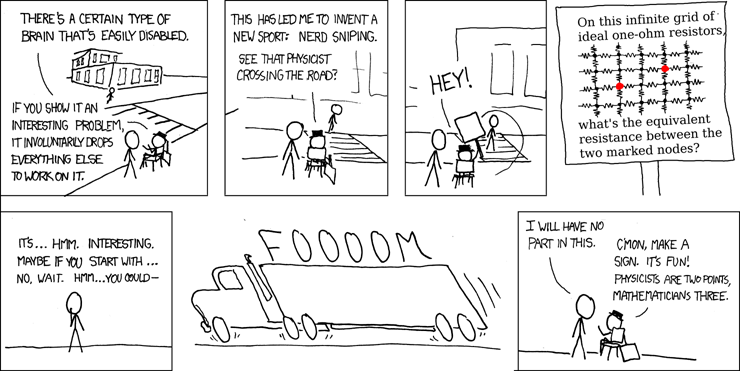
I think that it describes a lot of hackers/nerds/etc. :-)
Is it like this?
Re: Online Education's Dirty Secret - Awful Retention
#78Earlier quoted context omitted.
I really like your idea of "reaching" here. I think that in the MOOC model, the role of the MOOC is to help the professor extend their reach towards the students. I think the MOOC should bring the content marketing & designe experts to the table with the professor and help put together the front-end of the class. Part of that means helping the professor craft every email to the class to maximize engagement. In fact,…
> I think Coursera and EdX can do much better at using their design and content marketing talent to make these classes more accessible and successful. There's an interesting balance here. Professors I've talked to bemoan the lack of 'support' from Coursera (usually the universities provide a pot of money for profs to use themselves). But at the same time they would balk at some marketing guru coming in an 'spinning'…
oh i don't mean a marketing person who "spins" the course. but rather somebody who understands what messages to deliver to which students when. for example, if I haven't done any of the assignments in 3 weeks, telling me about admin for the upcoming exam is worthless. a designer and a content specialist understand this deeply and can help make the professor's communications more effective. "spinning" them would be worse...
Re: Online Education's Dirty Secret - Awful Retention
#79Another week, another article complaining that teaching a class which 5-10 thousand people successfully complete, and which cost less than $10 per successful student to provide, is an abysmal failure.
Meanwhile, the schools that the authors hold up as more successful examples of education have 20-500 successful graduates per session offered, nearly all of whom are idle young wealthy white people living in rich western countries, and who pay up to several thousand dollars per session each for this privilege.
Re: Online Education's Dirty Secret - Awful Retention
#80(Coursera engineer here) It's great to see thoughtful critiques like this. Thankfully, we have a data analytics team now (3 out of our 17 engineers), and they are studying our retention statistics and the factors that affect it. They're also running A/B experiments to see what increases it and getting some interesting results. We do see some big advantages of the timed model for learning, particularly in classes with…
For me, the killer feature would be the availability of textual/reading material corresponding to 100% of the content provided by videos.
So successfully completion of the course won't require watching the videos.