Live data from Hacker News

Make the Metric system the standard in the United States

petitions.whitehouse.gov

111–120 of 547 posts

Re: Make the Metric system the standard in the United States

#111

Before we start with the standard junk about "imperial measures are better because they are easier to understand / better suited to human scale / etc." can I say nope . The only advantage that imperial measures have (for some) is that they are familiar. That's the sum total of it. People where were raised metric find these apologies for imperial measures to be pure gibberish.

But, but - thumbs! Elbows! Feet!

Re: Make the Metric system the standard in the United States

#112

Earlier quoted context omitted.

The 2 cartons of milk in my fridge right now, say "2272ml 4 pints" on them.

This is because in both the US and the UK, imperial measures are legally defined in metric units. A pint is 568ml, by definition (well, in the UK, the US believes a pint is 454ml, but that's another argument).

The milk is clearly sold in pints though, if they were selling it in litres they would've sold 2 litres, not 2.272 litres.

Re: Make the Metric system the standard in the United States

#113

Before we start with the standard junk about "imperial measures are better because they are easier to understand / better suited to human scale / etc." can I say nope . The only advantage that imperial measures have (for some) is that they are familiar. That's the sum total of it. People where were raised metric find these apologies for imperial measures to be pure gibberish.

Reasonably scaled measurements are very useful, though. Everything in astronomy is measured in scaled units. Mass is in solar masses, interstellar distances are in parsecs (well kiloparsecs) or light years, planetary orbits are in astronomical units. Similar, a lot of atomic physics uses angstroms.

Of course, that doesn't apply much when the difference is only a factor of 2, like the pound/kilogram difference, but even there people cheat a bit by just saying "kilo."

Re: Make the Metric system the standard in the United States

#114
It's obviously a great idea, and obviously (to Americans) unlikely to happen in the lifetime of anybody reading this forum.

Does anybody else from America remember being taught the metric system in public elementary school, and being told that we'd be switching to it over the next few years? I was taught this around second grade (1981), I think based on the Metric Conversion Act of 1975 (http://en.wikipedia.org/wiki/Metric_Conversion_Act), which was not just signed by some random interweb tubers -- it was signed into law by the president. But IIRC, it was a toothless and impotent piece of legislation that was effectively stymied by the US auto industry.

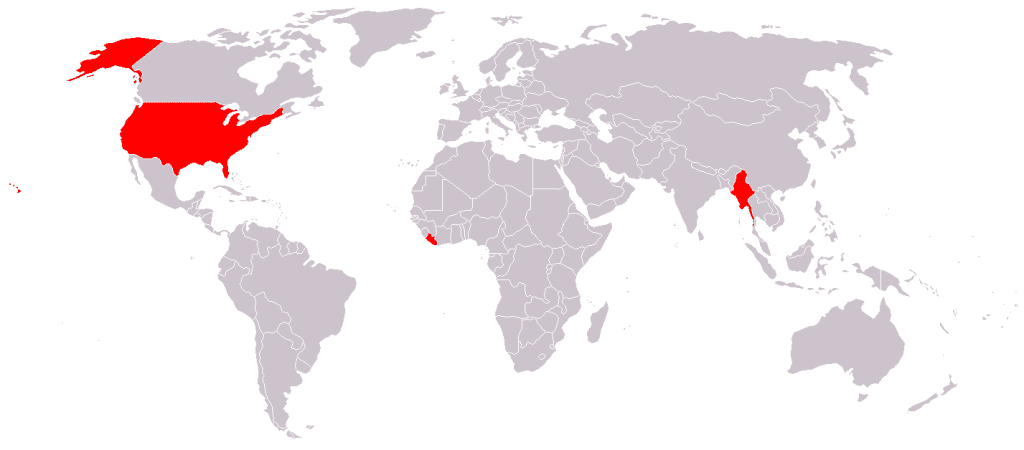
P.S. Amusing visual evidence that the US system sucks:

http://cdn.zmescience.com/wp-content/uploads/2011/03/metric-...

Re: Make the Metric system the standard in the United States

#115
post #59

It very likely is never going to happen. The main reason for resistance apparently is the various land boundaries that would have to be re-scaled to metric, which would be a source of endless legal wrangling. Already houses in the US have the longest history attached to them, sometimes all the way from the homesteading days if the plot is old. I've used both metric and imperial, for construction imperial is lots easi…

>Already houses in the US have the longest history attached to them, sometimes all the way from the homesteading days if the plot is old. That's young by European standards. Somehow we managed the conversion.

How many European countries are there? How many of them have had the same government for 230 years?

The US surveyed and then subdivided much of a continent into townships. Land was sold and granted by the section, halfs and quarters thereof. Flying over the Midwest, the manifold rectangles on the ground show how problematic even the slightest of conversion errors would be.

Maybe it's technical debt. But it exists because the legal system is stable.

Re: Make the Metric system the standard in the United States

#116
post #59

It very likely is never going to happen. The main reason for resistance apparently is the various land boundaries that would have to be re-scaled to metric, which would be a source of endless legal wrangling. Already houses in the US have the longest history attached to them, sometimes all the way from the homesteading days if the plot is old. I've used both metric and imperial, for construction imperial is lots easi…

>Already houses in the US have the longest history attached to them, sometimes all the way from the homesteading days if the plot is old. That's young by European standards. Somehow we managed the conversion.

We got to do a little do-over due to an ambitious little French upstart called Napoleon. That reboot fixed a lot of our problems. The US never got to even think about a do-over until they were so invested in Imperial that changing was very hard.

Re: Make the Metric system the standard in the United States

#117

There's a couple of things you'd want to consider converting to metric: long distances, short distances/dimensions, volumes, weights, and temperature come to mind. Long distances: swap out a bunch of highway signs, consider that 60mph (a mile a minute) ~= 100km/h, not too hard on people but a lot of signage needs to change. Feasible. Volumes: people are used enough to 2-liter bottles of soda, expect the 3.78 liter mi…

> For most people, a scale that starts at 0="civilization shuts down because you can't ice the roads" and goes up to 100="heatstroke territory" is a fine representation of humanity's day to day temperature. Why would we bother changing it?

I thought you were talking about Celsius at first...

Re: Make the Metric system the standard in the United States

#118
post #15
post #5

Earlier quoted context omitted.

Imperial is very visible in the UK (for road instances and for beer glasses in particular) but the country is pretty much metric now and has been for decades.

Funny you should mention beer – I've noticed an increasing tendency for pint glasses to be marked "568ml". Milk also doesn't come in pints any more, but does come in 568ml and 1 litre varieties. Still, as a nation we ask for and think of our beer and milk in pints.

people order beer in pints in Italy, everyone just thinks a pint is a fancy name for half a liter.

Re: Make the Metric system the standard in the United States

#119

I moved from Belgium to the US last year, and one of the things that surprised me was that metric measures actually see a fair amount of use in the States. It makes a convoluted system even more weird, but it's also just plain fascinating. 2L bottles of coke and 9mm bullets, miles except when people suddenly switch to kilometers, 50 meter pools and 5K jogging runs but a 120 yard football field, 2 oz shaving cream but…

I'm an American that grew up during the time they "tried" to go metric and none of this surprises me. Volumes are tricky for me, but I have no problem going from imperial to metric. Most other countries see the US and are like, "why aren't you using metric?" and we're like, "what's in it for us?" We learned metric in school and it's great, for exact measurements. Sometimes you just want to use what you have and not think about it. I don't know what 310mL is, I know how to measure 2 cups of water with...2 cups of water.

Speaking of globalization, TVs are still sold and classified in inches :-)

Re: Make the Metric system the standard in the United States

#120

I moved from Belgium to the US last year, and one of the things that surprised me was that metric measures actually see a fair amount of use in the States. It makes a convoluted system even more weird, but it's also just plain fascinating. 2L bottles of coke and 9mm bullets, miles except when people suddenly switch to kilometers, 50 meter pools and 5K jogging runs but a 120 yard football field, 2 oz shaving cream but…

To be fair, non-metric units are also use worldwide in some specific fields. In aeronautics, height is in feet. In a boat, distance are nautic miles (not even the same miles as Americans on the road).

Quick quiz: what's the diagonal size of your laptop screen in centimeters? Your mobile phone?

So it doesn't matter if you use completely unrelated metrics for different things. When you want to buy a laptop you know how many inches you want. When you swim, you know what a 50 meters pool means. But do you care how many laptop diagonals you're swimming? Probably not.

Now back to US switching to metrics: I think the real argument in favor of sticking to imperial is the cost and risk of the switch. Risk because confusion between metrics could lead to a catastrophe (example: filling the tank of a plane with liters when it should be the same number of gallons).
Post reply on HN