Live data from Hacker News

Suica, Japan's First IC Transit Card

tokyodev.com

241–250 of 276 posts

Re: Suica, Japan's First IC Transit Card

#241
post #232
post #75

Earlier quoted context omitted.

All iPhones can.

Hardware/software-wise, yes, but putting money on the card is a problem if you don't have a credit/debit card issued by a Japanese bank (or perhaps a few others). That's fine for locals, of course, but not helpful for many foreign visitors.

I had no problem topping it up with apple pay while in Japan.

Re: Suica, Japan's First IC Transit Card

#242
post #147
post #13

When you pay with Suica, the merchant pays a transaction fee of between 2 to 3.2%, similar to a credit card. That's surprising. IC cards are so universally and cheerfully accepted that I assumed they had no per-transaction costs. Compare the US, where merchants can be surly about card payments.

> Compare the US, where merchants can be surly about card payments. I rarely encounter this - I find it far more common to see places that won’t accept cash at all (even small businesses like food trucks).

Attitudes depends on margin and cash-handling costs.

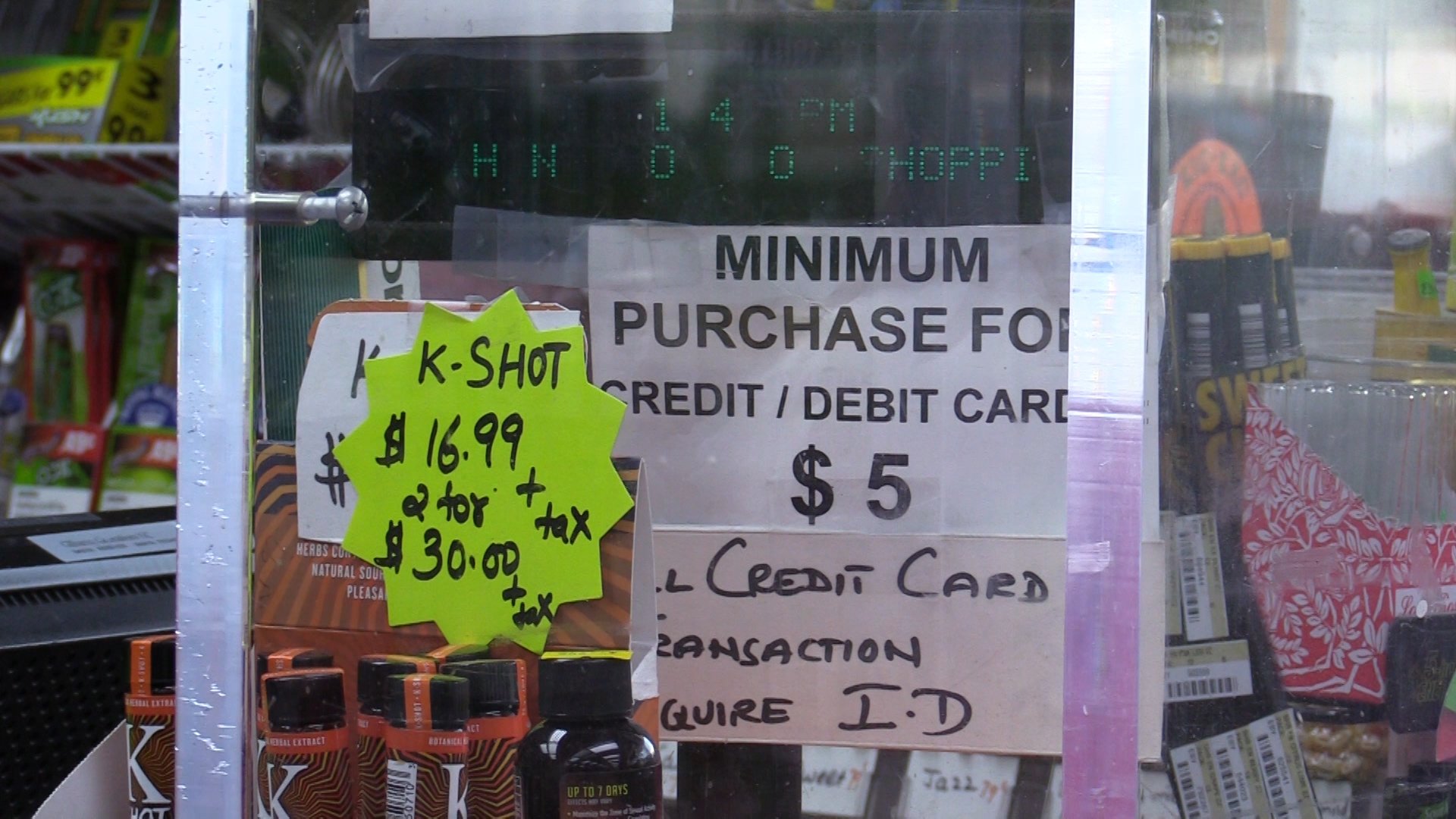
And prior to a 2013 class-action lawsuit that changed the situation, merchants were widely banned by payment processors from charging credit card transaction fees. But now many low margin businesses pass along the cost: for instance, it is common at gas stations, and almost universal at truck stops across the US. And some businesses have long opted for minimum transaction amount for credit purchases.

https://www.the-sun.com/wp-content/uploads/sites/6/2022/03/N...

https://wpcdn.us-east-1.vip.tn-cloud.net/www.41nbc.com/conte...

On the other hand, in places where the target clientele is fully-banked and handling cash is more costly, some businesses find it advantageous to opt solely for card transactions: for instance, an upscale establishment in a city. They may have higher margins that can easily eat the cost, and being card-only also decreases the attractiveness to robbers and discourages unbanked patrons. It has also been criticized for being discriminatory in the same way.

Re: Suica, Japan's First IC Transit Card

#243

If you haven’t experienced suica, it’s like magically fast. Faster than NFC, faster than Apple Pay, faster than tap to pay, faster than Disney magic bands, faster than your work badge. It absolutely floored me every time I used it in Japan and it’s a full payment transaction.

> Every Suica card has a chip storing two things: a unique card ID, and your current balance. Both of those live on the card itself, rather than a central server.

When you remove the network and run locally, you’d expect it to be amazingly fast.

But it’s also effectively physical cash. And that has many downsides as well.

Re: Suica, Japan's First IC Transit Card

#244
post #209

Ok, this might sound great but it's really not. I live in Switzerland, and they don't use a tap in/tap out system at all. There are no barriers to enter the station, anywhere. There are multiple ways to purchase a ticket, I usually use the app Fairtiq or the official SBB app, where I swipe right before boarding the train/tram/bus(it's a national system, so even works on the regional networks) and swipe left when I'm…

>tap in/tap off sucks no matter how good the system is. It is fundamentally a wrong think.

Tap system doesn't have to end billing period on tap out, if that's what you're trying to say.

Moscow/Saint Petersburg cards have many options which you can combine (add-on packages), as well as a regular balance (wallet).

"90 minutes unlimited" does how it is named, and if you travel first by metro, then switch to a bus, you pay less in the bus.

Re: Suica, Japan's First IC Transit Card

#245

Earlier quoted context omitted.

> If you bought unlimited ticket And that's the difference. IIRC, you have to periodically top up your Suica card with money which then gets deducted from the balance each time you use it. In Europe, there is no such thing - sure, you can buy a lot of single ride tickets and then use them when you need to, but you have to stamp the ticket when you start each ride, which does seem a little more inconvenient.

I don't think it's fair to conflagrate "Europe" as a single entity. From what I'm reading and my distant recollection: - In London you top up your Oyster card and pay a fare according to the zone your travelling to. Metro is gated. - In Paris your load up tickets in your Navigo pass and pay a flat rate every time you take the metro or RER. It's also gated. - In most (all ?) Swiss cities you don't have any card to cha…

There are no gates anywhere in Switzerland, but one will encounter patrollers much more frequently in the trains (seldom in the trams/buses). I was flabbergasted by the low-trust look of the 2.5-meters high gates in the Paris subway

Re: Suica, Japan's First IC Transit Card

#246

If you haven’t experienced suica, it’s like magically fast. Faster than NFC, faster than Apple Pay, faster than tap to pay, faster than Disney magic bands, faster than your work badge. It absolutely floored me every time I used it in Japan and it’s a full payment transaction.

They're now working on walk-through gates using UWB https://atadistance.net/2026/05/13/uwb-mobile-suica-isnt-jus...

Re: Suica, Japan's First IC Transit Card

#247
post #108

Earlier quoted context omitted.

I also did prefer my plastic Pasmo (essentially the same as suica) card until I learned during my last trip, that it can only be recharged with cash :-/

This doesn't especially bother me, but it is a kinda funny workflow to go to an ATM to withdraw cash (with your bank card) only to immediately put it back into the machine (to charge your IC card).

Word!

Re: Suica, Japan's First IC Transit Card

#248

Earlier quoted context omitted.

> If you bought unlimited ticket And that's the difference. IIRC, you have to periodically top up your Suica card with money which then gets deducted from the balance each time you use it. In Europe, there is no such thing - sure, you can buy a lot of single ride tickets and then use them when you need to, but you have to stamp the ticket when you start each ride, which does seem a little more inconvenient.

In London you can use a contactless (UK) bank card, and it works just like the "Osyter Card". I think that started around 2016. For journeys on the TFL network you should get billed the lowest fare, as long as you touch at the right points when changing.

I still have an old laminated underground pass with my picture on it from 92'.

Re: Suica, Japan's First IC Transit Card

#249
post #219
post #209

Ok, this might sound great but it's really not. I live in Switzerland, and they don't use a tap in/tap out system at all. There are no barriers to enter the station, anywhere. There are multiple ways to purchase a ticket, I usually use the app Fairtiq or the official SBB app, where I swipe right before boarding the train/tram/bus(it's a national system, so even works on the regional networks) and swipe left when I'm…

True, the Swiss is the simplest way around - and in planning is to activate it even without swiping (I'm not sure I remember details): But let's face it the tap system is not that far behind, because in some implementations it can do that calculation by itself (I believe having seen it in London?) so at the end of the day you end up paying the optimal price.

They're indeed planning a BiBo (“Be in – Be out”) alternative to EasyRide [0], which will rely on BT beacons placed in the cars and stations, as well as the motion sensors and GPS (like now). [0]: https://www.vybe.ch/ov-wird-einfacher-sbb-testet-automatisch...

Re: Suica, Japan's First IC Transit Card

#250

I live in Tokyo and use my Suica almost every day. Suica is very convenient because it makes entering station gates very smooth. I have a question: how do people enter stations in cities outside of Japan? I have never been outside of Japan, so I was curious.

In Norway, the trains and subway don't have physical barriers, you just enter! You will get a fine if you are stopped in a random control without a valid ticket (although the controllers are apparently reasonably lenient if you can show that you usually have an active ticket and just happened to forget), but there's nothing physically stopping you from trying!

I believe the reason is mostly historical (it wasn't deemed necessary when most of the system was built, and the later attempt to introduce the gates later failed for a bunch of different reasons)

Post reply on HN