AI slop that's also simply wrong. Flagged.
Taste Is All That's Left
231–240 of 573 posts
Re: Taste Is All That's Left
#232This post makes two mistakes. The first is an XKCD 605 (Extrapolating). The author makes bold predictions for the future as though they're inevitable, but gives zero evidence, because there is none, we're still at T=0. IBM is still in business. Wake me up when it's been taken out by someone vibe-designing a mainframe in kicad. Or even, let's see a dropbox clone get off the ground. Should be easy, right? (It's an HN t…
> dropbox clone get off the ground
Thats exactly what Im working on:
- web client: https://github.com/mickael-kerjean/filestash
- desktop sync: https://github.com/mickael-kerjean/fdrive
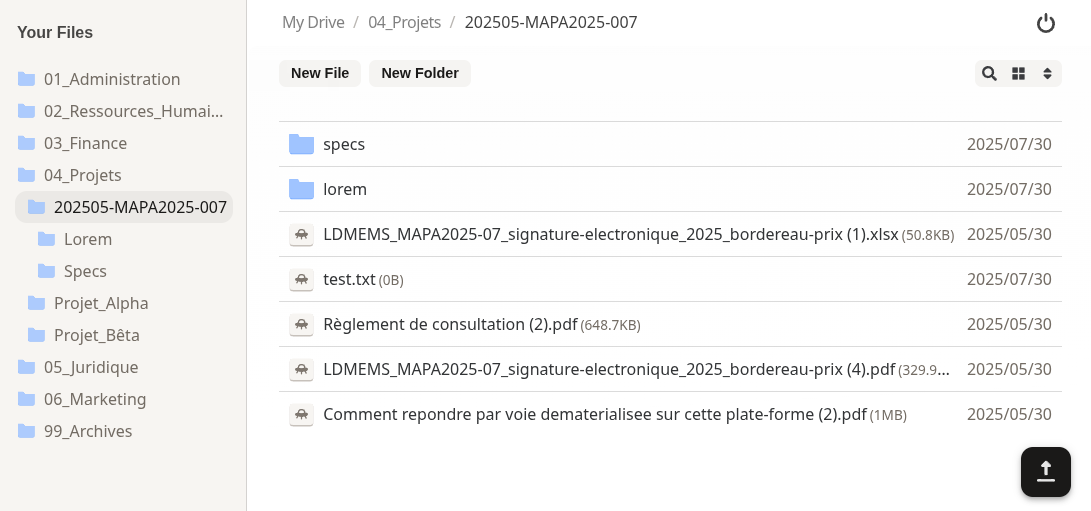
In line with the infamous top comment during their launch, it does of course support FTP as a storage, and the other way around exposing your Dropbox as a FTP server, while supporting theme so you have a similar look and feel as well: https://www.filestash.app/img/screenshots/theme_dropbox.png + tons of stuff Dropbox never did
Re: Taste Is All That's Left
#233I don’t like the term taste, but the problem that I have is that LLMs don’t seem to work “good enough”. They seem to be able to solve the immediate problem, but stacking this on the scale of 3-4 devs over 6 months or so doesn’t seem to produce anything. One thing that I’m particularly frustrated with is the writing quality of LLMs. Like this is the thing that they should be able to do, but I would say almost everythi…
I'll risk sounding antagonistic and ask you this: if LLMs are not "good enough", why are they still around? Obviously "good enough" was a poor pick of words of words on my behalf---and I'll gladly own it---but they should be "good enough" for something if a significant amount of resources keep getting allocated to them. Yes on a very personal level you look at LLM-generated code and think to yourself "wow this is gar…
Not disagreeing with you but the "resource allocation" which I presume to hint at the fallacy that capitalism is somehow great or optiomal at allocating resources is not really true. Just look at any big company such as meta and see how much inefficiency and bad choices there is.
Stock market as a measuring stick is completely irrational.
Re: Taste Is All That's Left
#234Earlier quoted context omitted.
> Yes on a very personal level you look at LLM-generated code and think to yourself "wow this is garbage" but what about the people, as pointed out many times in this thread, that simply do not care? Does that not count as "good enough"? Aside from the "amateur" qualifier, the Booch quote below provides insight to those questions: The amateur software engineer is always in search of magic, some sensational method or…
The use of “amateur” is indeed a very poor choice. An amateur is someone who seeks to master a skill or perform a craft for the love of the art, not for money. It’s the professional who is looking for the shortcut, not the amateur. The amateur is the one who hones a tool’s edge until it’s razor sharp, and cuts away all unnecessary detail until they’ve found the essence of what they’re trying to achieve. The work of a…
I think you are torturing this comparison by using different meanings of amateur and professional
A professional does mean "someone who does something for money" but it also often just means "someone who is very good at something"
Similarly, amateur does mean "someone who does something out of passion without wanting/needing to be paid" but also often just means "someone who is just starting out, is new at something, and is probably not good enough to be a (paid) professional doing it"
You're talking about the "passionate" amateur and comparing it to the "getting paid" professional. I think many people talking about amateurs and professionals are mostly talking about "amateurs (newbs)" and "professionals (very experienced)"
Re: Taste Is All That's Left
#235I don’t like the term taste, but the problem that I have is that LLMs don’t seem to work “good enough”. They seem to be able to solve the immediate problem, but stacking this on the scale of 3-4 devs over 6 months or so doesn’t seem to produce anything. One thing that I’m particularly frustrated with is the writing quality of LLMs. Like this is the thing that they should be able to do, but I would say almost everythi…
I like judgement. Taste is a subset.
For me taste is judgement about things that don't matter. Like you have taste in clothes. But a judge doesn't have bad taste when he makes a wrong decision, he has bad judgement.
Re: Taste Is All That's Left
#236On the topic of taste, I think of this quote in Susan Sontag's "Notes On 'Camp'" often: “For taste governs every free — as opposed to rote — human response. Nothing is more decisive. There is taste in people, visual taste, taste in emotion — and there is taste in acts, taste in morality. Intelligence, as well, is really a kind of taste: taste in ideas. (One of the facts to be reckoned with is that taste tends to deve…
An important feature of taste is also that it is highly variable between people, and because there is no system or proof of good taste, we cannot really say that one person's taste is objectively better than another's. This is what causes one person to build a large software system in a classical OOP language while another builds almost the same system in a typed functional language, each following their own internal…
[deleted]
Re: Taste Is All That's Left
#237We've been talking about taste for a year now as it relates to AI, so I'm going to counterpoint it: if competitors can reproduce your features, UX, and visual decisions within days, your taste is not really an advantage. How many apps implemented pull down to refresh once one person did it? How many people even remember (or care) whose taste spawned that UX pattern? [1] AI is not inaugurating an age of taste. It is s…
Imagine if artists were embracing AI the same way coders were being forced to. All that would be left there is taste, and your argument applies as readily there as well.
Re: Taste Is All That's Left
#238I found this post a bit too verbose and incoherent. It does read like AI slop to me, but the bigger issue is that its core argument itself seems flawed. The author seems to be advocating for choosing to "carry the burden" of one's taste (or aesthetics, judgement, standards, etc) while bemoaning that the market may not sufficiently reward for doing so. IMHO, the core flaw is in mixing these two things 1) the market re…
I think there's a coherent argument lurking in there, but the author hasn't refined it enough. Here's my attempt.
The industrial revolution seemed like the end of the artisan as an important man in his community, the death of good taste, and an apocalypse for professions like furniture makers.
And yet, do you remember the Aeron chair, darling of the dotcom era startup? The Eames chair, that wood veneer conversation piece which every real estate agent chooses when staging an apartment? In an era of mass production, taste moves up the market, but it never quite goes away.
Where does that leave our taste, dear reader? I am not sure. What I do know is that, just as the Aeron chair could not exist in a world without mass production, so too will there be tasteful software which cannot exist in a world without LLMs. I hope you're as excited as I am to build it.
I have no idea whether this was the actual intent, but it's where the disparate little facts seem like they might lead.
Re: Taste Is All That's Left
#239On the topic of taste, I think of this quote in Susan Sontag's "Notes On 'Camp'" often: “For taste governs every free — as opposed to rote — human response. Nothing is more decisive. There is taste in people, visual taste, taste in emotion — and there is taste in acts, taste in morality. Intelligence, as well, is really a kind of taste: taste in ideas. (One of the facts to be reckoned with is that taste tends to deve…
An important feature of taste is also that it is highly variable between people, and because there is no system or proof of good taste, we cannot really say that one person's taste is objectively better than another's. This is what causes one person to build a large software system in a classical OOP language while another builds almost the same system in a typed functional language, each following their own internal…
> One thing I fear is going to happen when more and more people use LLM's for coding is that they will default to the "average taste" of the LLM, and we will stop getting new interesting ideas about how to build things.
It is a possibility. But I also think we're underestimating the human need to create cool, unique things. Like yes most of the projects in this situation will have "average taste" but most of the projects out there today already do. Very few people have true taste and I don't think we're just going to see them disappear or be satisfied with LLMs feeding them "average taste." They will either likely stop using LLMs if that is the case or find ways around it to make it do things the way they want to, hence preserving their taste.
But I think it is a bit of an overblown fear that LLMs will just kill creativity and innovation in coding. Hackers will be hackin
Re: Taste Is All That's Left
#240We've been talking about taste for a year now as it relates to AI, so I'm going to counterpoint it: if competitors can reproduce your features, UX, and visual decisions within days, your taste is not really an advantage. How many apps implemented pull down to refresh once one person did it? How many people even remember (or care) whose taste spawned that UX pattern? [1] AI is not inaugurating an age of taste. It is s…
Dumbest idea ever. You are composing some text in a form, or filling in fields. You want to scroll up just a little to see something out of the viewport. Oops, your little swipe is misinterpreted as a refresh gesture: the input is gone.