Live data from Hacker News

Lost city discovered beneath Egypt's desert with ancient church

dailymail.com

61–70 of 213 posts

Re: Lost city discovered beneath Egypt's desert with ancient church

#61
post #32

Earlier quoted context omitted.

I've been to India many times (visiting family) as someone born and raised in America, and most people on the internet have bizarre views on India. I'm someone who is generally 'down' on travel to India because it's just a lot to ingest and I prefer easier places, but I personally would never worry about the sorts of things people online claim. It's not particularly dangerous in terms of violence. Food is amazing obv…

The problem with India is hygiene, not so much safety. The food might be great but you're practically guaranteed to get Delhi-Belly. I visited for work years ago, didn't eat any street food and was still taken out of action for 3 days. Rubbish is strewn everywhere , any standing water stinks. I don't think visiting again is worth the risk. Every Indian I've ever met has been lovely though (except for the ones who try…

For me, it was really the water that was problematic, as opposed to the food.

On my first visit, I was careful about the water I drank, but not very careful about other ingestion, and I got TD about halfway through the trip.

On the next visit, I was careful to keep my mouth closed while showering, and only use bottled water to clean my toothbrush, etc. Everyone else on the trip, eating the same food, got sick, but I didn't.

This is of course anecdata, but generally food, especially cooked food, is more likely to be safe.
Re: Lost city discovered beneath Egypt's desert with ancient church

#62

> During this period, from the late fourth to the mid-seventh century AD, Christianity became the dominant religion, towns expanded across the country and Egypt served as one of the empire's richest provinces. It's easy to forget how different the Middle East looked before the conquest of Islam starting in 600 AD.

Not just Islamic conquest but Arab conquest. Up to this point Arabs lived mainly in, well, Arabia. The indigenous peoples of Egypt, Syria, Iraq, etc..., were all non-Arab. Nowadays those indigenous groups are known as Copts, Syriacs, Chaldeans, etc...

Re: Lost city discovered beneath Egypt's desert with ancient church

#63
post #18

Earlier quoted context omitted.

>This is the only place in the world where I can say this about. Really dude? About India? South America in general, especially Brazil? I traveled a lot and I love everywhere, everyone and everything buy there are some places that scam 24/7.

Italy was it for me. The train station in Rome was crazy. And just Venice in general. I was probably just in the touristy areas, but it was definitely the most hardcore non-stop street scamming I'd been around.

Rented a car out of Munich and they forbade me from driving it to Italy. Said thieves are too common to risk driving, even in northern Italy. Train was simple enough though.

Re: Lost city discovered beneath Egypt's desert with ancient church

#64
post #49
post #37

Earlier quoted context omitted.

Proof to your modern eyes. Not to the eyes of those who also called Constantinople "New Rome", and who called themselves Romans even 1000 years later.

They actually called themselves Ῥωμαῖοι, not Romani, and not every description needs to be emic. There's nothing wrong with the label "Byzantine" except to Byzaboos.

> Byzaboos

Hey that's fresh. Do they have Hittitomori too?

Re: Lost city discovered beneath Egypt's desert with ancient church

#66

> During this period, from the late fourth to the mid-seventh century AD, Christianity became the dominant religion, towns expanded across the country and Egypt served as one of the empire's richest provinces. It's easy to forget how different the Middle East looked before the conquest of Islam starting in 600 AD.

Not just Islamic conquest but Arab conquest. Up to this point Arabs lived mainly in, well, Arabia. The indigenous peoples of Egypt, Syria, Iraq, etc..., were all non-Arab. Nowadays those indigenous groups are known as Copts, Syriacs, Chaldeans, etc...

Local populations adopted Arabic. Somewhat like, several centuries earlier, they adopted Greek; and elsewhere and at other times, Latin. The peoples of the regions were not replaced by Greek or Roman colonists.

Re: Lost city discovered beneath Egypt's desert with ancient church

#67

> During this period, from the late fourth to the mid-seventh century AD, Christianity became the dominant religion, towns expanded across the country and Egypt served as one of the empire's richest provinces. It's easy to forget how different the Middle East looked before the conquest of Islam starting in 600 AD.

Not just Islamic conquest but Arab conquest. Up to this point Arabs lived mainly in, well, Arabia. The indigenous peoples of Egypt, Syria, Iraq, etc..., were all non-Arab. Nowadays those indigenous groups are known as Copts, Syriacs, Chaldeans, etc...

Legitimate question, in the early days was this a large distinction? Specifically, my understanding was that the earliest raids where this distinction is most accurate, they didn't actually change the local societies much. Mostly were raids for resources and did not stay.

That is, until the Islamic raids started, the indigenous groups took losses, but were not nearly as transformed. Is that not accurate?

Re: Lost city discovered beneath Egypt's desert with ancient church

#68
post #49
post #37

Earlier quoted context omitted.

Proof to your modern eyes. Not to the eyes of those who also called Constantinople "New Rome", and who called themselves Romans even 1000 years later.

They actually called themselves Ῥωμαῖοι, not Romani, and not every description needs to be emic. There's nothing wrong with the label "Byzantine" except to Byzaboos.

But Wikipedia[0] says Ῥωμαῖοι transliterates to Romaioi, i.e. "Romans".

[0] https://en.wikipedia.org/wiki/Byzantine_Empire#Nomenclature

Re: Lost city discovered beneath Egypt's desert with ancient church

#69

> During this period, from the late fourth to the mid-seventh century AD, Christianity became the dominant religion, towns expanded across the country and Egypt served as one of the empire's richest provinces. It's easy to forget how different the Middle East looked before the conquest of Islam starting in 600 AD.

>It's easy to forget how different the Middle East looked before the conquest of Islam starting in 600 AD.

it naturally looked differently due to different climate. For example there was booming agriculture in Carthage back then - modern Tunisia. The climate warming during the first millennia made Mediterranean Basin less grain-production and animal farming suitable while more suitable for the nomadic Arabs riding out of Arabia. That warming also made life more convenient (in particular conditions became much better for agriculture, the backbone of the civilization) in the previously cold and swampy Mid and North Europe where as a result we see the wave of rise of the civilization.

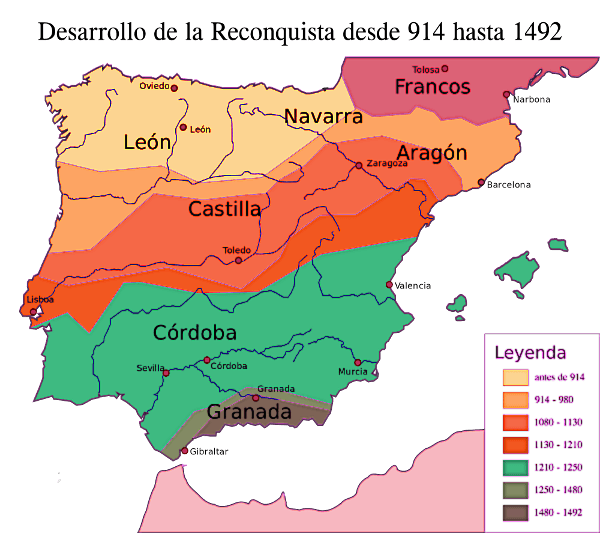
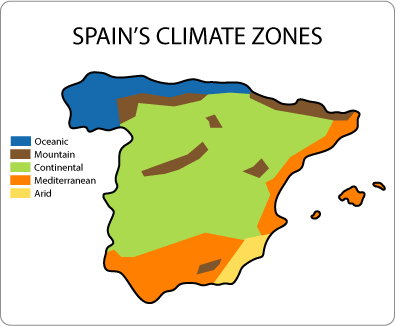
Coincidentally, we have Caliphates decline and Reconquista happening when the climate started to cool down toward the Little Ice Age. The map of Reconquista looks like a geographical climate regions map https://stuffedeyes.com/wp-content/uploads/2017/11/what-was-... (compare to https://www.spanish-town-guides.com/photo/spain_climate_map....)

Re: Lost city discovered beneath Egypt's desert with ancient church

#70
post #25

Earlier quoted context omitted.

Not singling you out, all the articles do it, but: Strange to call this Byzantine. The coins found are from the reign of Constantius II, who at times ruled the whole empire alone (as did his successor Julian). The idea that the East, even when administered separately, was some foreign/"Byzantine"/not- really -Roman "other" was invented much later.

Yes, invented much later, but the expression of a different power structure that those types of Romans felt was not present. But to our modern eyes it was. Hell, the mere fact the centre of power was in Constantinople and not Rome is proof enough that they were distinct.

Is the United States become a different entity when it moved its capital between Philadelphia and Washington DC?
Post reply on HN