Live data from Hacker News

Costco is the anti-Amazon

phenomenalworld.org

171–180 of 610 posts

Re: Costco is the anti-Amazon

#171
post #33

> Even if you think it is preferable at an individual level, there are good reasons to question the social value of the logistical complexity that it necessitates. Home delivery of single-packaged items entails an entirely different cost structure than freight trucks driving to consumer-facing warehouses delivering entire pallets of goods to be driven home by customers themselves. Ok, so 100 people can all drive to t…

Yeah, this argument falls flat on it's face. Of course it's more complex than that. When I worked from the office, centralized retail was very convenient and hardly added any driving. If you work from home, the opposite is true. The next revolution would be to standardize reusable packaging, that same daily delivery truck could bring that back. But only government could make that happen.

That idea is intriguing but brings up a lot of questions. If I live out in the middle of nowhere, order something but take a long time to open it, when does the Amazon truck come back to take the packaging? If there's a million of us procrastinators, is it really that much better than normal centralized garbage collection? Milk bottle delivery and collection only worked because the product naturally had a time limit, and once home refrigeration took off, the practice went away because people didn't consume on the same schedule.

FWIW most Amazon packages I get nowadays are just heavy paper anyways.

Re: Costco is the anti-Amazon

#172
post #134

The part about Costco choosing to avoid the last mile shipping problem reminded me of a proverb, roughly translated as: A clever person solves a problem; a wise person avoids it. I think it holds a lot of truth in engineering.

It seems costco can deliver HEAVY things that amazon can't (economically, afaict)

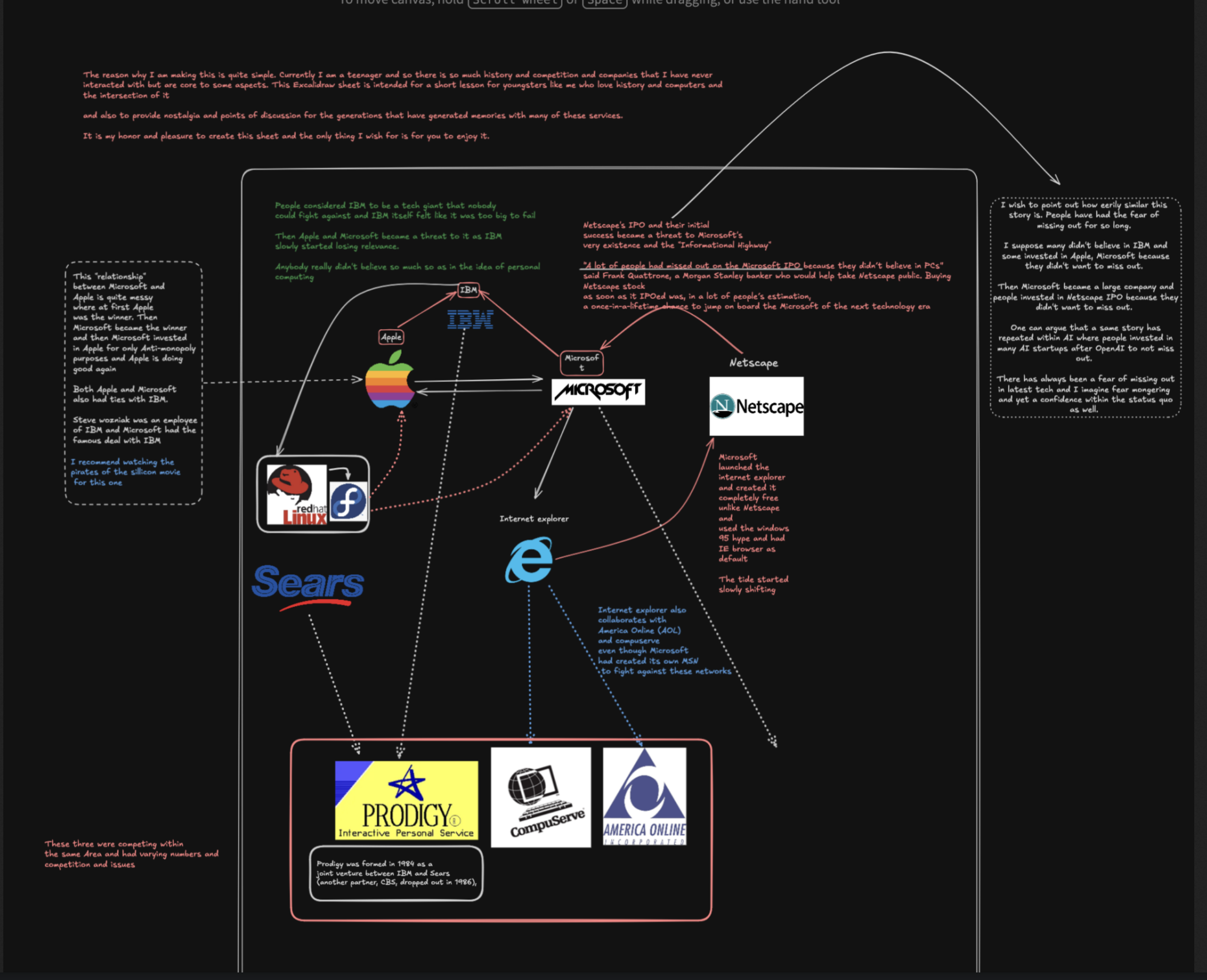
I was reading the book "How the internet happened": During the dot com bubble, there was a company called furniture.com which basically lost a lot of its investor money by learning the hard truth that IKEA also had to learn that shipping Heavy things like furniture isn't actually economical.

I am not sure if costco's model could allow it but especially for amazon, if they tried to do it or make it their USP like furniture.com, then I can imagine a very different outcome for it overall.

There was also a company I think who spent hundreds of millions of dollars (IIRC) in creating a large grocery website with buying large warehouses then and basically losing a ton of money. That business also failed quite drastically.

Another fun fact: when Amazon was first established, one of the largest loopholes that they had used which one can argue was why they were able to exist in the first place was that although they had selected book for Amazon because books are somewhat centralized (barnes and nobles essentially) but I think that the b&n warehouses required 10 books to be ordered each time.

So within the start, what they did was found out there was 1 book which was consistently out of stock. so they would order 1 book which the customer had ordered and then 9 of those other books. I imagine that if it might not have been for this as well, it might've been hard in the start.

There was also the fact that Barnes and nobles created their website and everyone thought that Amazon would basically die. Logic sort of suggests that it should've.

My conclusion is that Retail works in strange ways and timing matters a lot.

Also there are so many little facts within the book and it might be one of the fastest reads that I had of a book but the dot com bubble does feel quite similar to AI bubble IMO.

Here is a graph that I was making of a very limited connection graph of companies during the dot com bubble. https://files.catbox.moe/xdcxuy.png

I think that i have gone a bit too afar from my original comment but I sometimes like to chat and share bits of knowledge that I know and then I can't resist myself! :-D
Re: Costco is the anti-Amazon

#173
post #33

> Even if you think it is preferable at an individual level, there are good reasons to question the social value of the logistical complexity that it necessitates. Home delivery of single-packaged items entails an entirely different cost structure than freight trucks driving to consumer-facing warehouses delivering entire pallets of goods to be driven home by customers themselves. Ok, so 100 people can all drive to t…

For small items, add drones and the last miles savings get big.

  Weight of a typical car: 4,000 lbs. 
  Weight of a typical delivery drone: 80 lbs. 
  Typical drone payload: 5 lbs.
  5 mile drone delivery: ~2 kWh
  5 mile car delivery: ~100 kWh
So the breakeven is ~50 such items in one order.

Re: Costco is the anti-Amazon

#174
post #79

Earlier quoted context omitted.

Technically, so is the home delivery. It is usually a delivery truck full of packages for nearby addresses.

Right, 100 trucks delivering 100 single items to 100 homes, or 100 consumers each making 1 trip to buy 100 things. It really depends on the details too much to simplify it so far.

It is more like 1 truck delivering 100 single items to 100 homes.

Re: Costco is the anti-Amazon

#175
Surprisingly Amazon is actually pretty constrained. There are usually only 3-10 versions of a given product but sold by hundreds of different resellers.

When I was shopping for a water distiller there was only one large one but branded for ten different Chinese companies. (And They all had the same dangerous flaw where water could spill on the electrical plug.)

Re: Costco is the anti-Amazon

#176
post #16

Earlier quoted context omitted.

Indeed true. Even more efficient is when people can wait a few days and let Amazon bundle your orders and deliver on a designated day. That said people don’t typically get in a car to buy one thing -though obviously sometimes they do. On average though their trips will be for multiple things. I still think even without using designated delivery days Amazon deliveries are more efficient than individuals going out to b…

I've always wondered why I don't see passed on savings for the "amazon day" thing. It's gotta be way better for their logistics to deliver bulk orders, or pick a standardized delivery day for each neighborhood or something. Why do they only offer a single dollar of credit for choosing it?

I don’t know how much they are saving. On the one hand they save a stop (they aren’t saving a van as there are likely already vans delivering near by). on the other they have to hold on to stock longer waiting for things to all be ready. It costs money to store things

Re: Costco is the anti-Amazon

#178

Earlier quoted context omitted.

Amazon largely being a dumb marketplace, a faster-shipping AliExpress/Temu, really makes them easy to drop if you find that shipping speed isn’t super important for those types of products. You can just go straight to the source and cut Amazon out entirely.

It’s not only a faster Temu for e-junk. It can also deliver your paper wipes and bananas in the same order. Could you just place 3 different orders to 3 different vendors? Sure. Could you just drive to the grocery for 2 bananas and then to Costco for the big discounted paper wipes? Sure. But likely you will not. Which is why Amazon pulls a Trillion in revenue.

I've tried Amazon for groceries on this line of thinking. Verdict: it's terrible. Their groceries are priced uncompetitively and after a few times having some stranger pick my produce (and doing an offensively bad job of it) I don't do that anymore.

So since I'm 100% definitely going to the grocery store for produce, at minimum, this whole concept fails. May as well pick up the ziploc bags and paper towels as well while I'm there.

Re: Costco is the anti-Amazon

#179
post #33

> Even if you think it is preferable at an individual level, there are good reasons to question the social value of the logistical complexity that it necessitates. Home delivery of single-packaged items entails an entirely different cost structure than freight trucks driving to consumer-facing warehouses delivering entire pallets of goods to be driven home by customers themselves. Ok, so 100 people can all drive to t…

For small items, add drones and the last miles savings get big. Weight of a typical car: 4,000 lbs. Weight of a typical delivery drone: 80 lbs. Typical drone payload: 5 lbs. 5 mile drone delivery: ~2 kWh 5 mile car delivery: ~100 kWh So the breakeven is ~50 such items in one order.

Lol, where did you get those numbers from? xD

Tesla uses something like 15kWh per 100km, so 5 mile drive is something like 1.1kWh

Re: Costco is the anti-Amazon

#180

I nodded along to much of the article, but I really think it's wrong to see this as a model for public grocery stores. The analysis is glossing over a lot of the key factors that Costco uses to make its logicstics model work. You can't buy small quantities, so the staff don't need to spend much time breaking down pallets; you're not allowed in the building without a membership, so there's little need to invest in beh…

> you're not allowed in the building without a membership

I wonder why other stores like Target don't do that as well. Beyond the obvious, it just seems like the way to go.

Post reply on HN