Live data from Hacker News

This blog is written in en-GB

shkspr.mobi

221–230 of 474 posts

Re: This blog is written in en-GB

#221
post #13

> Here's the thing. No. Hahaha I decided to have a bit of fun with the Accept-Lang header, if you're british it shows a totally different version of my blog including changing my name to a more british variant, a background including tea, phone booths, kings guards, busses, bulldogs and flags... and the colour scheme changes to RWB. https://blog.dijit.sh The original plan was actually to write two variants of every b…

You might be interested to know that the BBC has a Pidgin version. > BBC News Pidgin now dey on Whatsapp > No dull yoursef, be di first to get latest tori, analysis, exclusive interviews and ogbonge coverage of Nigerian and International news from BBC News Pidgin, straight to your Whatsapp. > Click here to join di channel — https://www.bbc.com/pidgin

It reads very similar to the Hawaiian Pidgin Bible.

    Da time wen eryting wen start, God make da sky an da world. Da world come so no mo notting inside, no mo shape notting. On top da wild ocean dat cova eryting, neva had light notting. Ony had God Spirit dea, moving aroun ova da watta.

    Day Numba One

    Den God tell, “I like light fo shine!” an da light start fo shine. God see how good da light. Den he put da light on one side, an da dark on da odda side. Da light time, he give um da name “Day time.” Da dark time, he give um da name “Nite time.” So, had da nite time an da day time, az day numba one.

    Day Numba Two

    Den God tell, “I like get someting inside da middo fo no let da watta up dea an da watta undaneat come togedda!” An dass wat God do. God make someting fo no let da watta up dea an da watta undaneat come togedda. Da ting inside da middo, God give um da name “Da Sky.” Had da nite time an da day time, az day numba two.

    Day Numba Three

    Den God tell, “I like da watta unda da sky come togedda one place, so dat get dry land!” An dass wat God wen do. Da dry groun, God give um da name “Land,” an da watta dat wen come togedda one side, he give um da name “Ocean.” God look da dry groun an da ocean, an he tell, “Real, real good, all dat!”
Re: This blog is written in en-GB

#222
post #92

Earlier quoted context omitted.

By your logic, chinese english or indian english are the defacto as they massively outnumber american english You just mean that you visit more american sites than other non-US english speaking sites

Go to France, or Japan, or Hungary, or somewhere like that. Someone there is visiting a web site that is in English. Now, what English is it most likely to be? My guess is US English, not UK English, not Indian English, not Chinese English. Sure, they may visit some of those sites, but I suspect that the most frequent will be US English.

In this case, Japan is special. There relationship (post WW2) with the US is unparalleled compared to France or Hungary. It will absolutely be US style. Japan was never very close with the UK.

Re: This blog is written in en-GB

#223
post #213

Earlier quoted context omitted.

I live in Denmark, and for such basic words (crisps, trousers, maths, aluminium, football, quid, couldn't care less, fire engine, motorway, petrol, public transport, railway, tram) I use my native British words. People occasionally comment that it's a British word, but being misunderstood is so unusual I can't remember a recent example. Essentially everyone has read/watched Harry Potter, Dr Who or Midsomer Murders, a…

Wait, "couldn't care less" is British?

Many/most Americans say something like "I could care less about the World Cup".

British people say "I couldn't care less about the World Cup".

Both are saying they have no interest at all in the World Cup. I don't know why Americans phrase it that way.

To give a documented example, the lyrics of Teenagers by My Chemical Romance:

    They said, "All teenagers scare the livin' shit out of me"
    They could care less as long as someone'll bleed

Re: This blog is written in en-GB

#224

Earlier quoted context omitted.

If you want to read some hilarious reactions of Americans panicking when they are suddenly exposed to non-American English/British accents, check out these threads: https://www.reddit.com/r/PawPatrol/comments/1q68v16/british_... https://www.reddit.com/r/PawPatrol/comments/17wcsdm/my_digit...

I'm not sure "panicking" is the best word to describe a couple of parents wondering why the characters suddenly have different accents. But maybe I'm too American and "panicking" means something else for Brits.

Not even the accents - different voices are annoying enough. When I was young I watched some cartoons in English, and hearing them in Dutch later, despite being my native language, was still uncomfortable.

Re: This blog is written in en-GB

#225

Earlier quoted context omitted.

Equally, I doubt there was a single Brit involved in RFC 2617 Section 4.3 (for example).

I don't understand the reference. I looked it up here: https://datatracker.ietf.org/doc/html/rfc2617#section-4.3 4.3 Limited Use Nonce Values The Digest scheme uses a server-specified nonce to seed the generation of the request-digest value (as specified in section 3.2.2.1 above). As shown in the example nonce in section 3.2.1, the server is free to construct the nonce such that it may only be used from a particular…

That third word, starting with 'n' is British slang, which you are welcome to look up.

Presumably the etymology was in place before it took on its present meaning, but it is not a word I would use in a professional context.

My comment was oblique, but not sarcastic. Partly because I didn't want to use the word directly, and partly in keeping with the tone of the original blog post!

Re: This blog is written in en-GB

#226
post #28

I am the only Brit in the department I work in. No one gets the cultural references or British idioms I use, and I've found myself significantly changing the language I use to a very utilitarian and direct style to prevent the endless blank stares... reading this blog post just made me realise that this self-editing has made my interactions rather more 'flat' and unnatural, as they now lack spontaneity, with everythi…

When I moved to the states nearly 20 years ago, my pronunciation sharpened up (stopped dropping consonants) very quickly. Over time I stopped using idioms, and the few bits of Cockney Rhyming slang I used (Butchers, Scooby; which are look, and clue, respectively).

I think it was less as a conscious act and more as a result of just not being around people that use them. There's a sizeable element of cultural reinforcement involved.

That said, they'll pry my British spelling out of my cold, dead, hands.

Re: This blog is written in en-GB

#227
post #213

Earlier quoted context omitted.

I live in Denmark, and for such basic words (crisps, trousers, maths, aluminium, football, quid, couldn't care less, fire engine, motorway, petrol, public transport, railway, tram) I use my native British words. People occasionally comment that it's a British word, but being misunderstood is so unusual I can't remember a recent example. Essentially everyone has read/watched Harry Potter, Dr Who or Midsomer Murders, a…

Wait, "couldn't care less" is British?

I think everyone says “couldn’t care less”. But Wiktionary does say “could care less” is “American, nonstandard, proscribed”, so I guess only Americans have that (defective) alternative phrase.

Re: This blog is written in en-GB

#228
post #74

This French person has taken to writing in en-GB, as a token of protest against current USAian politics. I thank the USA for this step in French-British rapprochement ! Also, in the late 90's, The Register made me love British English... Local accents are great branding.

I really want to see a local Euro English[0] develop as an actual, recognized variant of English. Both because it would be really funny, but also as a way for Continental Europe to develop a common language we can shape our own way 0: https://en.wikipedia.org/wiki/Euro_English (we don't have to take the examples in this page as-is, we can definitely make better local oddities!)

I think it's a bit quick to want that variant to be actual already, but eventual we might be able to make it work.

Re: This blog is written in en-GB

#229

Earlier quoted context omitted.

I agree in general, but there's one exception: use of the word 'tabled'. This means roughly the opposite in British and US English, and there's often insufficient surrounding context to alert the reader to their error. (OTOH I don't think you should suppress 'false friends' like biscuits, pants etc.)

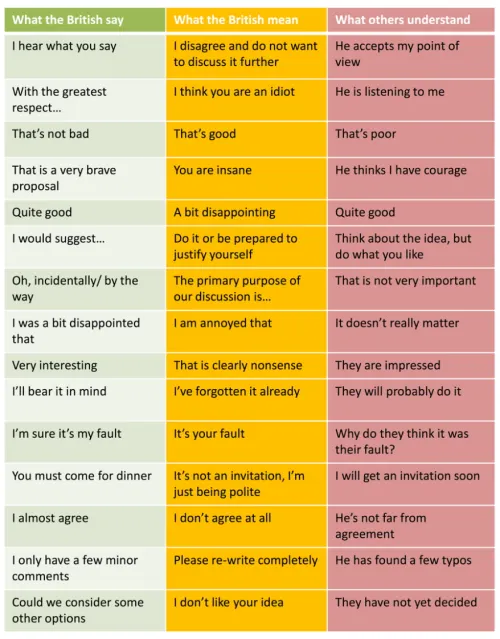
There are a few others. “Quite” comes to mind — “I am quite hungry” or “that meal was quite good” can mean opposite things, depending on the speaker region and even voice inflexion if spoken.

Once you start going in that direction, a lot of things that British people say can require some amount of translation, see e.g. this table: https://miro.medium.com/v2/resize:fit:640/format:webp/0*0Fs1...

Re: This blog is written in en-GB

#230
post #220

If you are from Europe, even if you're not living in the UK, the en-GB locale will feel a lot more familiar to you than the en-US one. It uses the dd-mm-yyyy date format like the rest of Europe, the start of the week is on Monday (vs Sunday in the US), the default paper size is A4 (vs US letter), measurement defaults are metric (indeed UK roads use imperial, but the default is otherwise metric), the time format uses…

The time format in the UK is mostly 12hr, although people are generally aware of 24hr time. In my experience, while there are usually more similarities between the UK and the rest of Europe, Europeans also have more exposure to American English than to British English, so it ends up being a bit of a wash, particularly when it comes to pronunciation, spelling, or idioms.

In the UK anything "serious" like a train/plane ticket/timetable uses the 24 hour clock. That includes the default way to show a digital clock on a watch, phone or computer.
Post reply on HN