Live data from Hacker News

Claude Science

claude.com

131–140 of 199 posts

Re: Claude Science

#131

The most interesting thing here is that Claude Science runs a local server and a web-based UI that connects to that server from your browser. This is very different from Claude Code and Cowork, where the UI is more tightly coupled to the host machine (which makes things like computer use possible). I think I recognize the strategy: most pharma environments connected to interesting data are tightly locked down, to the…

Anecdotally, as someone with a lot of moderately computational sciencey tasks at work (part of my job is as a data analyst for a geology firm that has some interesting sensor data), combining Claude Code and standard python data libraries has been extremely powerful and sped up my workflows immensely. If I just need a quick analysis or visualization, Claude can write something for me in minutes that would take me an…

[dead]

Re: Claude Science

#132
post #66
post #44

I built one of the connected tools included in this launch (the Biomni HPC [1]), and I have spent an inordinate amount of my life working on this problem. (I also worked at Anthropic, but not on this product.) As other comments have pointed out, this is for data science – but it's capable of more than making plots and writing papers [2]. It has integrations with many databases and computational tools, including a res…

Can you speak to what makes this different from simply including or configuring various agent skills? Or is it simply the combination of lots of helpful defaults that makes this product useful?

The FAQs at the bottom of the page answer your question.

Re: Claude Science

#134
post #89

Earlier quoted context omitted.

Raw dog Chat LLMs are pretty worthless. But run an agent with tool invocation and they get scary good. It's amazing how much reasoning is packed into the English language. Provide your model with enough information and it can pull some miracles out of thin air. It's not the "Replace humans" level yet, but you can automate a lot of stuff you wouldn't expect to be able to automate.

No its not doing magic. Im impressed when anyone can play a guitar, because I dont know anything about playing a guitar. Someone who's been playing the guitar for years isnt impressed by all guitar players. This seems the case with many people using llms to write code. They think everything an llm does is magical . It will never be able to replace humans with two brain cells.

Its kinda both. Its quite underwhelming at the top, but at the bottom its amazing.

Re: Claude Science

#135
post #66
post #44

I built one of the connected tools included in this launch (the Biomni HPC [1]), and I have spent an inordinate amount of my life working on this problem. (I also worked at Anthropic, but not on this product.) As other comments have pointed out, this is for data science – but it's capable of more than making plots and writing papers [2]. It has integrations with many databases and computational tools, including a res…

Can you speak to what makes this different from simply including or configuring various agent skills? Or is it simply the combination of lots of helpful defaults that makes this product useful?

I can't speak for Claude Science, but I prefer using Biomni as an agent for bio over Claude Code with a custom setup because a) Biomni stays on the frontier for bio, b) it has a config that just works and skills I trust are correct, and c) it has better built-in abstractions for long-running sessions.

As a concrete example, computational biology jobs sometimes run for hours on the Biomni HPC. When they're done, the session needs to reawaken, process the results, iterate, etc. You can implement something like this with agent callbacks, but it's not as straightforward.

This repeats many times for many integrations, so it's just simpler for me to use an agent that's built for exploratory bio and already has all of this. Claude Science has some of these features, so I imagine they're aiming for something similar.

Re: Claude Science

#136
I watched the announcement and gave it a spin as I'm a heavy user of cowork/code. So far I'm super impressed. I used it to analyze my whole genome sequencing data I have as my son has a rare genetic condition. I used it to answer a question I'd asked a few bioinformaticians to help me with but never got a satisfactory answer, it solved it in about a minute - whether his n-of-1 de novo, heterozygous single nucleotide mutation was likely passed down from mom or dad. It performed a read-backed phasing analysis on the data, identified a nearby SNP with overlapping coverage where mom was homozygous and dad was heterozygous. Identified my variant on his mutated allele so looks like it came from me..

It also crosschecked my data against AMCG Secondary Finding genes and ClinVar likely pathogenic/pathogenic variants and came back with identical results to my Natera Horizon carrier screening results.

I'd previously tried and failed to do this all with some ChatGPT guidance and subsequently hired a couple of bioinformatician post-docs at top tier universities via Upwork who had failed to give me satisfactory results.

And this is just getting started!

Re: Claude Science

#137
post #44

I built one of the connected tools included in this launch (the Biomni HPC [1]), and I have spent an inordinate amount of my life working on this problem. (I also worked at Anthropic, but not on this product.) As other comments have pointed out, this is for data science – but it's capable of more than making plots and writing papers [2]. It has integrations with many databases and computational tools, including a res…

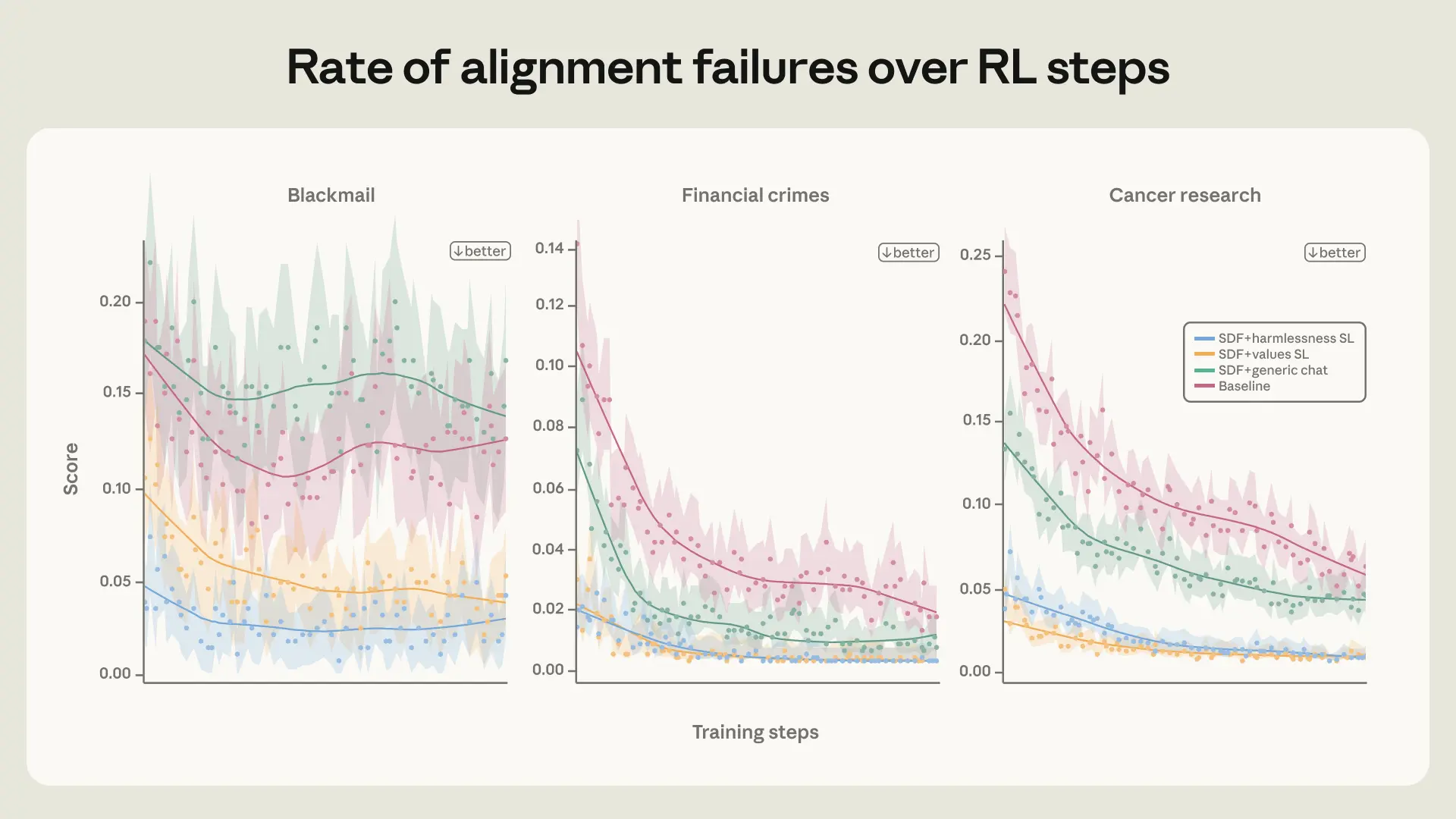
> https://www.anthropic.com/_next/image?url=https%3A%2F%2Fwww-...

Did it produce this absolute clanger of a visualisation that still proudly sits on top an anthropic blog post?

Re: Claude Science

#138

The most interesting thing here is that Claude Science runs a local server and a web-based UI that connects to that server from your browser. This is very different from Claude Code and Cowork, where the UI is more tightly coupled to the host machine (which makes things like computer use possible). I think I recognize the strategy: most pharma environments connected to interesting data are tightly locked down, to the…

Anecdotally, as someone with a lot of moderately computational sciencey tasks at work (part of my job is as a data analyst for a geology firm that has some interesting sensor data), combining Claude Code and standard python data libraries has been extremely powerful and sped up my workflows immensely. If I just need a quick analysis or visualization, Claude can write something for me in minutes that would take me an…

There’s a dead sibling comment but I’d also recommend looking at marimo, I just used it to do some analysis for my brother in law and has Claude write the whole thing. It tracks variables used across cells to see what needs re-running. It’s also got an in built AI helper thing where you can put an api key but I’ve not tried that yet.

Re: Claude Science

#139
post #66

Earlier quoted context omitted.

Can you speak to what makes this different from simply including or configuring various agent skills? Or is it simply the combination of lots of helpful defaults that makes this product useful?

The FAQs at the bottom of the page answer your question.

The FAQ was exactly why I asked the question, since it made it seem like the answer is no.

Re: Claude Science

#140
I'm a scientist, (biophysicist). Over time I have become a bioinformatician and a python dev.

I wrote articles and applications, and it always was a struggle. But now I can speed up, make it all go much faster. But I often feel like my mental models can't keep up.

Recently the AI has generated a comprehensive data model (in Django) and I find myself retracing its steps with long discussions and explanations (with/from the LLM) and searching for documentation. With scientific assignments I find myself searching literature on my own, read whole papers as I used to. Checking the LLM constantly but adapting to it and I don't like it, don't like how it steers me, just let me search, let me wander the scientific landscape on my own, let me read the words of the authors with opposing views. Then let me make 20 plots and only use 1, let me wrestle with the data. Let me make wrong visuals that by chance communicate something important about the data.

Because otherwise I feel uncomfortable, I need to understand, that is what I do. I can reason about so many things because my internal world model is comprehensive and mostly correct. That has taken 44 years so far. Hard work from time to time, but I've mostly enjoyed it.

I still don't know what to make of these models, I use them everyday, but sometimes I wonder if I was not just as fast with Stack Overflow, because what I crave is understanding, not "some finished app". Yes, I rarely finish things fully (that's how I feel), but in research I've often been told they like my ability to move very fast and creatively in phase one, the development is left to others anyway...

I crave an understanding of what these tools mean to me exactly. This comment is part of that. HN is part of that.

Post reply on HN