Live data from Hacker News

Fossil Fuels Are 40% of Freight Shipping Tonnage, but Half Its Fuel Use

cleantechnica.com

71–80 of 157 posts

Re: Fossil Fuels Are 40% of Freight Shipping Tonnage, but Half Its Fuel Use

#71
post #62

Earlier quoted context omitted.

The cost of EV energy (to the driver) is about half that of the cost of gas energy. And that's if you buy electricity at charging stations [1]. If you charge at home it gets less. If you have solar at home it approaches zero. Yes, the cost of the car itself is a factor, but even there prices are dropping all the time. >> when you can only take 10% as much fuel effeciency makes all the difference when we discuss % of…

Before the Iran war, I did a back of the envelope calculation for the price of gas of your average ICE for a certain fixed range vs. the price of electricity an average EV uses for the same range. This was under the assumption that you buy electricity at a random charging station that you don't have a contract with. Based on these average values I used, EVs fared slightly worse. This was not factoring in costs of pur…

I've only had an EV 3 months now, but it'll never see a charging station.

I pay around $.12/kw and get 4 miles per kw. So my "energy" costs are $.03/mile. I have a Mazda cx50 as well, it gets about 20-22mpg, with the gas prices here in Seattle that's around $.30/mile. Even where gas is cheaper that's still $.20/mile. Literally 10x the cost to run a gas car vs an EV.

I'm honestly shocked at how many people have EVs and rely on charging stations. I mean, I think it's a low number, but the fact that it's more than zero is shocking to me.
Re: Fossil Fuels Are 40% of Freight Shipping Tonnage, but Half Its Fuel Use

#72

Earlier quoted context omitted.

The cost of EV energy (to the driver) is about half that of the cost of gas energy. And that's if you buy electricity at charging stations [1]. If you charge at home it gets less. If you have solar at home it approaches zero. Yes, the cost of the car itself is a factor, but even there prices are dropping all the time. >> when you can only take 10% as much fuel effeciency makes all the difference when we discuss % of…

Indeed, solar panels and EVs are the way of the self-sufficient rugged individualist. It's an amazing PR and marketing coup to make it the other way around and presented as something for "liberal weaklings" etc.

>It's an amazing PR and marketing coup to make it the other way around and presented as something for "liberal weaklings" etc.

If there is such a marketing, then people relate to it because EVs are not suited for handling unpredictable situation. You got stuck in a ditch in the middle of nowhere at night, you loss all of your battery getting out of it, and now you are stuck. So you can't take it to unforgiving places.

EVs are great for boring commute that is it. I don't see it changing any time soon.

Re: Fossil Fuels Are 40% of Freight Shipping Tonnage, but Half Its Fuel Use

#73
post #28

Earlier quoted context omitted.

To further give context: the article is saying that most of the fuel transported around is done for long distances, so when something removes fuel use in the consumer side it has a double dip effect: less fuel consumed and less fuel used to transport the fuel, since long fuel supplies route diminish. It's a third order of thinking and that's why it's confusing. The article then argues that reducing that consumption i…

I wonder if this actually has the potential to have the opposite effect. If an oil producer electrifies faster than average, for example Norway, then oil that might have been consumed domestically instead is shipped overseas.

Norway has an abundance of hydro power. They've had an almost-entirely renewable grid even before the energy transition begin. Combine that with their small population and large oil reserves, and they have always exported far more than they have consumed domestically.

In theory the small amount of additional available oil due to domestic electrification might become available for export, but I expect that the global drop in demand due to worldwide electrification will make that unlikely: they'll just slow down production to avoid flooding the market and crashing the oil price.

Re: Fossil Fuels Are 40% of Freight Shipping Tonnage, but Half Its Fuel Use

#74

The top graph makes it seem much more dramatic than it is. Maritime shipping is very efficient, and consists of a very small fraction of overall petroleum usage. Road transportation uses about 20x as much fuel as ocean shipping, planes use about 2x as much, and trains about the same amount. The typical rule of thumb is that about 40% of the energy in a barrel of petroleum is lost before it goes into your gas tank. An…

> The top graph makes it seem much more dramatic than it is.

It's all projections, too. They don't even have a line to show where they are going from actuals to guesses.

Re: Fossil Fuels Are 40% of Freight Shipping Tonnage, but Half Its Fuel Use

#75
post #68
post #62

Earlier quoted context omitted.

Before the Iran war, I did a back of the envelope calculation for the price of gas of your average ICE for a certain fixed range vs. the price of electricity an average EV uses for the same range. This was under the assumption that you buy electricity at a random charging station that you don't have a contract with. Based on these average values I used, EVs fared slightly worse. This was not factoring in costs of pur…

> buy electricity at a random charging station Well there's your problem. Try doing the same calculation with the average residential electricity cost. Most car use is for commutes after all, so most people can just charge their EV in their driveway every night. Destination charging and rapid charging are notoriously expensive. It's a luxury product intended for a once-a-year road trip. It is not even remotely repres…

> so most people can just charge their EV in their driveway every night.

That does presume that those "most people" have a driveway where they can do charging. I.e., all apartment dwellers with cars in parking lots/garages (excluding those few that may have installed electrical plugs at each parking spot) are cut off, as are city dwellers without driveways who park on the street (or in another garage, again without electric hookups for charging).

Yes, eventually those garages and parking lots will likely include some form of "car charging" infrastructure, but until that happens, "most" is not as big of a percentage as that word makes it appear.

Re: Fossil Fuels Are 40% of Freight Shipping Tonnage, but Half Its Fuel Use

#76
post #62

Earlier quoted context omitted.

The cost of EV energy (to the driver) is about half that of the cost of gas energy. And that's if you buy electricity at charging stations [1]. If you charge at home it gets less. If you have solar at home it approaches zero. Yes, the cost of the car itself is a factor, but even there prices are dropping all the time. >> when you can only take 10% as much fuel effeciency makes all the difference when we discuss % of…

Before the Iran war, I did a back of the envelope calculation for the price of gas of your average ICE for a certain fixed range vs. the price of electricity an average EV uses for the same range. This was under the assumption that you buy electricity at a random charging station that you don't have a contract with. Based on these average values I used, EVs fared slightly worse. This was not factoring in costs of pur…

In my area the fuel cost of a hybrid car is a better deal than recharging an EV at PG&E retail rates, but this is just a policy knob that we can turn whenever we decide to get serious about reducing greenhouse gas emissions. If people are ambivalent about the operating costs of EVs then it is up to the government to put their thumb on the scale with a motor fuel tax, such that EVs look like a great bargain.

Re: Fossil Fuels Are 40% of Freight Shipping Tonnage, but Half Its Fuel Use

#77
post #72

Earlier quoted context omitted.

Indeed, solar panels and EVs are the way of the self-sufficient rugged individualist. It's an amazing PR and marketing coup to make it the other way around and presented as something for "liberal weaklings" etc.

>It's an amazing PR and marketing coup to make it the other way around and presented as something for "liberal weaklings" etc. If there is such a marketing, then people relate to it because EVs are not suited for handling unpredictable situation. You got stuck in a ditch in the middle of nowhere at night, you loss all of your battery getting out of it, and now you are stuck. So you can't take it to unforgiving places…

Surely you call a recovery truck to come pull you out and do an emergency charge on your battery, similar to how they’d provide you with emergency gas if your tank ran dry? Or tow you if they don’t have a charger?

Re: Fossil Fuels Are 40% of Freight Shipping Tonnage, but Half Its Fuel Use

#78

Oh wow, that's far higher than I've been using in my estimates, I'd been rounding down to 1/3. The massive reduction in oil supply from the sudden and unexpected closure of the Strait of Hormuz, with gas prices jumping but minimal economic contraction, has been great evidence that we could perform a global energy interchange far faster than anybody ever expected without causing massive damage. However, the pushback I…

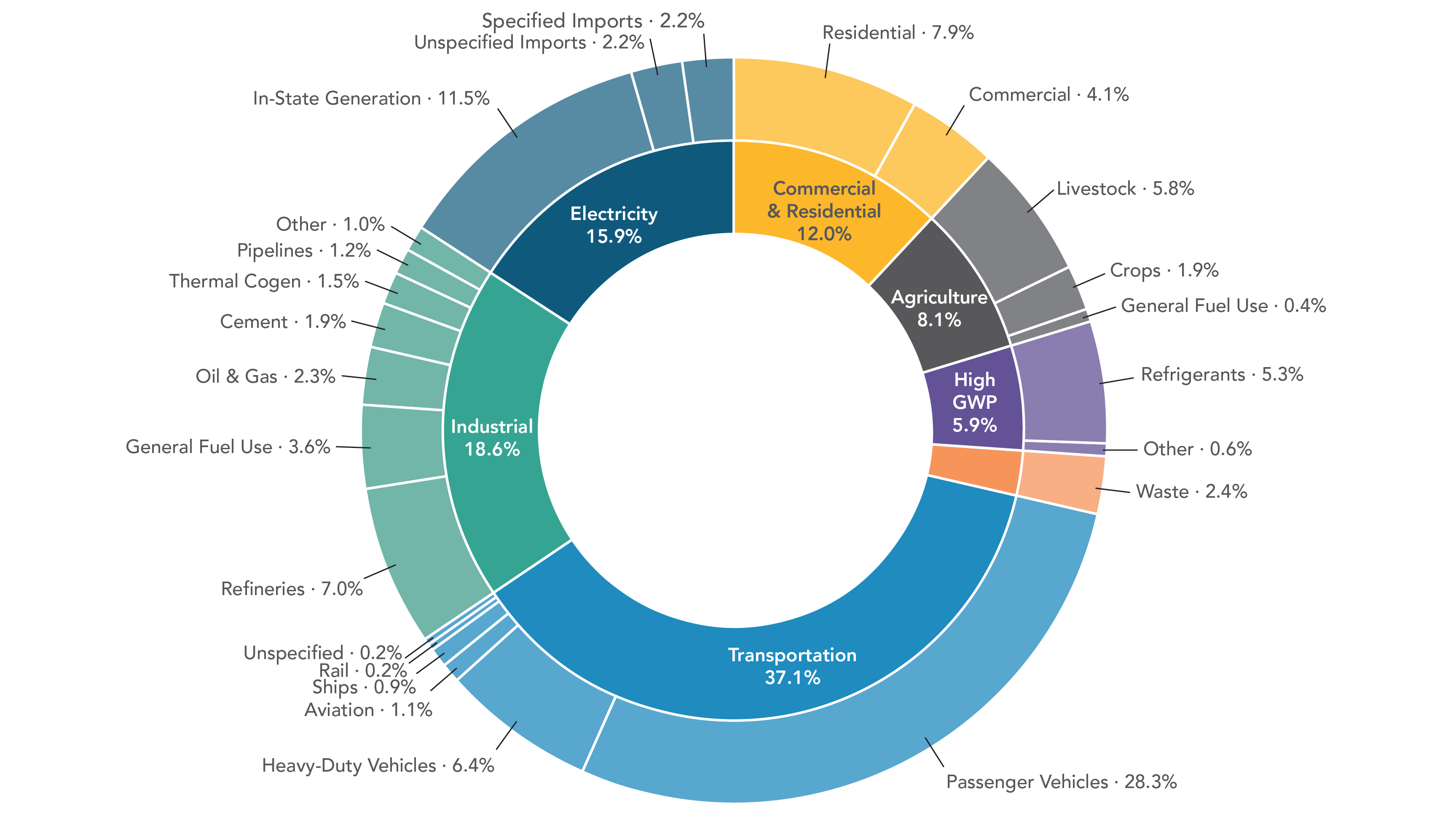
Where are all of the emissions coming from? I keep hearing that automobiles account for a small % and that trucking and shipping account for the majority, but you're saying shipping is only 1%.

That isn't true about private automobiles and I would be interested to know where you have been hearing it. It must come from some party with a vested interest in making car emissions seem like a non-problem. In reality, car emissions are the main thing that Americans and most other rich countries should be trying to address.

Here's a graphic of the latest data available for California, as an example: https://ww2.arb.ca.gov/sites/default/files/images/2023_scopi...

Re: Fossil Fuels Are 40% of Freight Shipping Tonnage, but Half Its Fuel Use

#79
post #31

Earlier quoted context omitted.

Why is the EV better? Because electricity transmission is more efficient than gas? What about the losses in the electricity transmission and the batteries and the conversion to motive force in the motor? Is it way less than that 40%? And wouldn’t there be more than 0% losses because refinery -> power plant shipping? I’m pro EV by the way, I just want to understand your point better. Being able to go all the way to tr…

It's a bit hard to answer the "dirtiest fuel you can find" case specifically, because there are a number of areas where EVs are more efficient. The biggest difference is probably the fact that the internal combustion engine in a car is about 25% efficient, though it depends on the RPM it is running at etc (the reason hybrids can push it up to ~40-ish% depending on how new they are is because the engine is always runn…

Re. "dirtiest power" - coal is dirtiest at the site of consumption, but if you consider the entire supply chain, diesel generators at remote locations might be worse. (Coal is usually supplied directly by train; diesel has to be refined and shipped in by truck.)

Re: Fossil Fuels Are 40% of Freight Shipping Tonnage, but Half Its Fuel Use

#80
post #72

Earlier quoted context omitted.

Indeed, solar panels and EVs are the way of the self-sufficient rugged individualist. It's an amazing PR and marketing coup to make it the other way around and presented as something for "liberal weaklings" etc.

>It's an amazing PR and marketing coup to make it the other way around and presented as something for "liberal weaklings" etc. If there is such a marketing, then people relate to it because EVs are not suited for handling unpredictable situation. You got stuck in a ditch in the middle of nowhere at night, you loss all of your battery getting out of it, and now you are stuck. So you can't take it to unforgiving places…

Tow trucks are sometimes needed for gasoline cars too.
Post reply on HN