... again?
I highly doubt they have given up here too
221–230 of 324 posts
... again?
I highly doubt they have given up here too
[flagged]
We already don't have free speech. There's nothing protecting it (and many laws already to the contrary.) There aren't really any such constitutional protections from what I can tell. Once laws are passed they aren't revoked. So it's just a matter of political climate. Just wait for people to get a little more negative, a little more paranoid (which has historically been "helped along" in various ways)-- a law only n…
And not being able to deny the Holocaust doesn't mean you don't have free speech
Earlier quoted context omitted.
You could have a system where everyone is directly elected while keeping checks and balances, if voting were restricted , eg. maybe everyone can vote for a president/prime minister, but only non-teachers can vote for an education minister, and only non-finance people can vote for something like the Fed chief, etc. The point being the checks and balances now happen because other groups keep your group in check by voti…
This sounds like the opposite of what should be happening? Like an anti-technocracy aiming for an electorate as little informed as possible? Why exclude teachers from picking the education minister? If we're restricting votes, shouldn't they be the only ones doing so instead?
It seems like an almost never ending hamster wheel of chat control being introduced, voted down, then introduced again in the next session.
No, this is the end of the wording for the initiative, nothing else. We will see many new initiatives, old wine in a new bottle. Any bet that EU diehard bureaucrats will change tune, not the goal. They are going to use the so called salami tactic. Death of free speech by many cuts, so to say. It is in the left wing DNA. Have a look at German history regarding "Landes-Verfassungsschutz" units. It is disturbing to read…
You’re painting an EPP/ECR initiative as left wing? That’s inconsistent with the facts.
So to him they are probably left-wing.
Earlier quoted context omitted.
That's the problem with modern democracies (it happens in the USA too). They only have to win once and it's law. We have to win every time.
It's a problem when the parliament can't propose the laws it has to vote on and the commission isn't elected and continues to be presided by the most corrupt person in the EU. She is blatantly EPP and just keeps proposing the shit they want. For Americans, imagine if only Republicans ever got to propose legislation and only Democrats could vote on it. That's more or less it.
Well, that's because she was nominated by European governments, which happen to be largely run by right-wing parties right now. There have been socialist personalities in her place in the past. That has nothing to do with democracy.
> Despite today’s victory, further procedural steps by EU governments cannot be completely ruled out. Most of all, the trilogue negotiations on a permanent child protection regulation (Chat Control 2.0) are continuing under severe time pressure. There, too, EU governments continue to insist on their demand for “voluntary” indiscriminate Chat Control. > Furthermore, the next massive threat to digital civil liberties i…
In a democracy, we don't kill our opposition. If they hold views we don't like, e.g. that security trumps privacy, they're going to litigate them. Probably their whole lives. That means they'll keep bringing up the same ideas. And you'll have to keep defeating them. But there are two corollaries.
One: Passing legislation takes as much work as repealing it; but unpassed legislation has no force of law. Being on the side that's keeping legislation from being passed is the stronger position. You have the status quo on your side. (The only stronger hand is the side fighting to keep legislation from being repealed. Then you have both the status quo and force of law on your side.)
Two: Legislative wants are unlimited. Once a group has invested into political machinery and organisation, they're not going to go home after passing their law. Thus, repeatedly failing to pass a law represents a successful bulwark. It's a resource sink for the defense, yes. But the defense gets to hold onto the status quo. The offense is sinking resources into the same fight, except with nothing to show for it. (Both sides' machines get honed.)
Each generation tends to have a set of issues they continuously battle. The status quo that persists or emerges in their wake forms a bedrock the next generations take for granted. This is the work of a democracy. Constantly working to convince your fellow citizens that your position deserves priority. Because the alternative is the people in power killing those who disagree with them.
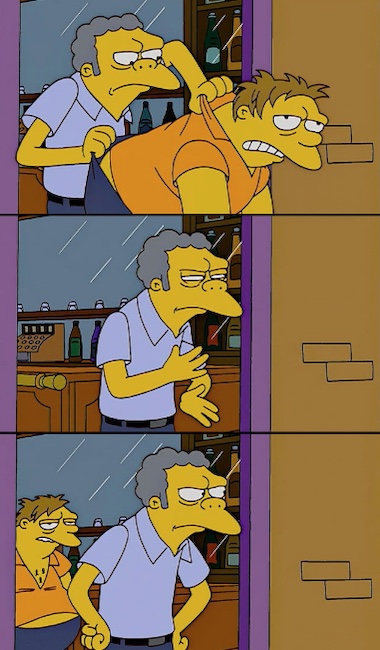
It seems like an almost never ending hamster wheel of chat control being introduced, voted down, then introduced again in the next session.
That's the problem with modern democracies (it happens in the USA too). They only have to win once and it's law. We have to win every time.
Passing legislation takes about as much effort as repealing. (The exception being if the legislation spawns a massive bureaucracy.)
Chat Control 1.0 was de facto passed. It's now being unpassed. We don't have to win every time. Just more.