Live data from Hacker News

Python 3.15’s interpreter for Windows x86-64 should hopefully be 15% faster

fidget-spinner.github.io

31–40 of 164 posts

Re: Python 3.15’s interpreter for Windows x86-64 should hopefully be 15% faster

#31

TLDR: The tail-calling interpreter is slightly faster than computed goto. > I used to believe the the tailcalling interpreters get their speedup from better register use. While I still believe that now, I suspect that is not the main reason for speedups in CPython. > My main guess now is that tail calling resets compiler heuristics to sane levels, so that compilers can do their jobs. > Let me show an example, at the…

Does MSVC support computed goto?

Re: Python 3.15’s interpreter for Windows x86-64 should hopefully be 15% faster

#32
post #7

This seems like very low hanging fruit. How is the core loop not already hyper optimized? I'd have expected it to be hand rolled assembly for the major ISAs, with a C backup for less common ones. How much energy has been wasted worldwide because of a relatively unoptimized interpreter?

Software has gotten so slow we've forgotten how fast computers are

Re: Python 3.15’s interpreter for Windows x86-64 should hopefully be 15% faster

#33
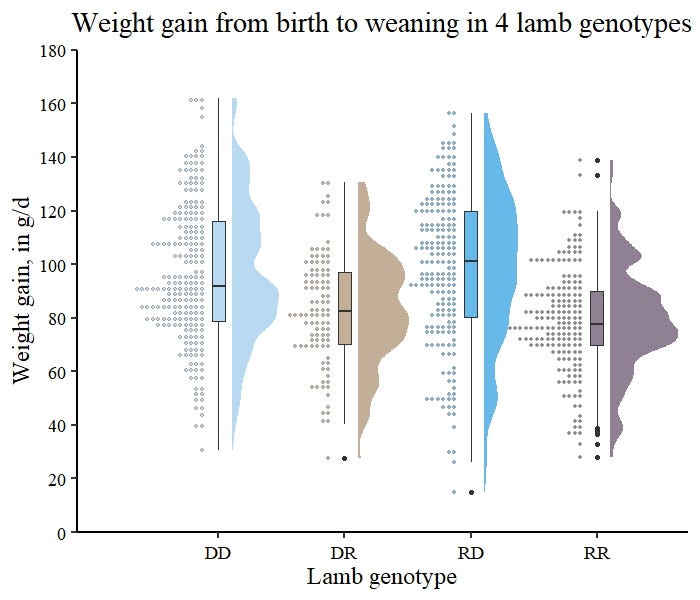
I've never seen this kind of benchmark graph before, and it looks really neat! How was this generated? What tool was used for the benchmarks?

(I actually spent most of Sep/Oct working on optimizing the Immer JS immutable update library, and used a benchmarking tool called `mitata`, so I was doing a lot of this same kind of work: https://github.com/immerjs/immer/pull/1183 . Would love to add some new tools to my repertoire here!)

Re: Python 3.15’s interpreter for Windows x86-64 should hopefully be 15% faster

#34
post #7

This seems like very low hanging fruit. How is the core loop not already hyper optimized? I'd have expected it to be hand rolled assembly for the major ISAs, with a C backup for less common ones. How much energy has been wasted worldwide because of a relatively unoptimized interpreter?

This is (a) wildly over expectations for open source and (b) a massive pain to maintain, and (c) not even the biggest timewaster of python, which is the packaging "system".

Re: Python 3.15’s interpreter for Windows x86-64 should hopefully be 15% faster

#35
post #7

This seems like very low hanging fruit. How is the core loop not already hyper optimized? I'd have expected it to be hand rolled assembly for the major ISAs, with a C backup for less common ones. How much energy has been wasted worldwide because of a relatively unoptimized interpreter?

Probably because anyone concerned with performance wasn’t running workloads on Windows to begin with.

Re: Python 3.15’s interpreter for Windows x86-64 should hopefully be 15% faster

#36

The money shot (wish this were included in the blog post): # if defined(_MSC_VER) && !defined(__clang__) # define Py_MUSTTAIL [[msvc::musttail]] # define Py_PRESERVE_NONE_CC __preserve_none # else # define Py_MUSTTAIL __attribute__((musttail)) # define Py_PRESERVE_NONE_CC __attribute__((preserve_none)) # endif https://github.com/python/cpython/pull/143068/files#diff-45b... Apparently(?) this also needs to be attached…

[flagged]

This is why they want to replace us with AI.

Re: Python 3.15’s interpreter for Windows x86-64 should hopefully be 15% faster

#37
post #27

Im a bit out of the loop with this, but hope its not like that time with python 3.14, when it was claimed a geometric mean speedup of about 9-15% over the standard interpreter when built with Clang 19. It turned out the results were inflated due to a bug in LLVM 19 that prevented proper "tail duplication" optimization in the baseline interpreter's dispatch loop. Actual gains was aprox 4%. Edit: Read through it and ha…

Thanks :), that was indeed my intention. I think the previous 3.14 mistake was actually a good one on hindsight, because if I didn't publicize our work early, I wouldn't have caught the attention of Nelson. Nelson also probably wouldn't have spent one month digging into the Clang 19 bug. This also meant the bug wouldn't have been caught in the betas, and might've been out with the actual release, which would have been way worse. So this was all a happy accident on hindsight that I'm grateful for as it means overall CPython still benefited!

Also this time, I'm pretty confident because there are two perf improvements here: the dispatch logic, and the inlining. MSVC can actually convert switch-case interpreters to threaded code automatically if some conditions are met [1]. However, it does not seem to do that for the current CPython interpreter. In this case, I suspect the CPython interpreter loop is just too complicated to meet those conditions. The key point also that we would be relying on MSVC again to do its magic, but this tail calling approach gives more control to the writers of the C code. The inlining is pretty much impossible to convince MSVC to do except with `__forceinline` or changing things to use macros [2]. However, we don't just mark every function as forceinline in CPython as it might negatively affect other compilers.

[1]: https://github.com/faster-cpython/ideas/issues/183 [2]: https://github.com/python/cpython/issues/121263
Re: Python 3.15’s interpreter for Windows x86-64 should hopefully be 15% faster

#38

I've never seen this kind of benchmark graph before, and it looks really neat! How was this generated? What tool was used for the benchmarks? (I actually spent most of Sep/Oct working on optimizing the Immer JS immutable update library, and used a benchmarking tool called `mitata`, so I was doing a lot of this same kind of work: https://github.com/immerjs/immer/pull/1183 . Would love to add some new tools to my reper…

Are you referring to the violin plot? https://en.wikipedia.org/wiki/Violin_plot and in Matplotlib as https://matplotlib.org/stable/api/_as_gen/matplotlib.pyplot....

It's in essence a histogram for the distribution, with smoothing, and mirrored on each side.

It looks nice, but is not without well-deserved opposition because 1) the use of smoothing can hide the actual distribution, 2) mirroring contains no extra information, while taking up space, and implying the extra space contains information, and 3) when shown vertically, too often causes people to exclaim it looks like a vulva.

In an HN discussion on the topic, medstrom at https://news.ycombinator.com/item?id=40766519 points to a half-violin plot at https://miro.medium.com/v2/1*J3Q4JKXa9WwJHtNaXRu-kQ.jpeg with the histogram on the left, and the half-violin on the right, which gives you a chance to see side-by-side presentation of the same data.

Re: Python 3.15’s interpreter for Windows x86-64 should hopefully be 15% faster

#39
post #13
post #7

This seems like very low hanging fruit. How is the core loop not already hyper optimized? I'd have expected it to be hand rolled assembly for the major ISAs, with a C backup for less common ones. How much energy has been wasted worldwide because of a relatively unoptimized interpreter?

Python’s goal is never really to be fast. If that were its goal, it would’ve had a JIT long ago instead of toying with optimizing the interpreter. Guido prioritized code simplicity over speed. A lot of speed improvements including the JIT (PEP 744 – JIT Compilation) came about after he stepped down.

Should probably mention that Guido ended up on the team working on a pretty credible JIT effort. Though Microsoft subsequently threw a wrench in it with layoffs. Not sure the status now.

Re: Python 3.15’s interpreter for Windows x86-64 should hopefully be 15% faster

#40

The money shot (wish this were included in the blog post): # if defined(_MSC_VER) && !defined(__clang__) # define Py_MUSTTAIL [[msvc::musttail]] # define Py_PRESERVE_NONE_CC __preserve_none # else # define Py_MUSTTAIL __attribute__((musttail)) # define Py_PRESERVE_NONE_CC __attribute__((preserve_none)) # endif https://github.com/python/cpython/pull/143068/files#diff-45b... Apparently(?) this also needs to be attached…

Important enough, or benefits them directly? I have no good guesses how improving Python's performance would benefit them, but I would guess that's the real reason.

Think about how much effort they have put into things like Pylance and general python support in VAC. Clearly they think they have enough users that this matters to that a first class experience is worth having.
Post reply on HN