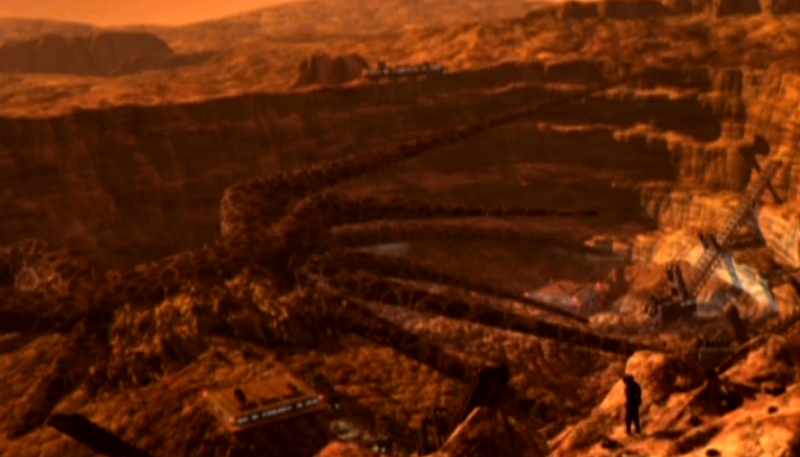
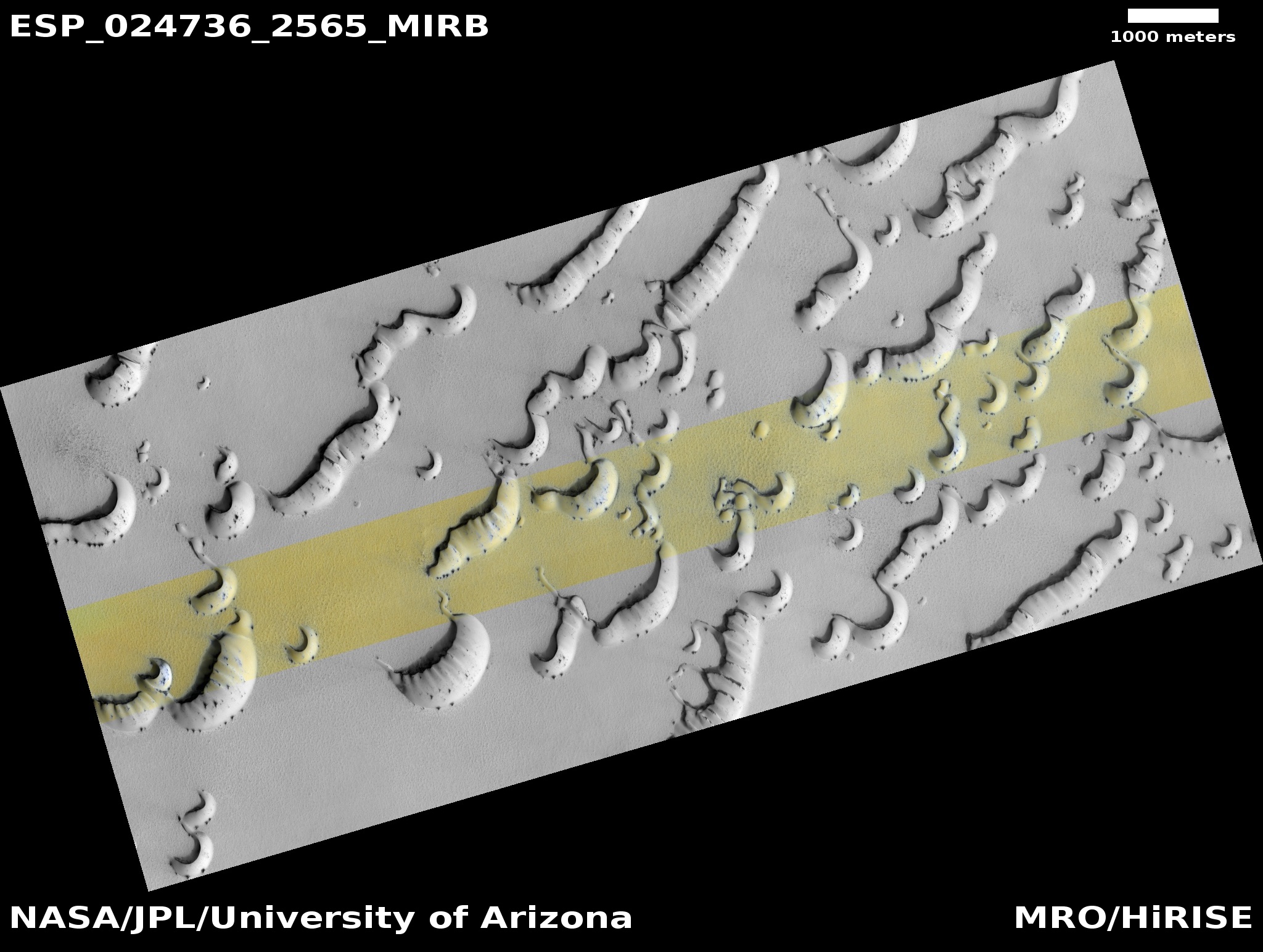
Without a scale those images are largely useless.
http://hirise.lpl.arizona.edu/ESP_024736_2565
Edit:
Ahah, here we are, about 1km:
http://hirise-pds.lpl.arizona.edu/PDS/EXTRAS/RDR/ESP/ORB_024...
11–20 of 122 posts
Without a scale those images are largely useless.
http://hirise.lpl.arizona.edu/ESP_024736_2565
Edit:
Ahah, here we are, about 1km:
http://hirise-pds.lpl.arizona.edu/PDS/EXTRAS/RDR/ESP/ORB_024...
One part of me wants to build another Curiosity style rover and catch the next Earth/Mars orbital cycle and put it down near stuff like this.
I can believe folks would find this as inspiring as looking back at the planet from the Moon.
> they might be colonies of photosynthetic Martian microorganisms, warmed from the sun, now sunbathing in plain view. That's incredible. Is that really possible? I wonder why the rover doesn't check them out? It seems weird it's digging through soil looking for chemicals possibly related to life when there's potential life out in plain view. NASA has some very strange priorities.
When planning a landing site for each rover mission, NASA considers a variety of factors and makes a best-guess as to the fruitfulness of each site from a scientific perspective. Clearly a team of brilliant scientists has not failed to consider the possibility of exploring these strange spidery features, but they have decided against it for the time being. It doesn't really make sense to assess their "strange priorit…
In particular, the geology of Mars in an incredibly fascinating topic. If you're looking for a good primer on the subject, I highly recommend Mapping Mars by Oliver Morton.
Mapping Mars contains a history of the science, highlighting the major contributors to the field and augmented with interviews from such notable science fiction authors as Kim Stanley Robinson. A good discussion is, for example, how much water exists on the planet. Consensus is now that there is water somewhere, but exactly how much water, where it sits, how it flows: great questions that are attacked with lucid explanations.
Hats off to NASA and human curiosity for this grand adventure.
Earlier quoted context omitted.
Betteridge's Law of Headlines is an adage that states, "Any headline which ends in a question mark can be answered by the word 'no'". http://en.wikipedia.org/wiki/Betteridges_Law_of_Headlines
We know. https://www.google.com/search?q=site:news.ycombinator.com+be... It's been mentioned 19 times already in the last month according to Google.
Either way it doesn't seem very constructive - or gentlemanly - to downvote an informed - and depending on the reader informative - comment.
Earlier quoted context omitted.
When planning a landing site for each rover mission, NASA considers a variety of factors and makes a best-guess as to the fruitfulness of each site from a scientific perspective. Clearly a team of brilliant scientists has not failed to consider the possibility of exploring these strange spidery features, but they have decided against it for the time being. It doesn't really make sense to assess their "strange priorit…
Yeah; just for starters, such a sandy area seems like a serious risk on its own to a rover, never mind the risk actual geysers would pose. The geysers are interesting, but are they worth jeopardizing an entire rover expedition for?
Earlier quoted context omitted.
Yeah; just for starters, such a sandy area seems like a serious risk on its own to a rover, never mind the risk actual geysers would pose. The geysers are interesting, but are they worth jeopardizing an entire rover expedition for?
You don't have to use a rover. What about a quadcopter or balloon filled with heated gas?
Earlier quoted context omitted.
We know. https://www.google.com/search?q=site:news.ycombinator.com+be... It's been mentioned 19 times already in the last month according to Google.
I didn't. First time I read about it. Either way it doesn't seem very constructive - or gentlemanly - to downvote an informed - and depending on the reader informative - comment.
Earlier quoted context omitted.
Yeah; just for starters, such a sandy area seems like a serious risk on its own to a rover, never mind the risk actual geysers would pose. The geysers are interesting, but are they worth jeopardizing an entire rover expedition for?
You don't have to use a rover. What about a quadcopter or balloon filled with heated gas?