Live data from Hacker News

Tiny electric motor can produce more than 1,000 horsepower

supercarblondie.com

151–160 of 616 posts

Re: Tiny electric motor can produce more than 1,000 horsepower

#151

Earlier quoted context omitted.

I don’t see anything inside the article that says it’s designed to be inside the wheel. I’m not sure where they got that from.

I get your skepticism and I know nothing about the field, but if the round thing in the press release picture isn’t designed to fit in a wheel, I’m confused. https://yasa.com/news/yasa-smashes-own-unofficial-power-dens...

Not necessarily, cf: https://lammotor.com/wp-content/uploads/2024/12/YASA-400R.jp...
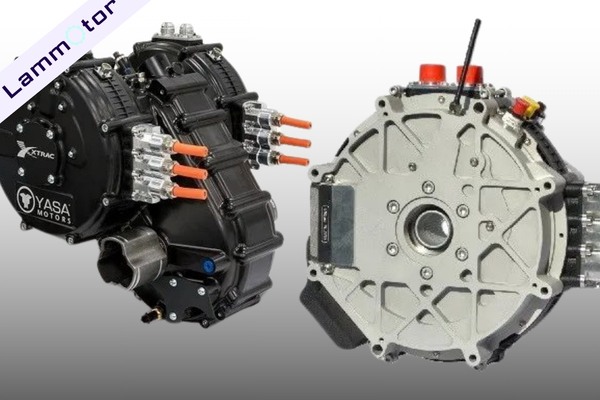
From https://lammotor.com/yasa-axial-flux-motor/

the shape is due to the change to the motor layout: https://www.thedrive.com/news/why-axial-flux-motors-are-a-bi...
Re: Tiny electric motor can produce more than 1,000 horsepower

#152
It's cool, but I think deploying motors without rare earth materials will be more impactful. The Nissan Ariya was ill-fated for other reasons, but it had a EESM motor that is easier to cool, more efficient at speed, and cheaper. That's where motor tech is headed. Power density just isn't terribly important in current applications, at least not past current sota.

Re: Tiny electric motor can produce more than 1,000 horsepower

#153
post #112

Earlier quoted context omitted.

Surely it would be easier to recharge rather than swap batteries? I wonder if in the future war will be like a turn based strategy game as everyone wait for drones to recharge before making a move.

Mid-air: yes. A boom with a charging cable or even beamed energy would be much easier. On the ground: swapping batteries is faster, and batteries are cheaper than planes or drones. You want the expensive part back in the air as soon as possible so you don't need as many of them. On the whole this probably also simplifies logistics: in civilian aviation airport space is limited, in wartime it's easier to transport one…

That's a future thought when it comes to electric aircraft - remote/emergency refuelling. I know they have tested lasers, and even sent a megawatt in 30 seconds over a distance of a few miles, though current convention of the laser back into usable power is around 50% efficiency. All gets down to a needed leap in electricity production and wished the World would get together on fusion reactors and knock it out the park over a mad race to be the first and lock down patents.

Re: Tiny electric motor can produce more than 1,000 horsepower

#154

Earlier quoted context omitted.

I don't think it's fair to insult all US citizens because of your personal shortcomings.

Do you not have personal experience with people under 40 in America? I would bet $20 over 95% of them don't know how to balance a check book.

I would bet $20 over 95% of them have never needed to balance a check book, and probably never will.

Re: Tiny electric motor can produce more than 1,000 horsepower

#155

Ok so whats the catch with the technology? Its more powerful, smaller, all readily available materials. Some kind of strange shape, longevity challenge? Difficult to make so costs are tough to bring down? Just noticed that they are owned by mercedes benz- they will kill it accidentally. Corporate wont be able to roll it out. They will try and capture all the value and kill its potential

Axial flux motors are difficult and expensive to make.

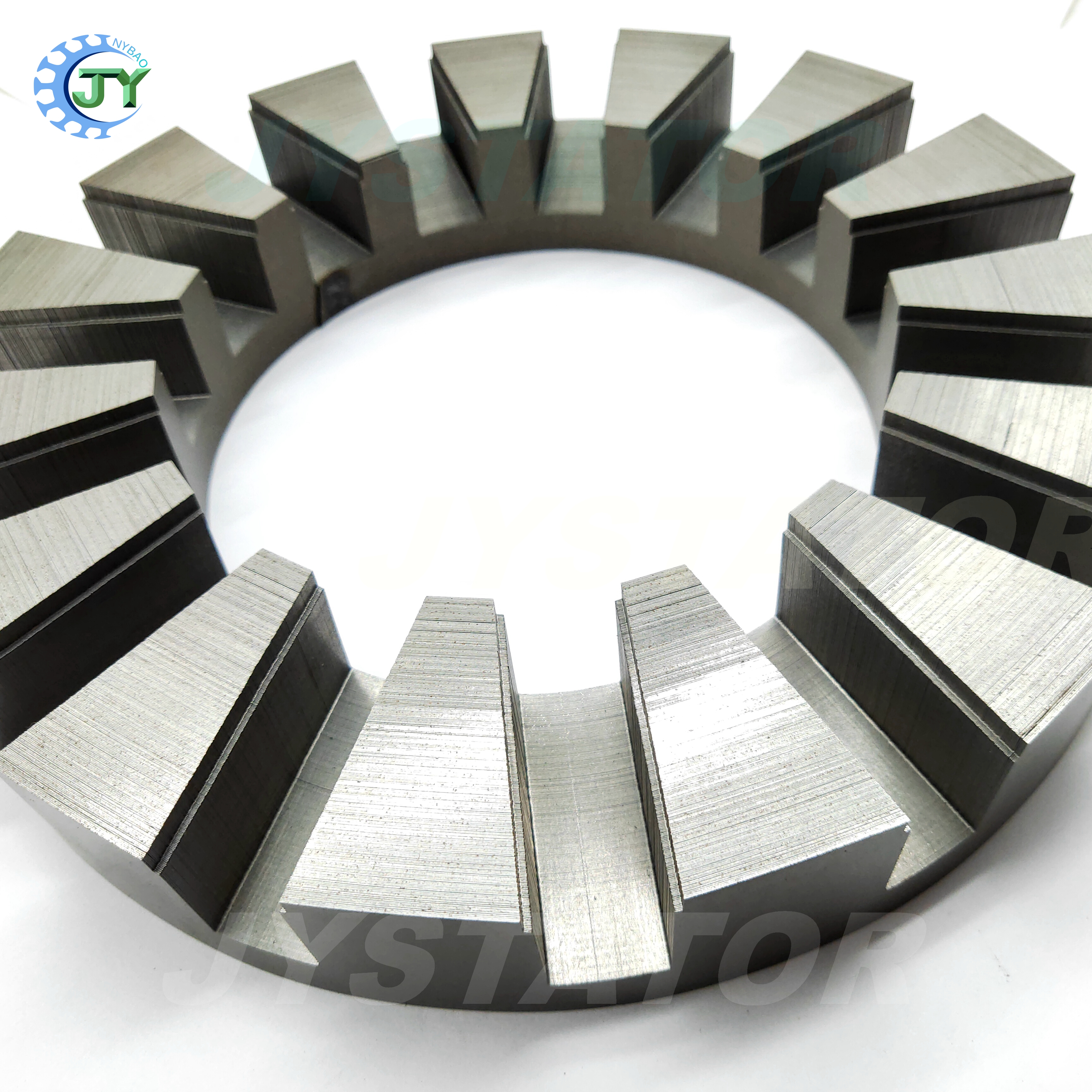
Motors need to be made of laminated steel sheets to reduce parasitic eddy currents. The laminations need to be thin in the direction of the direction of the flux. For radial flux motors you just punch out a shape and stack a bunch of sheets up. For axial flux you have to wind a strip: https://15658757.s21i.faiusr.com/2/ABUIABACGAAgmviFqAYozvPw-...

Each layer of that strip has a different cut in it, so its much more complicated to make. The shape and manufacturing method typically impacts efficiency; YASA avoids that by spending more money. Efficiency is an unavoidable requirement of high power density- heat is the limiting factor, and going from 98% to 96% efficient means double the heat.

The mechanical demands on the motor are also much higher- radial flux is balanced since the magnetic force pulls the rotor from opposite sides. Axial flux motors are usually one-sided, so the magnets are trying to pull the rotor and stator together with incredible force. That also makes vibrations worse. Extremely strong, expensive bearings are required to handle it. With permanent magnet rotors you need a jig to lower the rotor into place; they can't be assembled by hand. That also makes maintenance more difficult and expensive.

Re: Tiny electric motor can produce more than 1,000 horsepower

#156

Earlier quoted context omitted.

I don’t see anything inside the article that says it’s designed to be inside the wheel. I’m not sure where they got that from.

I think they misspoke when they said "in" the wheel, but supercars can have a separate motor for each wheel, and the closer they are to the wheel the better the torque as it's not also driving a longer shaft. The smaller the motor, the closer you can get.

I guess if you can make the motor and a suitable reduction box lighter than the equivalent bearing and driveshaft combination you could make the suspension arms mechanically simpler.

By using motors at each wheel you'd eliminate the need for a differential, saving a good 40-50kg or so. Of course, if you kept the drive shafts and put the motor and reduction box in the middle, you'd be able to use inboard brakes and save a lot of unsprung weight!

Re: Tiny electric motor can produce more than 1,000 horsepower

#157
post #7
post #6

Could lead to significant efficiency gains for EV's, because 1/4 of the motor weight means better power-to-weight ratio... a lot of things will automatically get better. YASA was founded in 2009, a spin out from Oxford University following the PhD of founder and still CTO, Dr Tim Woolmer. "Over the decades that followed both of these technologies were explored. But despite the potential for weight reduction, smaller…

But EVs are already heavy because of the battery. I suppose percentage-wise the motors don't make much of a difference (?)

It compounds. If you have a lighter more efficient motor you need a smaller battery for the same range, that combined weight loss means you meed lighter brakes etc etc, and because the car is now lighter you size of your motor you need is less.....

They claim, this compounding effect works out to basically double the effective weight saving from battery and motor.

ie if you start with saving 50kg on motor, and 50kg on battery, you end up saving 200kg over all. Still only about 10% of a typical electric car.

https://youtu.be/3qjB6GnhloY?si=yqlz7Evuyf5VaghO&t=446

Re: Tiny electric motor can produce more than 1,000 horsepower

#158
post #18

Everything but the Metric System: “The new YASA axial flux motor weighs just 28 pounds, or about the same as a small dog.” :)

Americans are very weird when it comes to metric. They often quote mobile phones as having something like "a six inch screen size but now only 12mm thick" - pick a measurement system people !

the author and the company are British

Re: Tiny electric motor can produce more than 1,000 horsepower

#159

I'm curious as to the efficiency of the motor (basically, how much of the input electric power is converted to motive power). If it isn't very good, then it might be excellent for drag races, but maybe not so many others. Also, any power that doesn't turn into torque, is likely to be expressed as heat.

It would almost have to be very efficient -- they're saying it can do something like 500HP continuous, and it doesn't have enormous fins all over it for cooling.

Looking at the picture, it looks like there may be a liquid input (cooling). Even a very efficient motor is going to need cooling (and lubricant).
Post reply on HN