Live data from Hacker News

Poorest US workers hit hardest by slowing wage growth

ft.com

301–310 of 354 posts

Re: Poorest US workers hit hardest by slowing wage growth

#301

Earlier quoted context omitted.

> Which ones? Liberation Day. > can’t bet on negotiation tactic, only on the outcomes and formal agreements How about money actually invested [1][2]. [1] https://fred.stlouisfed.org/series/C307RX1Q020SBEA [2] https://fred.stlouisfed.org/series/C307RX1Q020SBEA

> Liberation Day. From four months ago?

I can't tell which of these you meant -

"From four months ago? That's way too short a time for any tariff impacts to show up."

vs

"From four months ago? That's ancient history, it doesn't matter."

If it's the first, the link the other person provided shows a dip in manufacturing facility investment over the last 2 quarters. Maybe there will come a future point of stability where investors can feel confident, maybe not. Trump seems willing to use tariffs as a weapon for any disagreement with other countries, not just trade imbalances. There's little guarantee any trade agreement will be honored by the administration.

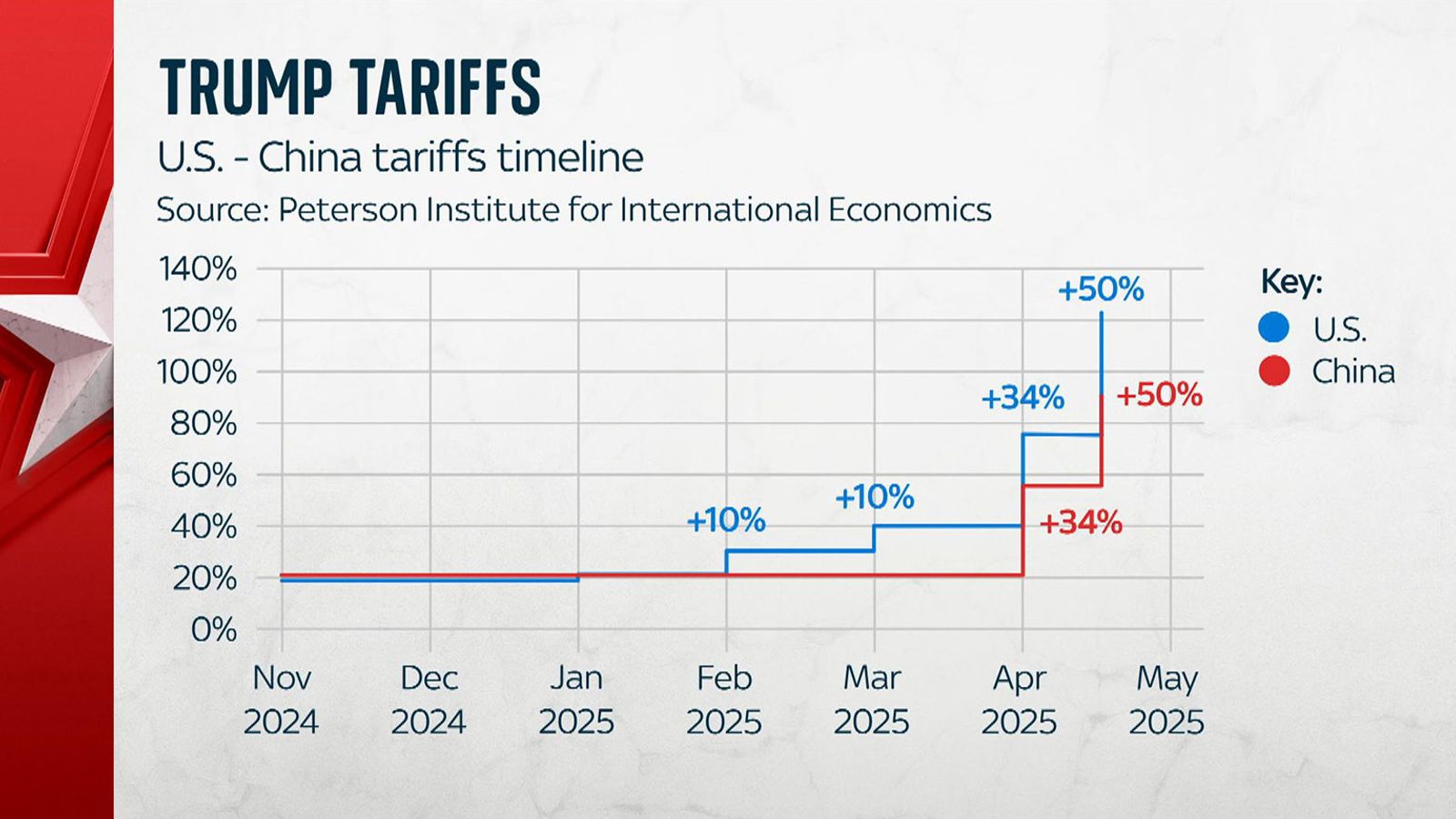
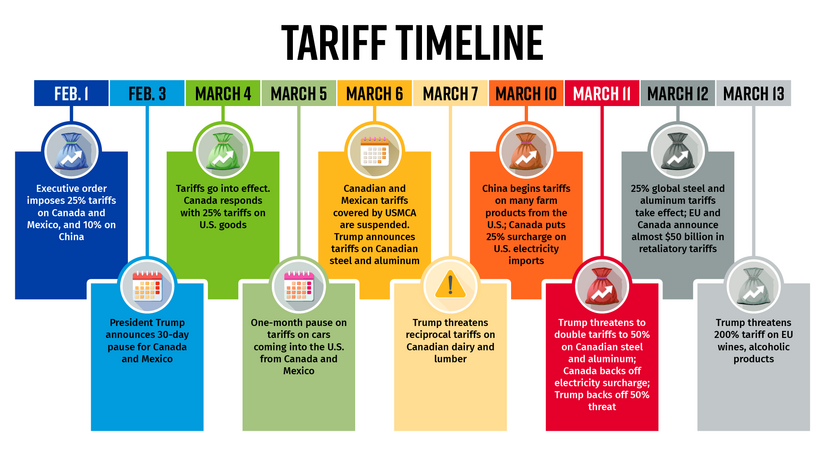
If it's the second, well, that's the problem. The tariff landscape has been in constant flux over the last several months [0,1,2]. You don't build a factory overnight. You want to understand what your supply chains and costs look like and have some confidence in what they'll look like by the time the factory is ready to start producing. There remains little guarantee that the landscape won't continue to change, and Trump's weaponizing of tariffs is part of that.

[0] https://e3.365dm.com/25/04/1600x900/skynews-trump-tariffs_68...
[1] https://news.ucr.edu/sites/default/files/styles/scale_825/pu...
[2] https://www.crugroup.com/globalassets/campaigns/commodity-ma...

Re: Poorest US workers hit hardest by slowing wage growth

#302

"people earning roughly less than $806 a week — slowed to an annual rate of 3.7 per cent in June, down from a peak of 7.5 per cent in late 2022" With inflation dropping from 9.1% in June 2022 to 2.7% in June 2025, real wages for these low earners are now growing for the first time in years. The Financial Times failure to mention this context makes me question their motives.

"The wage growth trend means the lowest paid are now more likely to find themselves among the 40 per cent of US workers whose salaries are not keeping pace with inflation…" They do talk about inflation in the article.

They are not more likely to find themselves among the 40% of workers who's salaries are lagging inflation, they are more likely to be among the 60% who's salaries are outpacing inflation.

The FT is being disingenuous.

Re: Poorest US workers hit hardest by slowing wage growth

#303
post #295
post #288

Earlier quoted context omitted.

Is insurance a legal requirement for a trailer in Tornado Alley?

Not if you own your trailer without a mortgage. If you have a mortgage you're pretty much required to have insurance. Not getting insurance doesn't make this cheaper really as you'll just lose your property completely every few years. Besides insurance rates are often highly subsidized by federal government and actually a really good bargain

> Not getting insurance doesn't make this cheaper really as you'll just lose your property completely every few years

It sounds a bit like the "Boots theory" of Discworld [0].

> insurance rates are often highly subsidized by federal government and actually a really good bargain

This feels a bit inconsistent with your previous comment about living in Tornado Alley being "not exactly a bargain".

What do you think about studies like this [1] which find a correlation between economic disparity and tornado risk?

[0] https://en.wikipedia.org/wiki/Boots_theory

[1] https://www.sciencedirect.com/science/article/abs/pii/S01660...

Re: Poorest US workers hit hardest by slowing wage growth

#304
post #24

What slowing wage growth? For the poorest the wages have essentially not increased for a long time right? It hasn’t even kept up with inflation. The recent bill actually makes it much worse.

> For the poorest the wages have essentially not increased for a long time right? No. Nominal wages grew from ‘21 to ‘23, hitting all-time highs in ‘24 [1]. > It hasn’t even kept up with inflation It did [2]. [1] https://fred.stlouisfed.org/series/CXU900000LB0102M [2] https://www.epi.org/publication/swa-wages-2023/

Good data! Looking at the objective figure on the chart is sobering tho - $4k in income!(I think it may go up after taxes given tax credits?)

Re: Poorest US workers hit hardest by slowing wage growth

#305

Earlier quoted context omitted.

> Yes individuals can rise and fall. One of the critiques of meritocracy: > […] It’s wild that everyone is using “merit” and “meritocracy” as though it somehow avoids elitism, when in reality it’s a sneaky way to cement biases without the appearance of bias. Of course people should be judged on their skills and not their wealth. But, how’d they acquire those skills, and why would anyone assume the money didn’t help?…

I do not see how this is criticism. Everything in life involves hefty doses of luck. The alternative (i.e. without merit) seems obviously worse as it would be completely luck, no? The complaint seems to want to lower the ceiling rather than raise the floor.

> Everything in life involves hefty doses of luck. The alternative (i.e. without merit) seems obviously worse as it would be completely luck, no?

There is some level of luck / chance, but one can tilt the odds: more tutoring that allows for more practice to get better in the skill(s) that are 'merited', getting into schools with good alumni networks so one can 'luckily' bump into the right people with the resources you need.

Initially good luck can breed good luck in the second iteration/generation.

The meta-criticism (if you will) is that the initial batch of merited people can lock-in things for their (grand-)kids in future batches. There needs to be a way allow opportunities for future batches if their (grand-)parents from earlier batches were not 'merited' initially. Otherwise you basically get the ball rolling on an aristocracy.

Re: Poorest US workers hit hardest by slowing wage growth

#306
post #284

Earlier quoted context omitted.

> True, since they own all the beachfront property Climate change does not mean just rising sea levels, but more extreme weather as well, which can include more flooding: warmer air holds more moisture, so when it eventually gets released it can be in downpours. See recent flooding in Texas. Poor people tend to live in the highest risk areas because the safer areas are desired most and so the people with money bid up…

Regarding people living in Tornado Alley because they can't afford to live anywhere else, insurance costs are much higher there, so not exactly a bargain. And plenty of wealthy people love high risk areas. Pretty much anything by a sea is high risk. And again, they pay for it with higher insurance rates. It's hard to get a good measure of damage caused by climate change. There are much touted statistics that say bill…

> It's hard to get a good measure of damage caused by climate change.

The Insurance Bureau of Canada (IBC), for one, may disagree:

* https://thepointer.com/article/2025-08-02/ontarians-are-payi...

* https://www.insurancebusinessmag.com/ca/news/catastrophe/can...

* https://www.lexpert.ca/news/finance-law/insurance-bureau-of-...

* https://www.ibc.ca/news-insights/in-focus/canadian-governmen...

Re: Poorest US workers hit hardest by slowing wage growth

#307
post #250

Earlier quoted context omitted.

So by your logic we should consider lowering the minimum wage in order to ensure employment. Employment is not a means in itself, the point of being employed is to "make a living". If a job cannot sustain a person then it should not exist. People deserve to live with dignity, earning a living wage.

>People deserve to live with dignity, earning a living wage. Look, I get where that is coming from. But no one deserves anything, even clean air. Instead, you pay for things with other things (e.g. clean air in exhchange for slightly more expensive cars). A (shitty) job is better than no job. Minimum wage should be lowered. You gotta help people with something else. For instance by allowing to build higher density ho…

> But no one deserves anything, even clean air. People 100% deserve clean air?

Re: Poorest US workers hit hardest by slowing wage growth

#308

Earlier quoted context omitted.

High unemployment would mean companies would have to offer more money to attract people They want unemployment to be low so they can keep wages and salaries suppressed

Except, of course, that this is completely backwards. Low unemployment shifts the balance of negociating power towards workers as companies have to compete to get them. See the massive growth in AI engineers’ wages for a nice illustration of this. High unemployment helps employers because they can put pressure on the workers, who are less likely to find a job with better conditions or at all. The fact that low unempl…

This is my bad. For some reason I got "unemployment rate" twisted in my head and thought it was related to the number of unfilled jobs

So my reasoning was "if there are not many unfilled jobs, it makes it tougher for people to find work, meaning the unemployment rate is low" which of course does not logically follow

My mistake

Re: Poorest US workers hit hardest by slowing wage growth

#309

Earlier quoted context omitted.

> Why the poor and working class? Because by and large, most of the jobs offshored by the U.S. have been lower skilled. As these jobs return, it is the lower skilled workers who will primarily benefit. I agree that there are likely examples of necessities which cannot be produced cost effectively locally which will become more expensive.

These jobs are not going to return. 'The system' is too profitable in its current form. What will happen is tariffs will cause prices to rise as companies pass on this tax to consumers (which is inflationary). In fact, they may go up more than that, same way as they did during covid. Even if say two years from now a new congress and senate remove these tariffs. The prices will not go down. Companies will not build ne…

> These jobs are not going to return. 'The system' is too profitable in its current form.

The system is set up to ensure efficient allocation of capital. If it's more profitable for manufacturers to produce goods in-country, that is exactly what they will do. It's a bold claim that tariffs will have no impact whatsoever on investment and spending, because it's clear that they absolutely will.

Re: Poorest US workers hit hardest by slowing wage growth

#310

Earlier quoted context omitted.

> Because so much menial labour is currently offshored, the primary benefactor of tariffs is expected to be the poor and working classes. See, I was with you until this (OK, mostly with you, luxury goods are price inelastic so the buyer definitely pays). The primary beneficiary of a carefully designed tariff policy might be some working class people in some industries (and some wealthy owners, natch), at the expense…

That's certainly a possibility, so I agree. If the uncertainty leads to significantly lower investment over a prolonged period of time, the benefits could be offset. Luxury items are price elastic. https://www.investopedia.com/ask/answers/040715/which-factor...

Strictly speaking luxury goods are income elastic (by definition) but can be either price elastic or inelastic at different points on the pricing curve, with profit-maximising suppliers attempting to set prices at the level where it reaches unitary elasticity. But when we're talking about designer brands (as opposed to the strict economic definition of a 'luxury good' which encompasses most of the shoe market), they typically price above that level anyway to maintain "exclusivity". Hermes made a point of publicly stating that it would pass on 100% of tariffs costs to consumers, and whilst I haven't tracked Louboutin shoe prices I doubt their customer base for shoes costing 10x their less fashionable equivalent is going to permanently refuse to pay a 15% price increase. Particularly not when it also applies to the brand's closest competitor in the form of other trendy European designer shoe brands. I suspect the tariff-eating that occurs in the US fashion market will tend to be US-based retailers cutting their margins rather than the foreign brand cutting its wholesale prices too...

see also: https://www.investopedia.com/ask/answers/012915/what-effect-...

Post reply on HN