Disappointed this isn't an actual VM running Windows 3.1 in the browser.
Canyon.mid
171–180 of 214 posts
Re: Canyon.mid
#172Please please please NEVER disable video player controls. Like a fool I didn't lower my system volume, and got blasted with maximum volume of the YouTube video.
If your YT/Winamp/whatever volume isn't at 100%, then what you're doing is: 1. generate audio signal 2. reduce volume of that signal, losing information because it's quantised 3. take that volume-reduced signal and boost it right back up again, but now with the lower bits destroyed You can make this effect as bad as you like, e.g. turn it down to 1% and then amplify by 100x... but why?
Ah so that's why my headphone amp disables volume control on the output entirely.
Re: Canyon.mid
#173Canyon.mid played using modern virtual instruments: https://www.youtube.com/watch?v=zfVobqrIymc
Canyon.mid played using modern real instruments: https://www.youtube.com/watch?v=1QN3ToFCv_s
Re: Canyon.mid
#174Earlier quoted context omitted.
The PC speaker could only play square waves, and had only one voice. There is no "correct" sound for a MIDI file as it's just note and tempo data. But many people probably associate them with the OPL2 synthesizer chip on AdLib and early SoundBlaster cards. [1] Now that we have high fidelity digital sound output on even the cheapest computers/devices, at least 44 kHz, at least two channels, and at least 16 bits per sa…
And, of course, because it could play square waves, you could bitbang it to play digitized audio using PWM. Sounded terrible, and super CPU-heavy (so not useful in games), but still.
Pinball Fantasies was actually quite impressive https://www.youtube.com/watch?v=yb8mLBa3dcg
Re: Canyon.mid
#175Earlier quoted context omitted.
And, of course, because it could play square waves, you could bitbang it to play digitized audio using PWM. Sounded terrible, and super CPU-heavy (so not useful in games), but still.
Pinball Fantasies was actually quite impressive https://www.youtube.com/watch?v=yb8mLBa3dcg
Huh, impressive indeed!
Re: Canyon.mid
#176Earlier quoted context omitted.
What exactly was the difference between PC speakers and MIDI? Why do we no longer need a MIDI device today to play the “correct” sound?
The PC speaker could only play square waves, and had only one voice. There is no "correct" sound for a MIDI file as it's just note and tempo data. But many people probably associate them with the OPL2 synthesizer chip on AdLib and early SoundBlaster cards. [1] Now that we have high fidelity digital sound output on even the cheapest computers/devices, at least 44 kHz, at least two channels, and at least 16 bits per sa…
There's a "correct" sound in that the MIDI standard itself doesn't specify a standard instrument assignment. For that, there's General MIDI but also entirely different approaches (like the MT-32 instrument assignment, which predates General MIDI) and extensions to General MIDI (like Roland's GS and Yamaha's XG). Some didn't have a standard assignment at all (like the FB-01). Even the Adlib and earlier Soundblaster cards didn't have exactly GM compatible MIDI playback drivers; General MIDI specifies a minimum number of 24 simultaneous voices, and an OPL2 or even a pair of them can't satisfy that requirement.
There's also a "correct" sound insofar that the tracks were usually arranged using one sound module or another. Even when devices are compatible in the sense that they have adopted the same standard, hearing music on another device than the one the soundtrack was originally arranged for will cause some degradation, because the standards are only loosely specified in terms of timbre, volume levels, envelopes etc.
Some DOS games have specific arrangements for a variety of different kinds of MIDI devices for these reasons, with different mix levels and instrument setup, sometimes scaled down arrangements, adjustments for the instrument patches and even loading entirely new patches onto the devices.
Re: Canyon.mid
#177Earlier quoted context omitted.
Because in order to get the best dynamic range while listening to diverse music, you need to detect the loudness of tracks and albums and adjust the gain of each track/album accordingly. In order to have room for the music player to adjust the volume higher for quieter tracks, you need to apply a "pregain" to lower the volume overall, while turning up your speakers to compensate. This solves the problem, but by doing…
Why not use a compressor?
Compressors destroy dynamic range. The idea is to normalize, not limit.
Re: Canyon.mid
#178You remind me that I didn't have a sound card at the time and I played all my games (mostly LucasArts) with the PC speaker. For me, the MIDI versions are too boring as they lack the "raw electric power" of the speaker that I loved for years.
I had a completely different experience. The moment we played Monkey Island for the first time after installing our brand new SoundBlaster-compatible cheap soundcard, bought with the money a couple of early teenagers can have, well, it was GLORIOUS. I still remember it vividly 30+ years later.
For me it was Epic Pinball on a Sound Blaster 16. Playing Duke Nukem 1 was awesome and all(wish I could go back) but when I heard the intro to Epic Pinball come out of these speakers:
https://assets.superhivemarket.com/store/product/190602/imag...
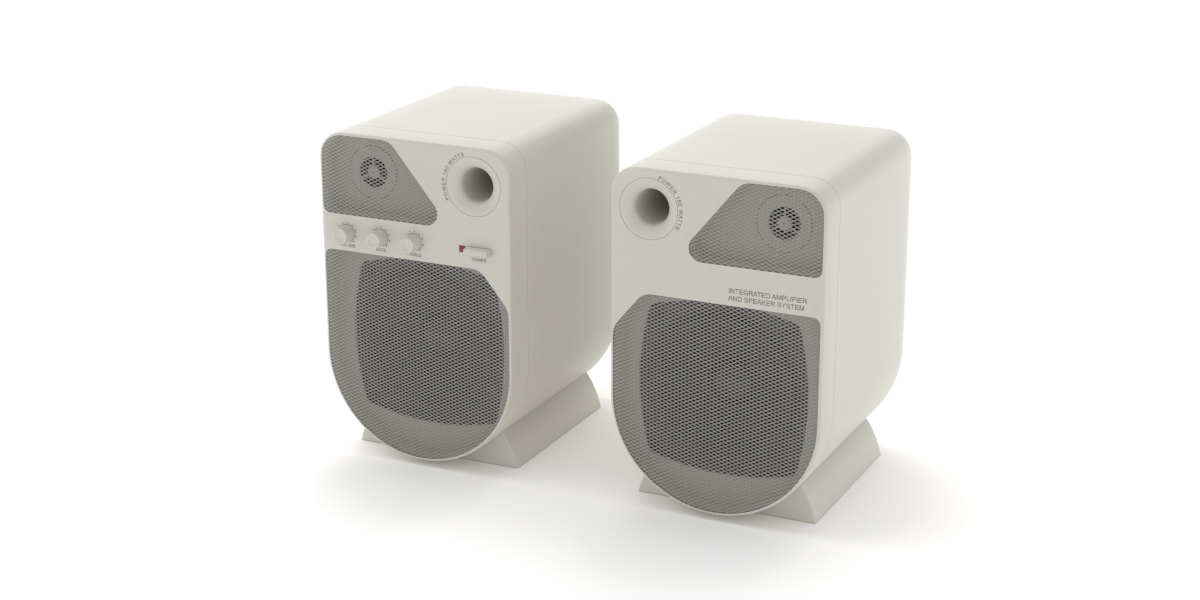
It was one of those moments where computers blew my 8 year old mind, I was never the same.
Re: Canyon.mid
#179Earlier quoted context omitted.
If your YT/Winamp/whatever volume isn't at 100%, then what you're doing is: 1. generate audio signal 2. reduce volume of that signal, losing information because it's quantised 3. take that volume-reduced signal and boost it right back up again, but now with the lower bits destroyed You can make this effect as bad as you like, e.g. turn it down to 1% and then amplify by 100x... but why?
I don't think this is true in practice anymore. Given that most sources are 16 bit wide, and afaik most OSes internally use 24 bits these days in the OS mixer (at least my laptop does), the information loss is negligible (just some rounding errors and that's it). I'd be much more worried about 44.1khz sources being resampled to 48khz if that's the OS playback rate. I mean you won't be able to hear that either in prac…
You're correct, with Realtek AC97 devices the resampling used to sound absolutely horrendous. Like they picked the worst possible algo. It's not as big of an issue these days though.
Re: Canyon.mid
#180"You bolt awake on the NY subway. You are not online. It is 1987 AD. You are Judge Reinhold, and are an office worker in a comedy movie. The future cannot come to pass. Rome must burn."