Live data from Hacker News

A conversation about AI for science with Jason Pruet

lanl.gov

21–30 of 163 posts

Re: A conversation about AI for science with Jason Pruet

#21
post #6

> We certainly need to partner with industry. Because they are so far ahead and are making such giant investments, that is the only possible path. And therein lies the risk: research labs may become wholly dependent on companies whose agendas are fundamentally commercial. In exchange for access to compute and frontier models, labs may cede control over data, methods, and IP—letting private firms quietly extract value…

> research labs may become wholly dependent on companies

They already are. Who provides their computers and operating systems? Who provides their HR software? Who provides their expensive lab equipment?

Companies are not in some separate realm. They are how our society produces goods and services, including the most essential ones.
Re: A conversation about AI for science with Jason Pruet

#22

Clearly AI is worthy of public investment, but given the capture of this administration by tech interests, how can we be sure that public AI funding isn't just handouts to the president's cronies?

The DOE has been building supercomputers for a while now: https://en.m.wikipedia.org/wiki/Oak_Ridge_Leadership_Computi...

Re: A conversation about AI for science with Jason Pruet

#23

Earlier quoted context omitted.

If so, yes indeed, fair point by him/her. It's up to ordinary folks like us to push against unfair tech transfer because yes, federal labs and research institutions would otherwise provide the incumbents an extreme advantage. Having been in this world though, I didn't see a reluctance in federal labs to work with capable entrepreneurs with companies at any level of scale. From startup to OpenAI to defense primes, the…

> I didn't see a reluctance in federal labs to work with capable entrepreneurs My reluctance is when we talk about fraud, waste, and corruptions in government, this is where it happens. The DoD's budget isn't $1T because they are spending $900B on the troops. It's $1T because $900B of that ends up in the hands of the likes of Lockhead martin and Raytheon to build equipment we don't need. I frankly do not trust "entre…

Not that it fully takes away from your argument but a lot of that high price tag is also due to requiring much better controls on material to prevent supply chain attacks ala getting beepers with explosives in the hands of all your leadership

Re: A conversation about AI for science with Jason Pruet

#25
post #6

> We certainly need to partner with industry. Because they are so far ahead and are making such giant investments, that is the only possible path. And therein lies the risk: research labs may become wholly dependent on companies whose agendas are fundamentally commercial. In exchange for access to compute and frontier models, labs may cede control over data, methods, and IP—letting private firms quietly extract value…

I fail to understand the sentiment here. This is the intention of tech transfer. To have private-sector entities commercialize the R&D. What is the alternative? National labs and universities can't commercialize in the same way, including due to legal restrictions at the state and sometimes federal level. As long as the process and tech transfer agreements are fair and transparent -- and not concentrated in say OpenA…

> What is the alternative?

Reasonably there should be a two way exchange? It might be okay for companies to piggyback on research funds if that also means that more research insight enters public knowledge.

Re: A conversation about AI for science with Jason Pruet

#26
post #6

> We certainly need to partner with industry. Because they are so far ahead and are making such giant investments, that is the only possible path. And therein lies the risk: research labs may become wholly dependent on companies whose agendas are fundamentally commercial. In exchange for access to compute and frontier models, labs may cede control over data, methods, and IP—letting private firms quietly extract value…

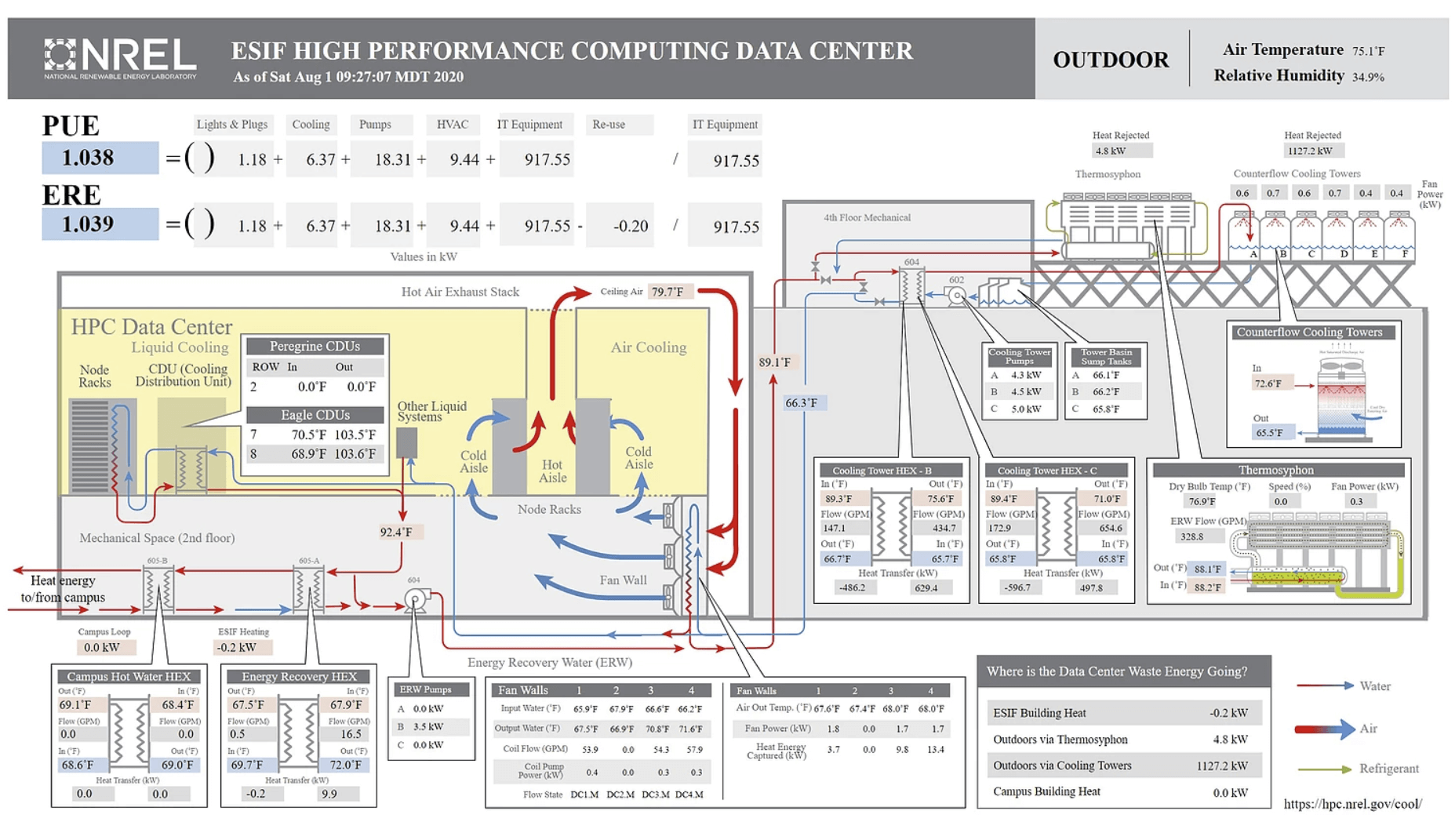
The point of https://www.nrel.gov/index is to research how to do renewable energy. Likewise, the research done by https://www.nrel.gov/hpc/about-hpc and its data center https://www.nrel.gov/computational-science/hpc-data-center is to pioneer ways to reuse its waste heat (and better cool existing data centers).

I'm kind of disappointed that their dashboard has been moved or offline or something for the past few years. https://b2510207.smushcdn.com/2510207/wp-content/uploads/202... is what it used to look like.

Re: A conversation about AI for science with Jason Pruet

#28

Clearly AI is worthy of public investment, but given the capture of this administration by tech interests, how can we be sure that public AI funding isn't just handouts to the president's cronies?

How about we fix global warming and switch 100% to clean energy, and then invest in AI?

Re: A conversation about AI for science with Jason Pruet

#29
post #6

> We certainly need to partner with industry. Because they are so far ahead and are making such giant investments, that is the only possible path. And therein lies the risk: research labs may become wholly dependent on companies whose agendas are fundamentally commercial. In exchange for access to compute and frontier models, labs may cede control over data, methods, and IP—letting private firms quietly extract value…

[dead]

Re: A conversation about AI for science with Jason Pruet

#30

Clearly AI is worthy of public investment, but given the capture of this administration by tech interests, how can we be sure that public AI funding isn't just handouts to the president's cronies?

How about we fix global warming and switch 100% to clean energy, and then invest in AI?

To the extent that further improvements to AI remain economically useful, "let's do these other things first" means your economy trails behind those of whoever did work on the AI.

To the extent that further improvements to AI are either snake oil or just hard to monopolise on, doing everything else first is of course the best idea.

Even though I'm more on the side of finding these things impressive, it's not at all clear to me that the people funding their development will be able to monopolise the return on the investment - https://en.wikipedia.org/wiki/Egg_of_Columbus etc.

Also: the way the biggest enthusiasts are talking about the sectoral growth and corresponding electrical power requirements… well, I agree with the maths for the power if I assume the growth, but they're economically unrealistic on the timescales they talk about, and that's despite that renewables are the fastest %-per-year-growth power sector and could plausibly double global electrical production by the early 2030s.

Post reply on HN