Live data from Hacker News

New York Underground

nationalgeographic.com

61–70 of 87 posts

Re: New York Underground

#61
post #14

Earlier quoted context omitted.

Woah. The water mains are 800 feet down? How does that work? How did they even get there?

I'm guessing they probably got there before everything on top was built, but how do they get down there now for repairs and such?

No - they're still building out these tunnels.

My uncle worked briefly on the project in the 60's but its very much active

http://www.youtube.com/watch?v=5gfSEjMtAoc

Re: New York Underground

#62
post #29
post #20

The greatest depth shown in that graphic is 800 feet. At 10-12 feet per floor, that's equal to the height of a 67-80 story skyscraper. This means Manhattan has a 'mirror-image' city under the ground -- its 'citizens' are electric power, water, gas, and trash. I can't help but be in awe.

What is even more amazing is that this mimics nature. Most trees have a root structure that is a rough mirror image of what's above ground!

That's true in grasses, but not in trees. In grasses, if the aboveground leaves get shortened/killed, from fire or mowing, the belowground roots die back, then both regrow in a similar manner.

Re: New York Underground

#63
post #51

Earlier quoted context omitted.

The roots are generally much closer to the surface than the canopy is to the ground. Like within a meter versus dozens of meters.

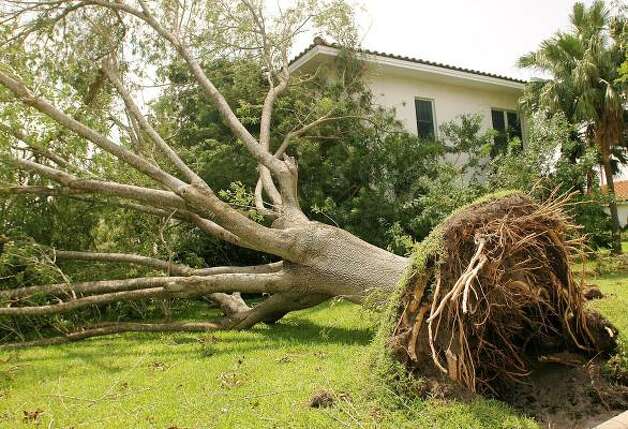
Having lived in a very hurricane-prone area of the southeastern US for most of my life, I can verify that tree roots are not a mirror of the above-ground portion.

Any pictures?

Re: New York Underground

#64

So, there are two of those deep underground water tunnels, one which runs down from the Bronx through Manhattan and another that runs from the Bronx through Queens and Brooklyn. These tunnels were completed in 1917 and 1935 respectively. How they managed to do this then is beyond me. Currently a third tunnel is being built and apparently it's "the largest construction project in New York history". The project was beg…

To me, $6 billion seems really cheap for a project that seems pretty vital to the city's long term health, safety and security. Compare this to the ~$10 billion for the California High Speed Rail project, which doesn't seem nearly as important as this NYC project.

I think you mean more like $100-150b for Cal-HSR.

Re: New York Underground

#65
post #63
post #51

Earlier quoted context omitted.

Having lived in a very hurricane-prone area of the southeastern US for most of my life, I can verify that tree roots are not a mirror of the above-ground portion.

Any pictures?

Not personal photos, but here are some examples:

http://www.cclockwood.com/stockimages/WE-HURRICANE-GUSTAV-46...

http://www.doc.state.nc.us/news/scrapbk/David-1.jpg

http://www.city-data.com/disaster-photos/photos/220.jpg

http://www.cclockwood.com/stockimages/WE-HURRICANE-GUSTAV-46...

http://4.bp.blogspot.com/-m6YoyhPEom8/Tlpzy9dkJII/AAAAAAAABY...

http://ww2.hdnux.com/photos/05/20/46/1378705/5/628x471.jpg

Google something like: https://www.google.com/search?hl=en&q=hurricane+trees+do...

Edit: Horrible formatting job, and to say that Pine trees were the worst offenders in our area.

Re: New York Underground

#66
post #14

Earlier quoted context omitted.

Woah. The water mains are 800 feet down? How does that work? How did they even get there?

I'm guessing they probably got there before everything on top was built, but how do they get down there now for repairs and such?

They don't. That's why they are building a third water tunnel. For backup, and so they can do repairs on the other two.

Re: New York Underground

#67
post #65
post #63

Earlier quoted context omitted.

Any pictures?

Not personal photos, but here are some examples: http://www.cclockwood.com/stockimages/WE-HURRICANE-GUSTAV-46... http://www.doc.state.nc.us/news/scrapbk/David-1.jpg http://www.city-data.com/disaster-photos/photos/220.jpg http://www.cclockwood.com/stockimages/WE-HURRICANE-GUSTAV-46... http://4.bp.blogspot.com/-m6YoyhPEom8/Tlpzy9dkJII/AAAAAAAABY... http://ww2.hdnux.com/photos/05/20/46/1378705/5/628x471.jpg Google somet…

I grew up in south florida and have witnessed a bunch of root walls, but It really depends on the tree.

Palm trees for examples have deep root structures and small canopies which is how they survive the strong tropical winds.

Re: New York Underground

#69
Naive question, but are things like power, gas, water, TV cables and steam always buried like this (requiring digging to make repairs or modifications), or are there cities/systems where they are laid in human-accessible tunnels? Seems like it would be more practical, albeit more expensive.

Re: New York Underground

#70
post #65

Earlier quoted context omitted.

Not personal photos, but here are some examples: http://www.cclockwood.com/stockimages/WE-HURRICANE-GUSTAV-46... http://www.doc.state.nc.us/news/scrapbk/David-1.jpg http://www.city-data.com/disaster-photos/photos/220.jpg http://www.cclockwood.com/stockimages/WE-HURRICANE-GUSTAV-46... http://4.bp.blogspot.com/-m6YoyhPEom8/Tlpzy9dkJII/AAAAAAAABY... http://ww2.hdnux.com/photos/05/20/46/1378705/5/628x471.jpg Google somet…

I grew up in south florida and have witnessed a bunch of root walls, but It really depends on the tree. Palm trees for examples have deep root structures and small canopies which is how they survive the strong tropical winds.

Correct, there are certain exceptions.

I believe the point of this rabbit trail was to correct that notion that root formations are mirrors (or otherwise similar) of the tree trunks/canopies. At least, that's what I was hoping to show.

Post reply on HN