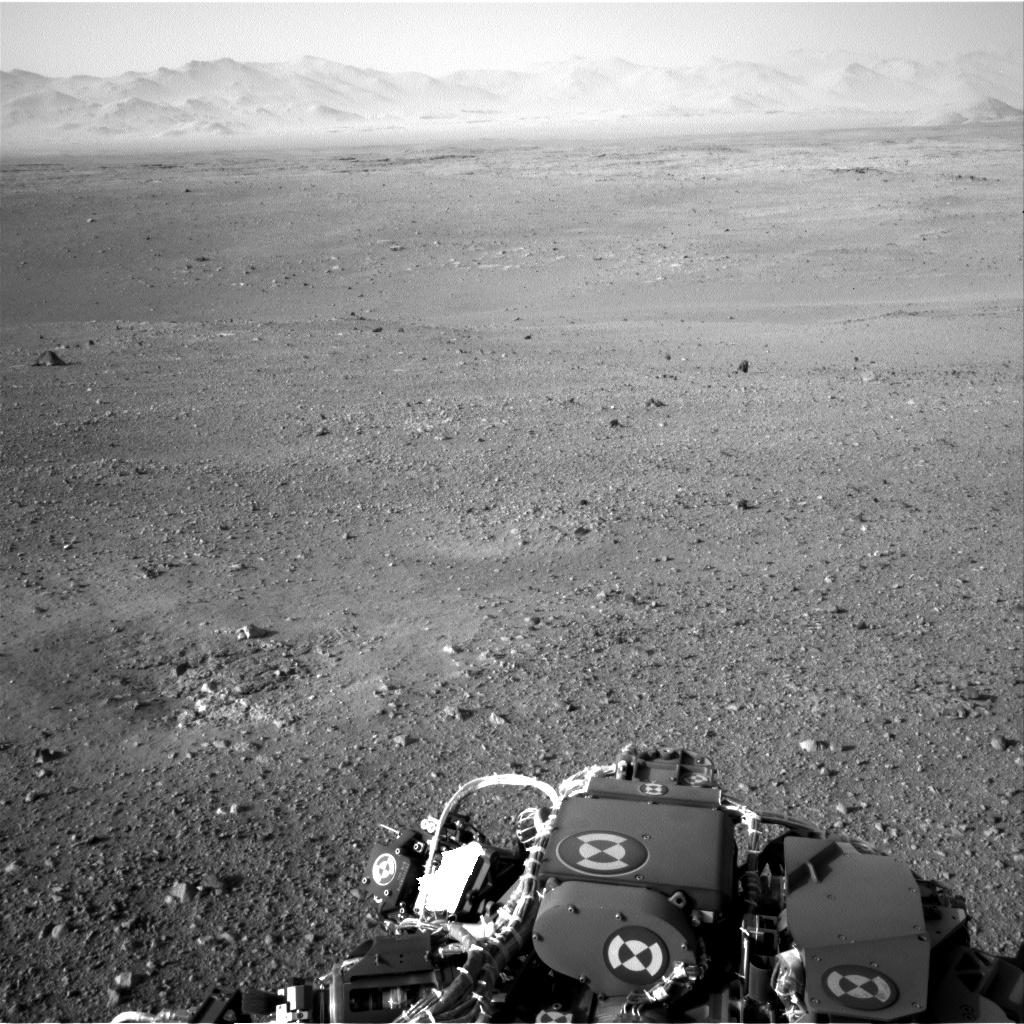
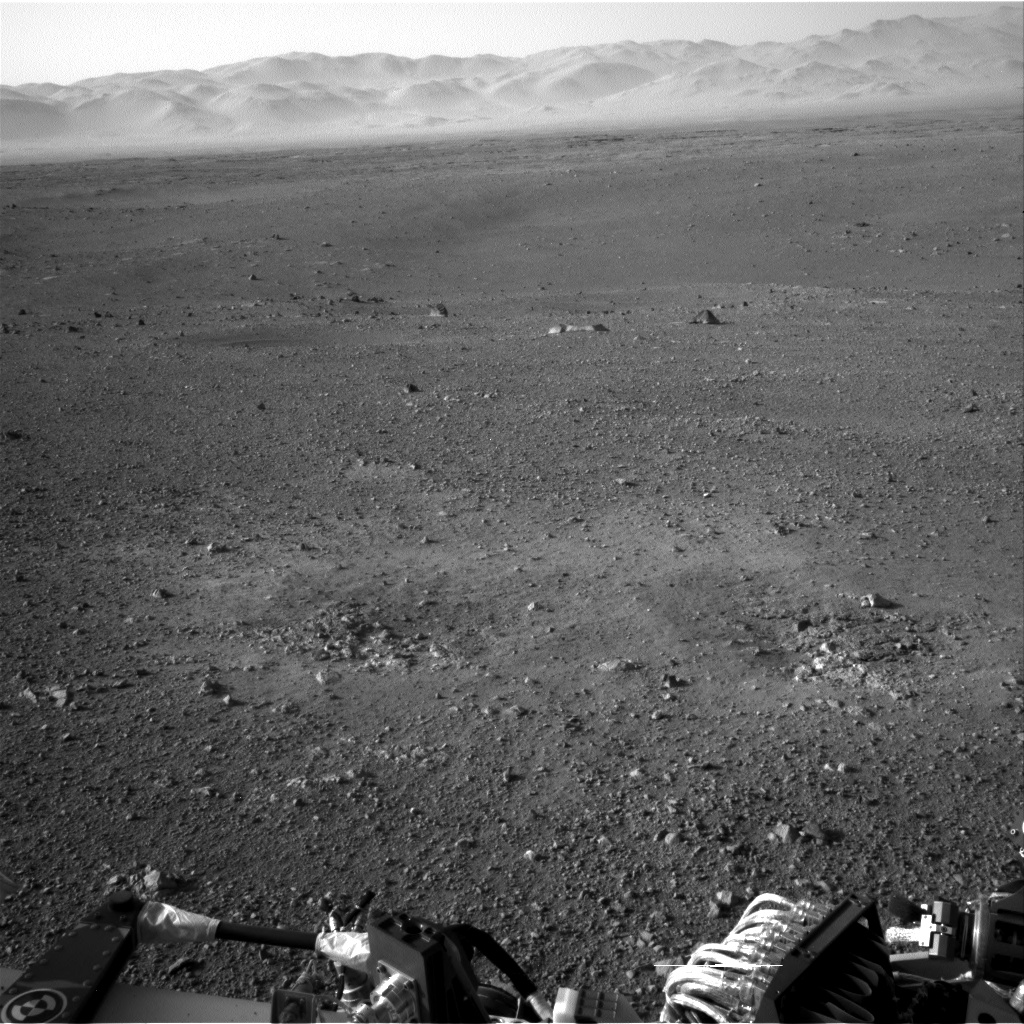
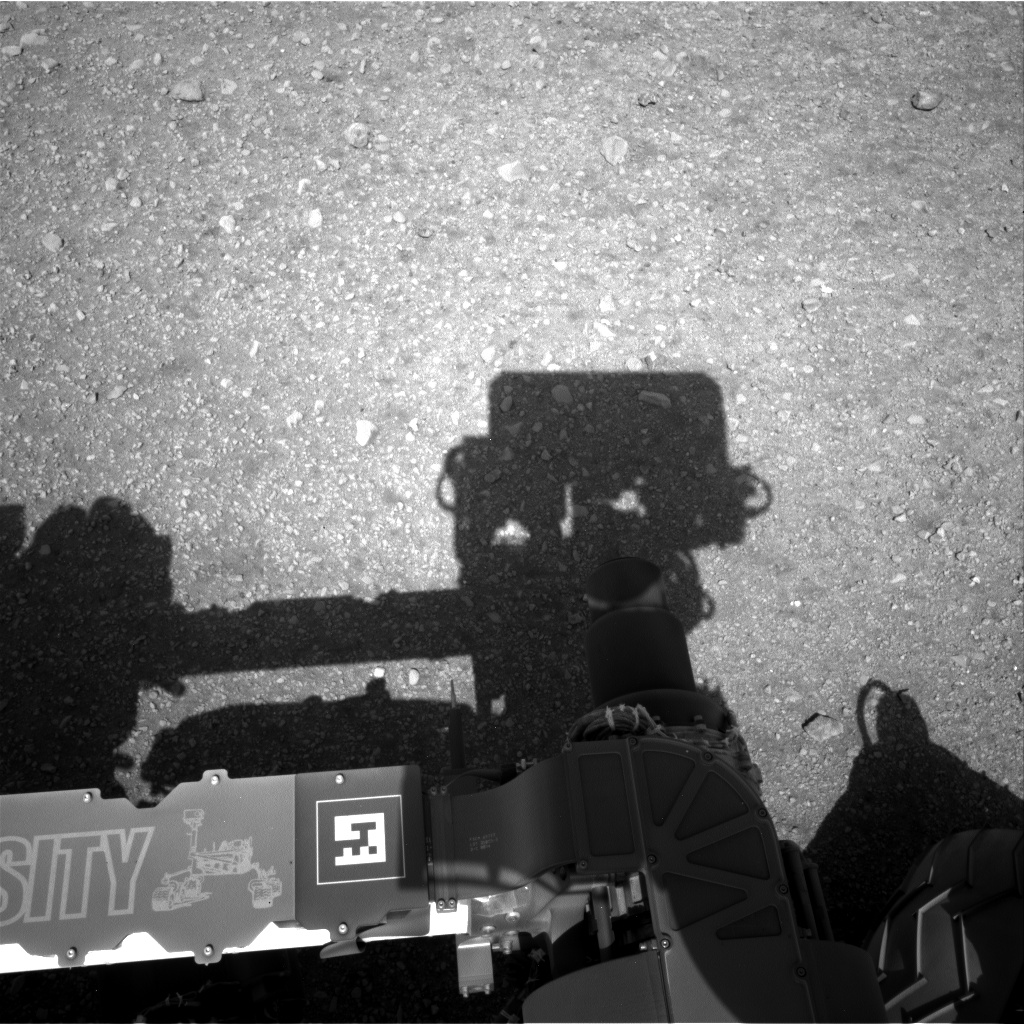
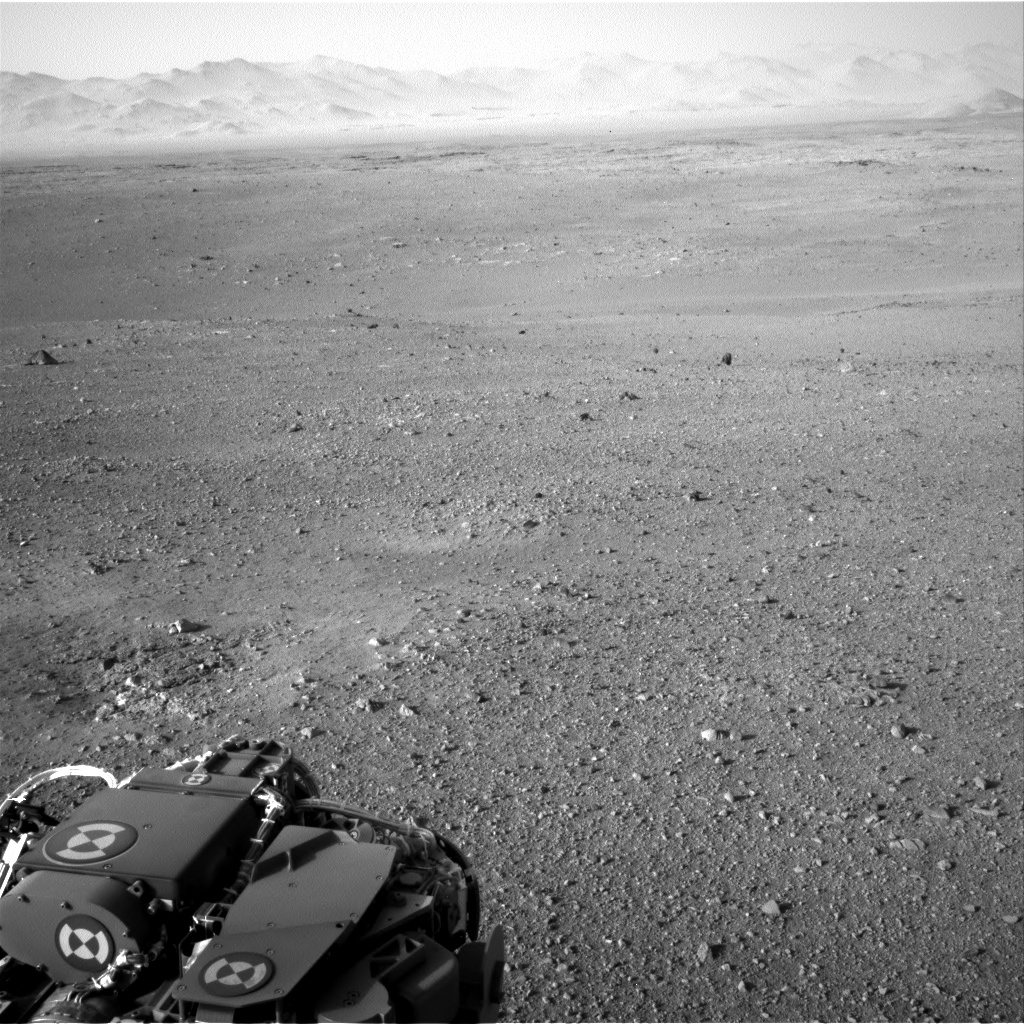
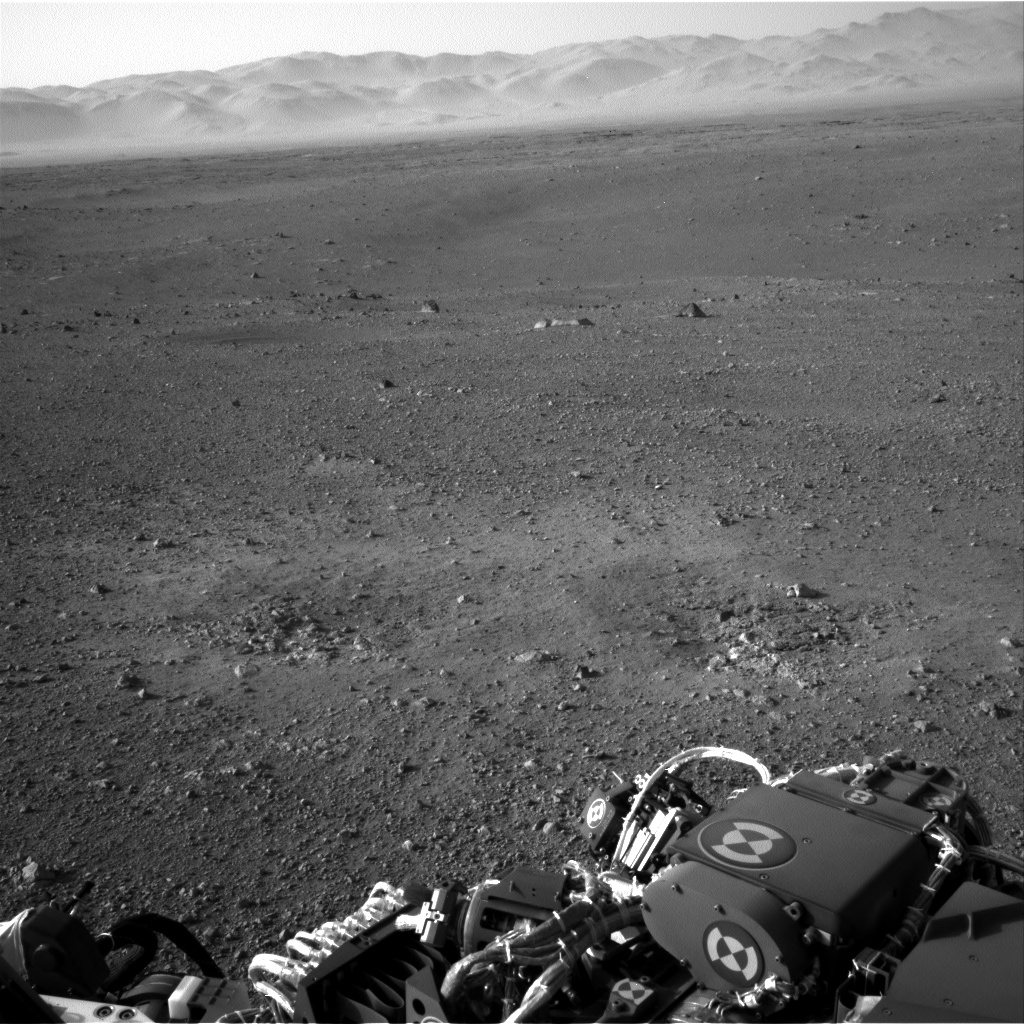
i hate to be critical of an image sent from millions of miles away but I have an honest question: Why do images from landers like this always look like there were taken from a iPhone 1's camera?
These images aren't even from the main cameras. These are still navcam images. http://en.wikipedia.org/wiki/Curiosity_rover#Rover_instrumen...
First full-resolution images of the Martian surface
11–20 of 150 posts
Re: First full-resolution images of the Martian surface
#12Re: First full-resolution images of the Martian surface
#13i hate to be critical of an image sent from millions of miles away but I have an honest question: Why do images from landers like this always look like there were taken from a iPhone 1's camera?
The early pictures are from a low resolution camera with a clear dust cover still attached. This camera is used to determine if Curiosity is about to land in a crater. A higher resolution camera will be activated later. (taken from http://www.quora.com/NASA/Why-dont-we-have-more-color-images... )
Re: First full-resolution images of the Martian surface
#14Earlier quoted context omitted.
If I had to guess - and I do, because I don't work for NASA - it's because there's a limited payload space on board, and visible images are some of the least interesting things, science-wise, that you can ask from Mars. Combine this with the electronics-unfriendly environment, and you probably aren't going to be strapping huge DLSR's on a 2.5 billion dollar science machine. Edit: Also, these appear to be the navigati…
I doubt that is the reason, the weight of a 16mp sensor or marginally more than a 2mp one. The metal camera supports are much likely to dwarf the sensor weight differences. most of a DSLR's weight is lens and battery(s), both of which are not issues in this case, since the lens would be the same and the power comes from a nuclear battery. NASA couldn't just bolt on a 5DmkIII and expect it to work because the electron…
That and the fact that they used sneakernet, which is still much higher bandwidth than wireless, especially in space.
Re: First full-resolution images of the Martian surface
#15Re: First full-resolution images of the Martian surface
#16Re: First full-resolution images of the Martian surface
#17i hate to be critical of an image sent from millions of miles away but I have an honest question: Why do images from landers like this always look like there were taken from a iPhone 1's camera?
It has only a 2 megapixel sensor, which is a shame. I am sure that it has something to do with radiation hardening and the other environmental factors. It would be good though if NASA did catch up with sensor technology. I suspect the 2MP sensor was approved years ago when it was state of the art.
Also NASA is notoriously risk averse (for good reason). Apparently it is very common for them to rely on old but proven technology. Some of this has to do with risk aversion, but I imagine some of it also has to do with budget. It pains me to think what NASA could be doing with 10x more money.
Re: First full-resolution images of the Martian surface
#18i hate to be critical of an image sent from millions of miles away but I have an honest question: Why do images from landers like this always look like there were taken from a iPhone 1's camera?
>> The bandwidth from Curiosity directly to Earth is about 8 kb/s. Curiosity has a high bandwidth link to the Mars Odyssey Orbiter, a Mars satellite, which has a 256 kb/s link to Earth. The early pictures are from a low resolution camera with a clear dust cover still attached. This camera is used to determine if Curiosity is about to land in a crater. A higher resolution camera will be activated later. (taken from ht…
Re: First full-resolution images of the Martian surface
#19Navcam Left A: http://mars.jpl.nasa.gov/msl-raw-images/proj/msl/redops/ods/...
Navcam Left A: http://mars.jpl.nasa.gov/msl-raw-images/proj/msl/redops/ods/...
Navcam Right A: http://mars.jpl.nasa.gov/msl-raw-images/proj/msl/redops/ods/...
Re: First full-resolution images of the Martian surface
#20Has something been whited-out in the bottom right corner?