First color photo from Mars Curiosity
spaceindustrynews.com
First color photo from Mars Curiosity
1–9 of 9 posts
Re: First color photo from Mars Curiosity
#2Blogspam and slower site with less info than the original...
http://mars.jpl.nasa.gov/msl/multimedia/images/?ImageID=4282
Re: First color photo from Mars Curiosity
#3I just don't get the hype.
Re: First color photo from Mars Curiosity
#4Full-res jpeg direct link: http://photojournal.jpl.nasa.gov/jpeg/PIA15691.jpg
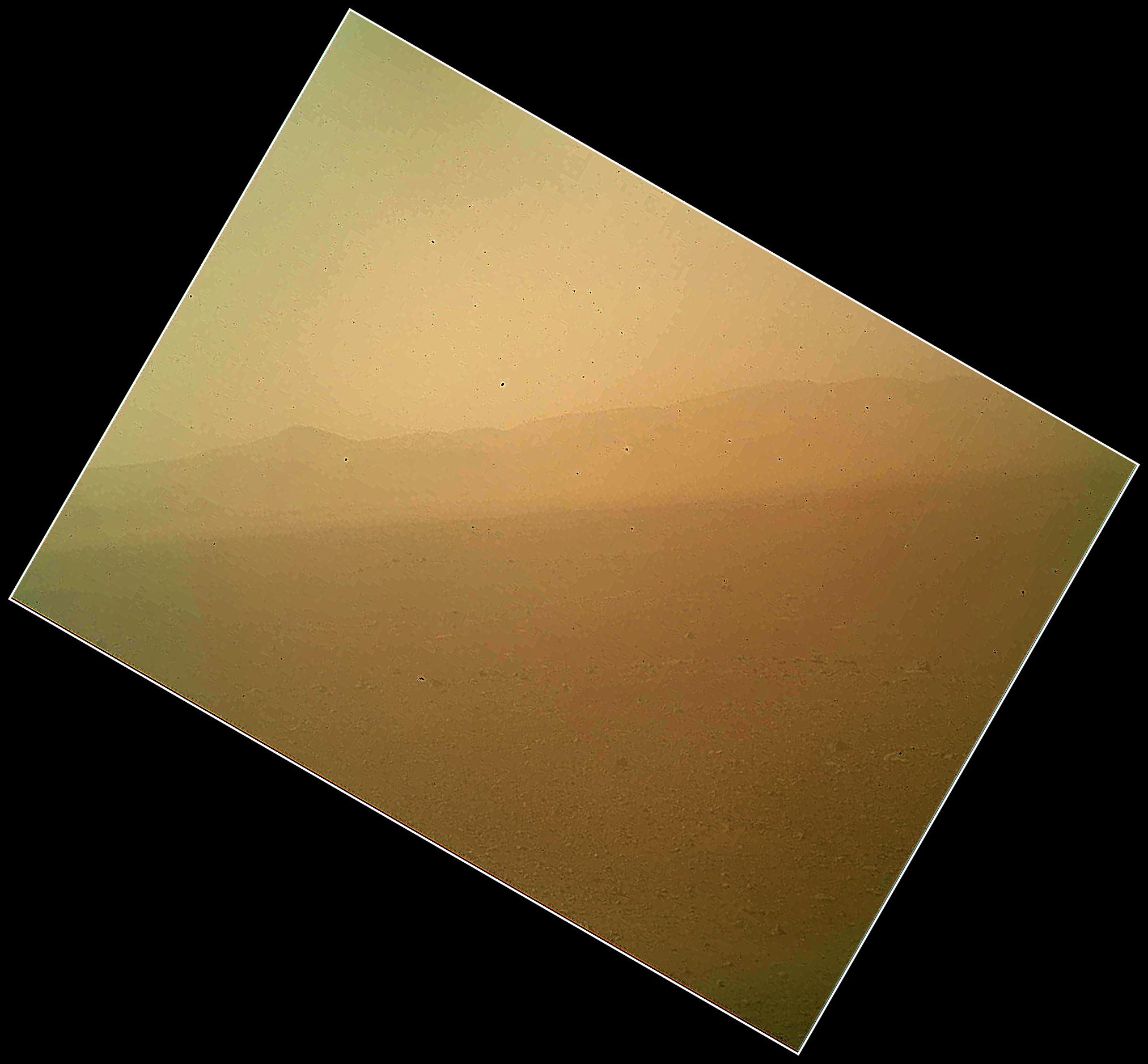
There seem to be much artifacts in the image, such as those black dots. What are those?
I guess the overal bad image quality is probably due to dust?
There are many JPEG artifacts, even in the high-res TIFF. Is it transferring the pictures to Earth in jpeg?
Re: First color photo from Mars Curiosity
#5Full-res jpeg direct link: http://photojournal.jpl.nasa.gov/jpeg/PIA15691.jpg There seem to be much artifacts in the image, such as those black dots. What are those? I guess the overal bad image quality is probably due to dust? There are many JPEG artifacts, even in the high-res TIFF. Is it transferring the pictures to Earth in jpeg?
Those are locusts.
Re: First color photo from Mars Curiosity
#6Full-res jpeg direct link: http://photojournal.jpl.nasa.gov/jpeg/PIA15691.jpg There seem to be much artifacts in the image, such as those black dots. What are those? I guess the overal bad image quality is probably due to dust? There are many JPEG artifacts, even in the high-res TIFF. Is it transferring the pictures to Earth in jpeg?
[deleted]
Re: First color photo from Mars Curiosity
#7Full-res jpeg direct link: http://photojournal.jpl.nasa.gov/jpeg/PIA15691.jpg There seem to be much artifacts in the image, such as those black dots. What are those? I guess the overal bad image quality is probably due to dust? There are many JPEG artifacts, even in the high-res TIFF. Is it transferring the pictures to Earth in jpeg?
Two issues I can think of off-hand.
First, the image is shot through the transparent lens cap currently protecting the camera. The cap wont be removed until after the mast is deployed. The mast is still in the position it was stowed in for the journey, this is why the image is at an angle.
Second, the high gain antenna hasn't been deployed yet, so they're working on limited bandwidth. The image was probably heavily compressed to transmit it over the link currently in use.
Re: First color photo from Mars Curiosity
#8Full-res jpeg direct link: http://photojournal.jpl.nasa.gov/jpeg/PIA15691.jpg There seem to be much artifacts in the image, such as those black dots. What are those? I guess the overal bad image quality is probably due to dust? There are many JPEG artifacts, even in the high-res TIFF. Is it transferring the pictures to Earth in jpeg?
Two issues I can think of off-hand. First, the image is shot through the transparent lens cap currently protecting the camera. The cap wont be removed until after the mast is deployed. The mast is still in the position it was stowed in for the journey, this is why the image is at an angle. Second, the high gain antenna hasn't been deployed yet, so they're working on limited bandwidth. The image was probably heavily c…
Also, at least for space satellites, high energy protons and other particles hitting the camera sensors cause streaks, glitches, and pinholes that have to be scrubbed out. Perhaps the same is true on Mars with only 4% of the atmosphere.
Re: First color photo from Mars Curiosity
#9Full-res jpeg direct link: http://photojournal.jpl.nasa.gov/jpeg/PIA15691.jpg There seem to be much artifacts in the image, such as those black dots. What are those? I guess the overal bad image quality is probably due to dust? There are many JPEG artifacts, even in the high-res TIFF. Is it transferring the pictures to Earth in jpeg?
Those are locusts.
reddit called and was asking for you