Live data from Hacker News

A Short Introduction to Automotive Lidar Technology

viksnewsletter.com

181–187 of 187 posts

Re: A Short Introduction to Automotive Lidar Technology

#181

Earlier quoted context omitted.

I doubt it. Yes, FSD is more flexible and can also drive reasonably well on city streets, but there is a reason why it is not certified for level 3 on motorways. It would most likely fail certification. With a level 3 system, I can take my eyes off the road and watch a movie. Doing that with FSD, even in the best conditions, is suicidal. Level 3 vehicles must have an extremely low failure rate. Any crash would quickl…

> With a level 3 system, I can take my eyes off the road and watch a movie. Doing that with FSD, even in the best conditions, is suicidal. That is hyperbole at best. I've test driven a Tesla with FSD and it worked flawlessly, such that I would have been perfectly safe taking my eyes off the road. Of course one test drive is not sufficient data to say one should trust the system all the time, but you are making the cl…

Oh, it's 100% trustworthy until it suddenly isn't.

I have driven a number of level 2 cars on the motorway and almost all of them can do extended zero-intervention driving, but that does not make them safe. The failure rate compared to humans is still sky high.

Multiple independent FSD tests have shown that you need to take over several times an hour to avoid dangerous or illegal situations https://electrek.co/2024/09/26/tesla-full-self-driving-third...>. The number will be lower on a motorway and you will sometimes have time to correct even if you are not looking, but the number of failures is still significant. If you take your eyes off the road, it is only a matter of time before you end up in a ditch.

I stand by my statement. The system is _never_ trustworthy enough to take your eyes off the road.
Re: A Short Introduction to Automotive Lidar Technology

#182

Earlier quoted context omitted.

Nice, you just outed yourself as being completely clueless. There exist many good sensor fusion techniques for summing the output of disagreeing sensors.

Sounds like bad designs. If you can get rid of something to reduce complexity you absolutely should.

Except when getting rid of something results in a non-working system. Reduced complexity doesn't work as evidenced by Tesla's inability to have a single driverless mile after nearly a decade of development.

Re: A Short Introduction to Automotive Lidar Technology

#183
post #93
post #19

Earlier quoted context omitted.

Have you ever seen the corners of a car that has been parked in a big East-coast city? They will sustain damage during the course of normal operation and storage, and many people will not stop and leave their insurance information, especially if the damage is perceived as minor and happens while the car is parked and the owner not present. Currently, the corners of a car are relatively non-critical to its function an…

Right. It seems to have been Waymo's decision to have zero blind spots around the vehicle perimeter, even if that means having the sensors stick out. Cruise had an accident where another vehicle knocked a pedestrian into a Cruise car, and the pedestrian was dragged. Cruise lost their California DMV autonomous license for that. So there's a good case for full perimeter coverage. Humans don't have that. The same week a…

> Cruise had an accident where another vehicle knocked a pedestrian into a Cruise car, and the pedestrian was dragged. Cruise lost their California DMV autonomous license for that

Cruise didn't lose the license because the car and/or human operator accidentally dragged a pedestrian (similar to the NYPD Truck). They lost their license because some time after the accident, Cruise employees fully aware of what transpired chose to cover up that part in their report of the accident to the state regulators. The state regulators found it out anyway.

Re: A Short Introduction to Automotive Lidar Technology

#184
post #141

Earlier quoted context omitted.

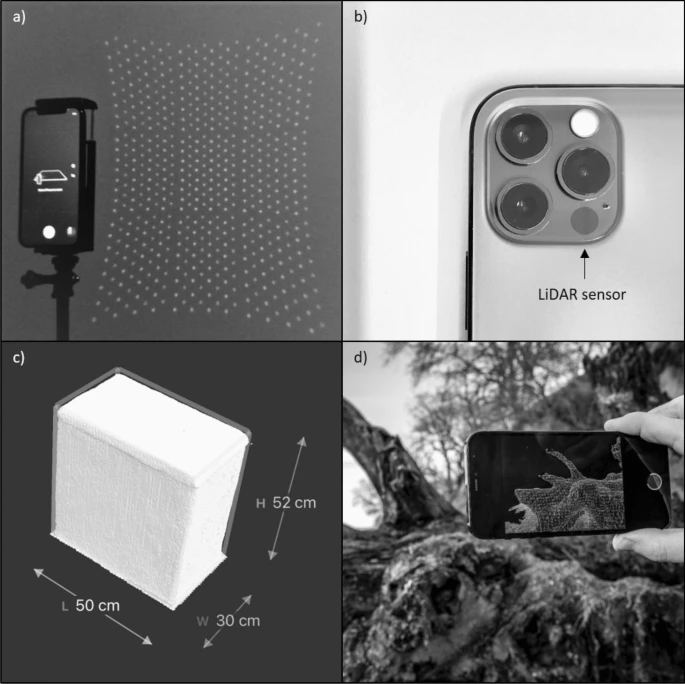
I don't think the Lidar in apple's stuff is actually a lidar, I think its a structured light sensor.[1] What do I mean by that? lidar sends pulses of light and works out the difference between emission time and arrival time to work out how far the pulse has travelled. The structured light sensor emits a pattern or dots, and any distortion of that can be used to compute the shape of an object. [1] https://image-ppubs.…

They aren't talking about FaceID. iPhone 12 introduced a lidar sensor in the back. https://www.nature.com/articles/s41598-021-01763-9

if you actually read the paper you linked, you can clearly see the structured light pattern emitted by the laser. (https://media.springernature.com/lw685/springer-static/image... or figure two.)

Also the patent I linked was filed in 2020, after faceID was rolled out.

Re: A Short Introduction to Automotive Lidar Technology

#185

Earlier quoted context omitted.

Nice, you just outed yourself as being completely clueless. There exist many good sensor fusion techniques for summing the output of disagreeing sensors.

Sounds like bad designs. If you can get rid of something to reduce complexity you absolutely should.

Did you forget why the 737 max had 2 crashs ? The alert of the difference between 2 sensors didn't work / wasn't there. So the system was relying on 1 sensor.

Re: A Short Introduction to Automotive Lidar Technology

#186
post #58

Earlier quoted context omitted.

Those can be gamed easily.

Please explain!

Laser damage is notoriously difficult to predict due to a statistical nature of thresholds. There are many tricks and non-trivial ideas that can make the device certified eye safe, even if it emits a high laser power. These obviously wont be discussed willy-nilly on random forums.

Re: A Short Introduction to Automotive Lidar Technology

#187
post #22

Earlier quoted context omitted.

IIRC the data coming out of the Conti radars was preprocessed to give bearing, distance, and size of an object in the FOV of the unit. I don't know if I ever saw the true raw data out of one of them, but I'm curious what it looks like.

Ye I have a hard time imaganing how a car radar image looks like. On boat radars it seems like the radar have really high resolution (can see much further than lidars) but have worse accuracy. I.e. things looks like blobs. A lidar image at 50+ meters is very sparse.

If you want more points downrange, you design your scanner to work on a smaller FOV. Some things change - you need an optical design that scans a small area in front of it somehow (faceted mirrors are popular), and at some point you need a laser source of higher quality, possibly moving away from diode lasers and towards things like fiber laser sources. This isn't conjecture BTW, this is what players like Waymo do and is evident from studying the sensor package if you're curious.
Post reply on HN