Live data from Hacker News

Four billion years in four minutes – Simulating worlds on the GPU

davidar.io

101–108 of 108 posts

Re: Four billion years in four minutes – Simulating worlds on the GPU

#101
post #93

Earlier quoted context omitted.

> Can't black holes already encode an infinite amount of information past the event horizon? No, current physics has a bunch of hard limits on information. > A new fundamental particle doesn’t necessarily make it soft sci-fi Calling something a particle doesn’t matter here. It’s a fully formed computational device that happens to magically solve all problems. Consider, how do you encode and read information from such…

> No, it’s just a magic macguffin that does whatever the author wants. As a general rule I consider this unfair. It's okay for science fiction to be set in universes that have different physical laws than our own. Hard or soft sci-fi has nothing to do with whether the rules match up to reality, only whether they're internally consistent and whether they are delved into in technical detail. Sure, there is no known par…

I think you’re misunderstanding what the terms mean. Star Trek is filled with academic lectures, fundamental particles, etc but its underlying physics is soft.

Hard: is a category of science fiction characterized by concern for scientific accuracy and logic https://en.wikipedia.org/wiki/Hard_science_fiction

Soft: refer to science fiction which prioritizes human emotions over scientific accuracy or plausibility. https://en.wikipedia.org/wiki/Soft_science_fiction

Hard refers to science fiction that matches our understanding of physics, mathematics, etc. If they discover an unknown particle or effect not theorized to exist in scientific literature it’s by definition not Hard science fiction.

Operating at the unknown edge where we don’t know what it takes to make AGI so under or overestimating the hardware requirements is fine. Tossing away our physics and replacing it with whatever is needed for the story to function is the definition of soft science fiction.

Granted degrees of soft science fiction exist. Jurassic Park is close enough to the boarder of Hard Science fiction it’s a little debatable, where Star Wars is fantasy with shapeships.
Re: Four billion years in four minutes – Simulating worlds on the GPU

#102
post #101

Earlier quoted context omitted.

> No, it’s just a magic macguffin that does whatever the author wants. As a general rule I consider this unfair. It's okay for science fiction to be set in universes that have different physical laws than our own. Hard or soft sci-fi has nothing to do with whether the rules match up to reality, only whether they're internally consistent and whether they are delved into in technical detail. Sure, there is no known par…

I think you’re misunderstanding what the terms mean. Star Trek is filled with academic lectures, fundamental particles, etc but its underlying physics is soft. Hard: is a category of science fiction characterized by concern for scientific accuracy and logic https://en.wikipedia.org/wiki/Hard_science_fiction Soft: refer to science fiction which prioritizes human emotions over scientific accuracy or plausibility. https…

> I think you’re misunderstanding what the terms mean.

I was going off the Google definitions, oops.

> Star Trek is filled with academic lectures, fundamental particles, etc but its underlying physics is soft.

Yes, that's true, and I agree. Star Trek isn't really fully internally consistent or rigorous because advanced/alien technology is simply the setting. Most of it is about the people, not the science.

> Hard refers to science fiction that matches our understanding of physics, mathematics, etc. If they discover an unknown particle or effect not theorized to exist in scientific literature it’s by definition not Hard science fiction.

Since when? From Wikipedia:

> The heart of the "hard science fiction" designation is the relationship of the science content and attitude to the rest of the narrative, and (for some readers, at least) the "hardness" or rigor of the science itself.

> One requirement for hard SF is procedural or intentional: a story should try to be accurate, logical, credible and rigorous in its use of current scientific and technical knowledge about which technology, phenomena, scenarios and situations that are practically or theoretically possible.

Existing in a different universe from ours doesn't make it automatically soft, if their current scientific and technical knowledge is still rigorous in the same way that ours is. As an example, their book "Ra" seems absolutely like hard sci-fi to me, even though there exists within it an actual concept of "magic" (!), because (without spoilers) the phenomenon called magic is fully defined, and there is no element of arcanity to it.

But I guess you're right that this specific story might not count as hard sci-fi; though I don't agree that it's because of the particle's existence but rather the way it is regarded: the point of the story is to explore the philosophical implications of such a machine existing, not to explore the actual science of the machine.

Their other stories, like "Ra" and "Fine Structure", certainly explore the science of their respective universes/situations, not just the philosophical implications, and I would count both of those examples as hard sci-fi, having read both.

Re: Four billion years in four minutes – Simulating worlds on the GPU

#103
post #101

Earlier quoted context omitted.

I think you’re misunderstanding what the terms mean. Star Trek is filled with academic lectures, fundamental particles, etc but its underlying physics is soft. Hard: is a category of science fiction characterized by concern for scientific accuracy and logic https://en.wikipedia.org/wiki/Hard_science_fiction Soft: refer to science fiction which prioritizes human emotions over scientific accuracy or plausibility. https…

> I think you’re misunderstanding what the terms mean. I was going off the Google definitions, oops. > Star Trek is filled with academic lectures, fundamental particles, etc but its underlying physics is soft. Yes, that's true, and I agree. Star Trek isn't really fully internally consistent or rigorous because advanced/alien technology is simply the setting. Most of it is about the people, not the science. > Hard ref…

The very first line: “Hard science fiction is a category of science fiction characterized by concern for scientific accuracy and logic.“ Scientific rigor might apply in a fictional setting with different laws, but accuracy requires a universe similar to our own.

One of the references linked from Wikipedia wants not some consistent set of laws but also facts about our universe like the moon not having an atmosphere. https://books.google.com/books?id=PiphRocVYRwC&pg=PA187#v=on... Thus a platypus should be closely related to mammals even though it lays eggs. In a different universe different genealogies are possible even with identical physics, but that doesn’t fit our science.

So by “rigor of the science itself” it’s in reference to our science not the stories universe because:

> Existing in a different universe

Any story could work in some theoretical universe. Olympian gods could exist with the right physics and any child learning how the world works is exploring that physics.

> if their current scientific and technical knowledge is still rigorous in the same way that ours is

I think what you’re looking for is Rationalist fiction which cares about the consistency of the setting’s internal rules but not how close the physics matches ours. ‘Harry Potter and the Methods of Rationality’ fits as soft science fiction and rationalist fiction. The main character is definitely trying to understand how the world works and carries out many experiments, things just don’t fit our physics.

Meanwhile you can have Hard Science fiction with primitive humans exploring the ruins of our civilization who don’t have the slightest idea of the scientific method. That line between possibility and not is a meaningful line and we came up with words to describe it.

Re: Four billion years in four minutes – Simulating worlds on the GPU

#104
post #103

Earlier quoted context omitted.

> I think you’re misunderstanding what the terms mean. I was going off the Google definitions, oops. > Star Trek is filled with academic lectures, fundamental particles, etc but its underlying physics is soft. Yes, that's true, and I agree. Star Trek isn't really fully internally consistent or rigorous because advanced/alien technology is simply the setting. Most of it is about the people, not the science. > Hard ref…

The very first line: “Hard science fiction is a category of science fiction characterized by concern for scientific accuracy and logic.“ Scientific rigor might apply in a fictional setting with different laws, but accuracy requires a universe similar to our own. One of the references linked from Wikipedia wants not some consistent set of laws but also facts about our universe like the moon not having an atmosphere. h…

PS: “Since when?” that linked book was from ~1970.

I will admit the term “Hard” has gotten somewhat diluted over time, but it’s still grounded by our scientific knowledge.

Re: Four billion years in four minutes – Simulating worlds on the GPU

#105
post #85

Earlier quoted context omitted.

Climate change predicts a warmer wetter world The author just didn’t know this

The issue is, the locations where most humans live today, grew historically from the best spots our ancestors could find in the whole planet, taking many factors in consideration: proximity to water bodies, good climate, good agricultural lands, adequate rainfall, et cetera. These are not random locations, they grew around the best spots available. If climate changes, they tend to regress toward the mean, diminishing…

You are reading too much into my comment, i was just talking about the simulation being dumb.

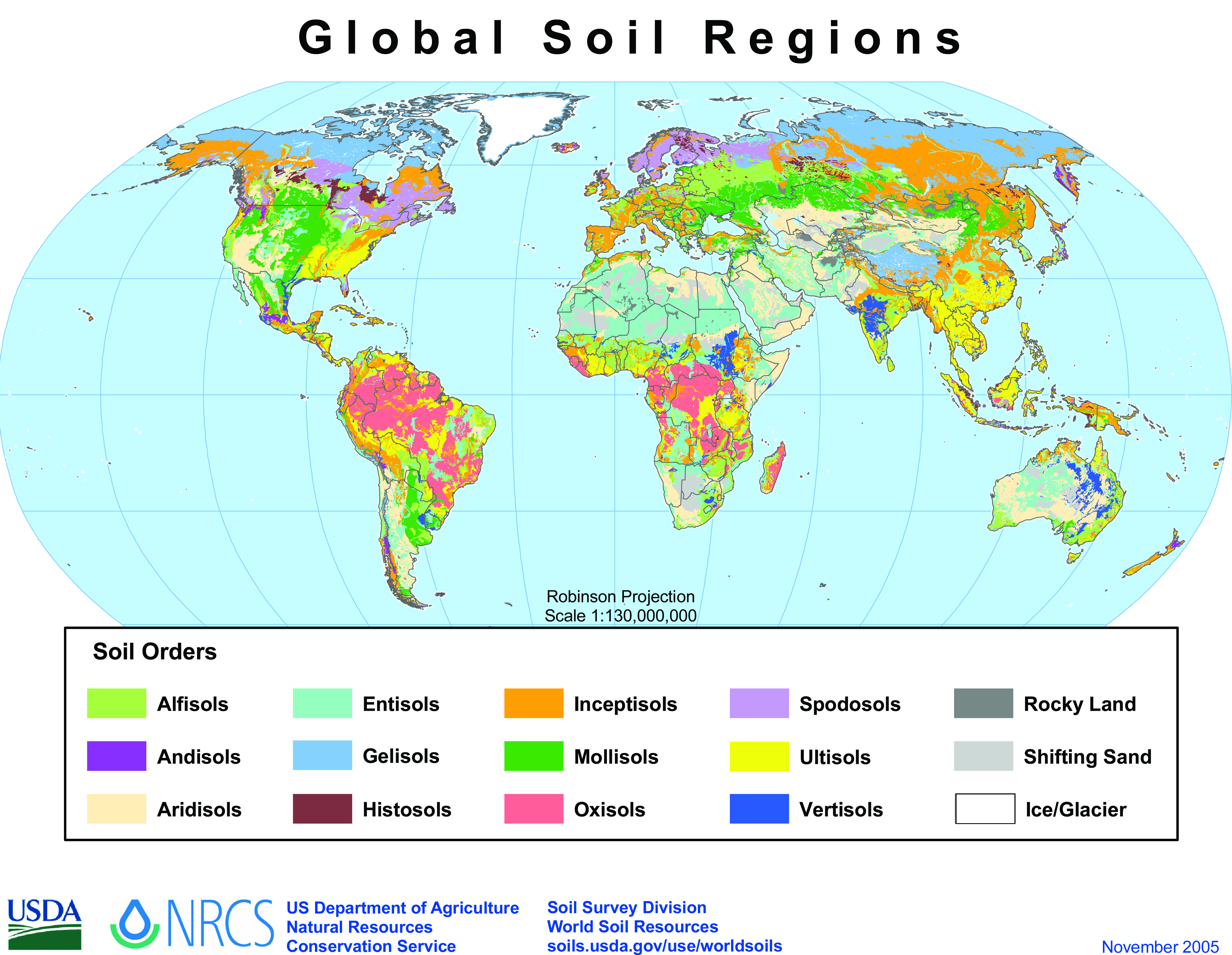
But here’s a question for you, total arable land increases or decreases with a warmer wetter world? (We must consider soil as the soil in eg norther Canada is garbage and would take a millennium to improve)

https://upload.wikimedia.org/wikipedia/commons/e/e5/Global_s...

Re: Four billion years in four minutes – Simulating worlds on the GPU

#106
post #85

Earlier quoted context omitted.

The issue is, the locations where most humans live today, grew historically from the best spots our ancestors could find in the whole planet, taking many factors in consideration: proximity to water bodies, good climate, good agricultural lands, adequate rainfall, et cetera. These are not random locations, they grew around the best spots available. If climate changes, they tend to regress toward the mean, diminishing…

You are reading too much into my comment, i was just talking about the simulation being dumb. But here’s a question for you, total arable land increases or decreases with a warmer wetter world? (We must consider soil as the soil in eg norther Canada is garbage and would take a millennium to improve) https://upload.wikimedia.org/wikipedia/commons/e/e5/Global_s...

A slight decrease is likely (~-5%). Output gains in cold regions are not expected to match losses from regions that will get too dry/hot, unless artificial irrigation use expands, putting further strain in water resources:

> Annual food caloric production is the product of caloric yield, cropping frequency (CF, number of production seasons per year) and cropland area. Existing studies have largely focused on crop yield, whereas how CF responds to climate change remains poorly understood. Here, we evaluate the global climate sensitivity of caloric yields and CF at national scale. We find a robust negative association between warming and both caloric yield and CF. By the 2050s, projected CF increases in cold regions are offset by larger decreases in warm regions, resulting in a net global CF reduction (−4.2 ± 2.5% in high emission scenario), suggesting that climate-driven decline in CF will exacerbate crop production loss and not provide climate adaptation alone. Although irrigation is effective in offsetting the projected production loss, irrigation areas have to be expanded by >5% in warm regions to fully offset climate-induced production losses by the 2050s.

Source: https://par.nsf.gov/servlets/purl/10423092

Re: Four billion years in four minutes – Simulating worlds on the GPU

#107
post #106

Earlier quoted context omitted.

You are reading too much into my comment, i was just talking about the simulation being dumb. But here’s a question for you, total arable land increases or decreases with a warmer wetter world? (We must consider soil as the soil in eg norther Canada is garbage and would take a millennium to improve) https://upload.wikimedia.org/wikipedia/commons/e/e5/Global_s...

A slight decrease is likely (~-5%). Output gains in cold regions are not expected to match losses from regions that will get too dry/hot, unless artificial irrigation use expands, putting further strain in water resources: > Annual food caloric production is the product of caloric yield, cropping frequency (CF, number of production seasons per year) and cropland area. Existing studies have largely focused on crop yie…

Control F precipitation not sure why my mobile Safari won’t let me copy paste, but they specifically say that they don’t count for precipitation changes because it’s too complicated and in the future they might try doing that…

Re: Four billion years in four minutes – Simulating worlds on the GPU

#108

Mm..cool but the last part where any civilization that has night lights would by definition burn all the fossil fuels and turn the place into a desert seems like an assumption based on only one possible trajectory of our own civilization, let alone all other possible alien civilizations. There's nothing to make death by warming and desertification any likelier than nuclear war or the development of clean fusion, or a…

For what it's worth, the simulation does account (in a crude manner) for the heat causing increased water vapour uptake from the ocean and accelerated plant growth (which in turn increases the rate of carbon sequestration). I admit that the desertification at the end is a bit of artistic license to make the storytelling easier to visually convey, realistically things would be more complex than that. And it is just that, a story of one particular possible scenario, as I've written about elsewhere:

> “The final section is intended to illustrate a possible future, though perhaps an improbable one,” Roberts said. “I wanted it to be dramatic, so it is an illustration of a particularly extreme outcome where literally all of the fossil fuels are burned, but I tried to keep the effects realistic otherwise, based on scientific articles I've read about such a hypothetical.”

https://www.vice.com/en/article/xgx7nq/watch-four-billion-ye...

Post reply on HN