It seems odd to me not to mention things like MaxMSP or PD in an article like this. Arguably Max is one of the most successful standalone visual programming languages (standalone in so far as it’s not attached to a game engine or similar - it exists only for its own existence).
We need visual programming. No, not like that
11–20 of 505 posts
Re: We need visual programming. No, not like that
#12The fundamental problem in visual programming is that it limits you to geometry (practically to 2D euclidian space). Most non-trivial programming problems are spaghetti by nature in such spaces.
But program code is 2D as well. And quite limited 2D, with 80 characters width max (or similar, but never unlimited).
The fact you can give things names means that there is rarely a need to follow the edges so the visualization is much less cluttered
Re: We need visual programming. No, not like that
#13The fundamental problem in visual programming is that it limits you to geometry (practically to 2D euclidian space). Most non-trivial programming problems are spaghetti by nature in such spaces.
Mapping to a plane doesn't help you understand how state changes occur over time, or what is the over-all state of the state-machine is.
The only time I've seen visual programming work is when the state is immutable. How-ever it requires a major paradigm shift how one design, develop and test their programs.
Re: We need visual programming. No, not like that
#14The fundamental problem in visual programming is that it limits you to geometry (practically to 2D euclidian space). Most non-trivial programming problems are spaghetti by nature in such spaces.
I got the Apple Vision Pro with the hope to tinker with such things. Is one more dimension enough to "unlock" visual programming? I don't know, and unfortunately not many seem interested in exploring it.
I don't think extra dimensions help. Even simple functions have easily tens of interconnected references and representing these spatially is gonna be a mess even in higher dimensions.
Re: We need visual programming. No, not like that
#15The fundamental problem in visual programming is that it limits you to geometry (practically to 2D euclidian space). Most non-trivial programming problems are spaghetti by nature in such spaces.
But program code is 2D as well. And quite limited 2D, with 80 characters width max (or similar, but never unlimited).
Code is 1d with named links.
Visual languages trade named links for global wiring, which is very cluttered for serious problem solving.
Re: We need visual programming. No, not like that
#16The fundamental problem in visual programming is that it limits you to geometry (practically to 2D euclidian space). Most non-trivial programming problems are spaghetti by nature in such spaces.
And yet IDA and Ghidra use that same 2d representation structure for basic blocks (e.g. https://byte.how/images/ghidra-overview/graph-edges.png ) showing code flow between the blocks
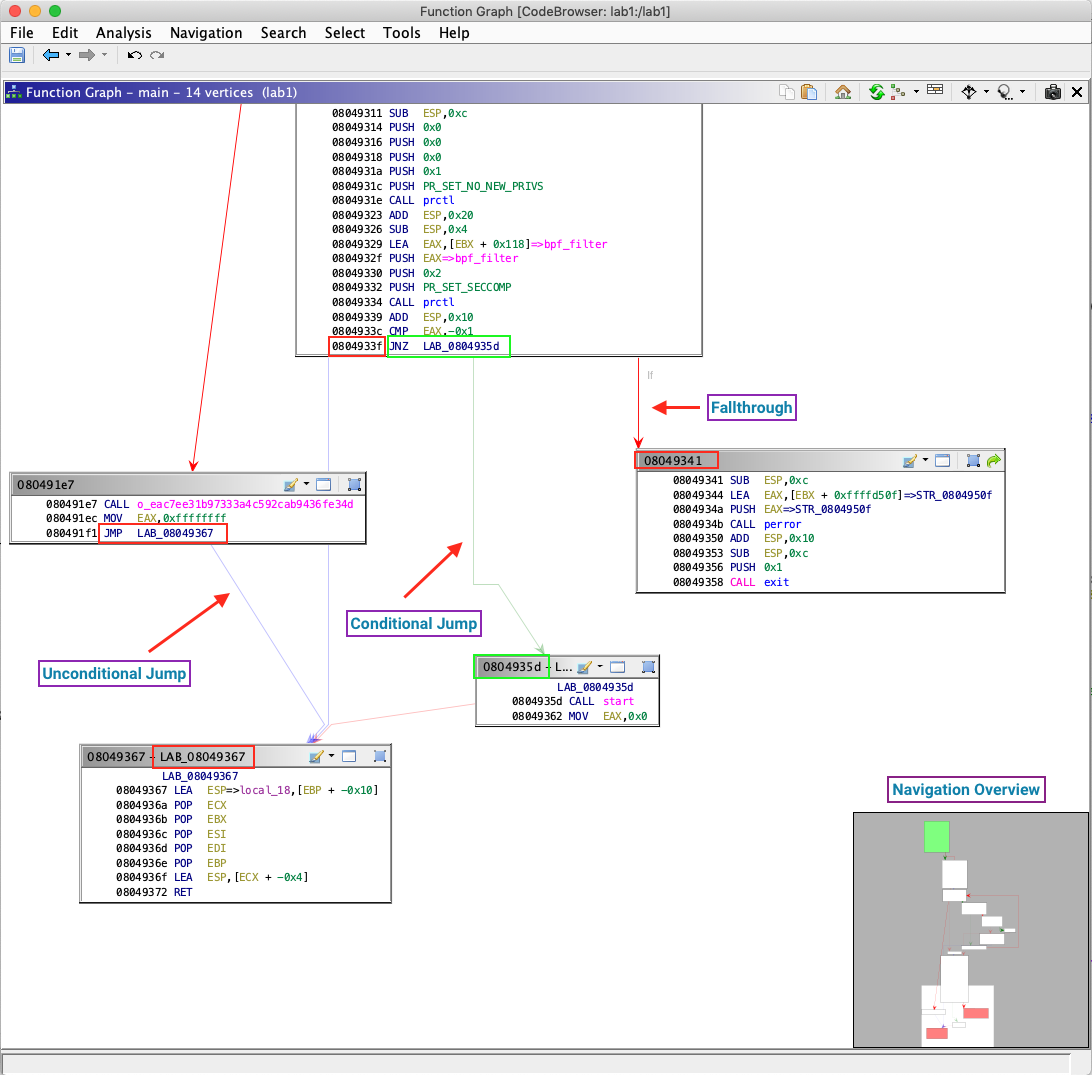
I have had better-than-average success representing the high level sequence of computer-y actions using sequence diagrams, and suspect strongly my audience would not have the same comprehension if I used pseudocode or python or C++
Where I think the anti-visual programming audience and I can agree is the idea of a standard library, since a bunch of diagrams showing a "length" message being sent to a String object is for sure the wrong level of abstraction. In that way, I'd guess the DSL crowd would pipe up and say that is the same problem a DSL is trying to solve: express the code flow in terms of business nouns and verbs, and let the underlying framework deal with String.length nonsense
I've seen a hybrid approach to this in a few testing frameworks, such as Robot Framework https://robotframework.org/robotframework/latest/RobotFramew...>
Re: We need visual programming. No, not like that
#17The issue with every one I’ve used is that it hides all the parameters away in context aware dialog boxes. Someone can’t come along and search for something, they need to click every element to via the dialog for that element to hunt for what they are looking for. I found every time the lead dev on a project changed, it was easier to re-write the whole thing than to try and figure out what the previous dev did. There…
This is definitely true for visual systems. That said, I've also found it to be true for text-based codebases.
Re: We need visual programming. No, not like that
#18The fundamental problem in visual programming is that it limits you to geometry (practically to 2D euclidian space). Most non-trivial programming problems are spaghetti by nature in such spaces.
That is not a problem, and for sure not a fundamental one. The textual representation is very limited, it's actually 1D with a line breaks helping us read it. 2D gives a lot more possibilities of organising code similar to how we draw diagrams on a whiteboard.
Power of text or other symbols is that they aren't spatially bounded. That's why it works even in "1D".
There are probably some possible usability gains from adding dimensions. E.g. node-type "programming" in Blender is quite nice. But for general purpose progamming it's hard to see how we'd get rid of symbolic representation.
Re: We need visual programming. No, not like that
#19Earlier quoted context omitted.
That is not a problem, and for sure not a fundamental one. The textual representation is very limited, it's actually 1D with a line breaks helping us read it. 2D gives a lot more possibilities of organising code similar to how we draw diagrams on a whiteboard.
Power of text or other symbols is that they aren't spatially bounded. That's why it works even in "1D". There are probably some possible usability gains from adding dimensions. E.g. node-type "programming" in Blender is quite nice. But for general purpose progamming it's hard to see how we'd get rid of symbolic representation.
Specifically, textual programs use symbols to build a graph of references between computations, where the average visual language tries to use explicit lines between blocks. But the reference graphs of non-trivial programs are often decidedly non-planar, which only becomes a problem when you try to lay them out on a plane.
Re: We need visual programming. No, not like that
#20Most of this isn't visual "programming" just good explanatory diagrams. I think it gets to a core issue which is a dichotomy between:
- trying to understand existing programs - for which visuals are wanted by most but they usually need concious input to be their best
- programming (creating new code) itself - where the efficiency of the keyboard (with its 1d input that goes straight to spaghetti code) has never been replaced by visual (mouse based?) methods other than for very simple (click and connect) type models