Live data from Hacker News

People spend more when prices end in .99 (2018)

kenthendricks.com

131–140 of 210 posts

Re: People spend more when prices end in .99 (2018)

#131
post #69

> They ran the experiment for two days. During this time, 241 people bought cheese. When they saw .00-ending prices, they bought cheese 44.1% of the time. But when they saw .99-ending prices, they bought cheese 51.2% of the time. > This study not only confirmed that .99-ending prices lead to more revenue Er, surely that depends on the rest of the price e.g. 1.00 v 1.99.

The only price I ever compare and look at is €/gram €/liter. For my cheese that would be 6-8€/kg

> €/gram €/liter

And when you see 0.99 €/gram ? :)

Re: People spend more when prices end in .99 (2018)

#132

The psychology is fascinating. I would have thought that $1 feels smaller than $0.99. Two nines feels heavy. But despite what my mom would say, I’m surely wrong if everyone else is doing it.

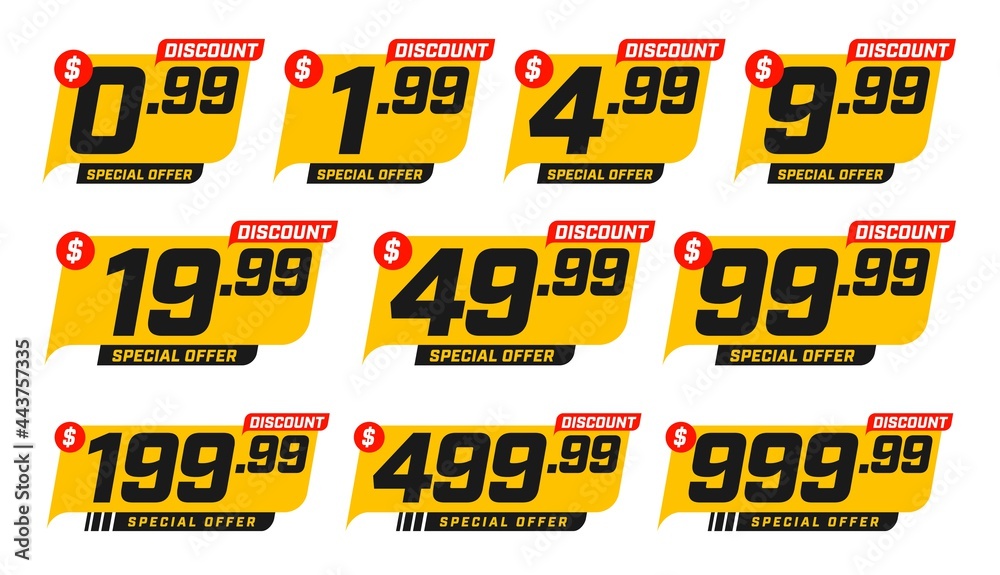
Only if you assume that all numbers are printed in the same font size. Many stores would print their prices like this: https://as2.ftcdn.net/v2/jpg/04/43/75/73/1000_F_443757335_WE...

So, the $0.99 feels like costing 0.

Re: People spend more when prices end in .99 (2018)

#133
post #89
post #81

Earlier quoted context omitted.

I think it's more like "have to record the sale and produce a receipt". The customer wants their penny, so you have to ring it up. Now if you steal a dollar, your totals at the end of the day are off a dollar. But, if you take the dollar with no recorded sale, your counts are good.

But OP's comment also says >Back then, most registers didn’t print receipts.

Registers that keep track of how much should be in the till, based on the day's sales, those have been around quite a long time. NCR got big enough in 1912 that they had antitrust trouble. Their big selling feature was tracking the till.

https://www.asc.ohio-state.edu/economics/pdf/marvel/ncr.pdf

Re: People spend more when prices end in .99 (2018)

#134

I never like thinking of pricing in this way. When you price something as $9.99, you're signaling to your customer that you're trying to manipulate them. Whereas a flat $10 is honest. Integrity means a lot. The software I sell is priced in whole numbers. However, the magnitude of effect claimed in the article is huge. It's the difference between selling at cost and a huge margin. Between doing well and shutting down…

> When you price something as $9.99, you're signaling to your customer that you're trying to manipulate them. Whereas a flat $10 is honest.

JC Penney effect. They do it because it works. And most consumers don't reward honesty with better business. It sucks but at this point it's on the consumer.

And JC Penney was barely more than a decade ago. This phenomenon has been practiced for decades.

>Given the replication crisis is worst in these types of studies - the kinds of studies that beg to be the subject of TED talks - you have to wonder how reproducible these effects are.

Forget the lab tests, there's more than a few other live experiments to study (not just JC Penney, though I'm not sure if they did this even back then).

Re: People spend more when prices end in .99 (2018)

#135

Earlier quoted context omitted.

Retailers don't do this because of published studies. They do it because they've tested it internally for the last 40 years.

Reminds me of people who tried selling sturdy repairable phones with longer battery life. Even when people complained about battery issues etc. They kept buying the thinnest flagship. Mass markets are mass market.

> Reminds me of people who tried selling sturdy repairable phones with longer battery life.

My brother buys these. They survive up to a year in his "care", rather than the usual 3-4 months of flimsier phones. They all end up with cracked screens within months though.

Almost no mainstream consumer electronics nowadays are meant for people who lead active lives (outside of planned and streamlined activities like going to the gym or running) - because the people as a whole generally don't live active lives. If you happen to be an outlier, making your phone survive becomes a serious logistical issue. Sadly carrying one is a necessity in this day and age.

Another example: Many offroad vehicles/trucks nowadays won't survive days of the advertised use-cases without serious damage and are often utterly unsuited for it (the cybertruck isn't an outlier here). These things are being sold to people who like to play pretend. Manufacturers cross their fingers and hope you don't actually.

Notable exceptions to the rule are things like satellite communicators and some dedicated GPS map devices. They seem to have no issue surviving many phones with their own screens and functionality intact. Their manufacturers know you wouldn't buy them if you didn't plan to use them in the advertised conditions.
Re: People spend more when prices end in .99 (2018)

#136
post #96
post #72

Earlier quoted context omitted.

The advertiser who knows half his spend is wasted is the one who /does/ know what he's doing.

Yes, that's the point of the quote, but the point of the poster you're replying to is that wasting half your budget would be considered gross incompetence in any other department. "Half the lines of code I write are useless, I just don't know which half." - an incompetent coder "Half the time I spend on the phone is wasted, I just don't know which half" - an incompetent salesperson "Half of my menu is inedible, I jus…

> "Half the lines of code I write are useless, I just don't know which half." - an incompetent coder

Legacy code in a nutshell. On some blue moon you get a chance to do a clean refsctor, but otherwise business doesn't care if 90% of the code is useless.

Even as the refactorer, you know that refactoring can be anywhere from throwing away simple unused code, to removing a seeming unneeded line and causing a forest fire. I imagine that's the equivalent with advertising (i.e I agree with you).

Re: People spend more when prices end in .99 (2018)

#137
post #100

Earlier quoted context omitted.

To me .99 signals that you care for affordability. Luxury products don't care about that. That's why apple's pricing looks odd to me. Expensive prices minus one dollar

That's not affordability, that's tricking someone into buying something that they wouldn't have otherwise.

If they buy something becsuse it's a penny cheaper, who's really being tricked?

Re: People spend more when prices end in .99 (2018)

#138
post #32

Actually, the .99 price-point started as a clever way to prevent theft, manage inventory, and keep track of sales. The idea was that pricing something at $1.00 might tempt a cashier to pocket the bill, but pricing it at $0.99 meant they’d have to open the register to give change, reducing the risk. Back then, most registers didn’t print receipts. This method also helped with inventory control. For example, if the tot…

> This method also helped with inventory control. For example, if the total sales for the day ended in .56, it meant 44 (or 144) items were sold, no matter how many customers bought them. That seems like bollocks, who cares about a technique for tracking total number of any items sold? That isn't helpful for inventory management at all? And even if you had only a single product, or you totalled sales separately for s…

>who cares about a technique for tracking total number of any items sold?

Pre-digital calculator salesmen? Time is money and being able to do a quick mental math can be helpful before doing a more detailed inventory

>you could then just divide by the price, you don't need to coerce the total into being a tally mod 100.

That's why they gave more than one reason. Why laser focus on criticizing a single one?

Re: People spend more when prices end in .99 (2018)

#139

Actually, the .99 price-point started as a clever way to prevent theft, manage inventory, and keep track of sales. The idea was that pricing something at $1.00 might tempt a cashier to pocket the bill, but pricing it at $0.99 meant they’d have to open the register to give change, reducing the risk. Back then, most registers didn’t print receipts. This method also helped with inventory control. For example, if the tot…

> Actually, the .99 price-point started as a clever way to prevent theft, manage inventory, and keep track of sales. The idea was that pricing something at $1.00 might tempt a cashier to pocket the bill, but pricing it at $0.99 meant they’d have to open the register to give change, reducing the risk. Back then, most registers didn’t print receipts. Wouldn't the extra labor required offset any potential savings? (More…

It's a small form of security, and we've traditionally traded some convinence and efficiency to mitigate theft.

Re: People spend more when prices end in .99 (2018)

#140

Actually, the .99 price-point started as a clever way to prevent theft, manage inventory, and keep track of sales. The idea was that pricing something at $1.00 might tempt a cashier to pocket the bill, but pricing it at $0.99 meant they’d have to open the register to give change, reducing the risk. Back then, most registers didn’t print receipts. This method also helped with inventory control. For example, if the tot…

Seems unlikely, given that the inventory control idea falls apart as soon as you suppose there’s items priced below $0.99.

This would be decades ago, so many useful products would indeed be below 99 cents.
Post reply on HN